
Now Reading: The 1950 Heist: How Four Students Reclaimed Scotland’s Stone of Destiny from Westminster Abbey
-
01
The 1950 Heist: How Four Students Reclaimed Scotland’s Stone of Destiny from Westminster Abbey
The 1950 Heist: How Four Students Reclaimed Scotland’s Stone of Destiny from Westminster Abbey

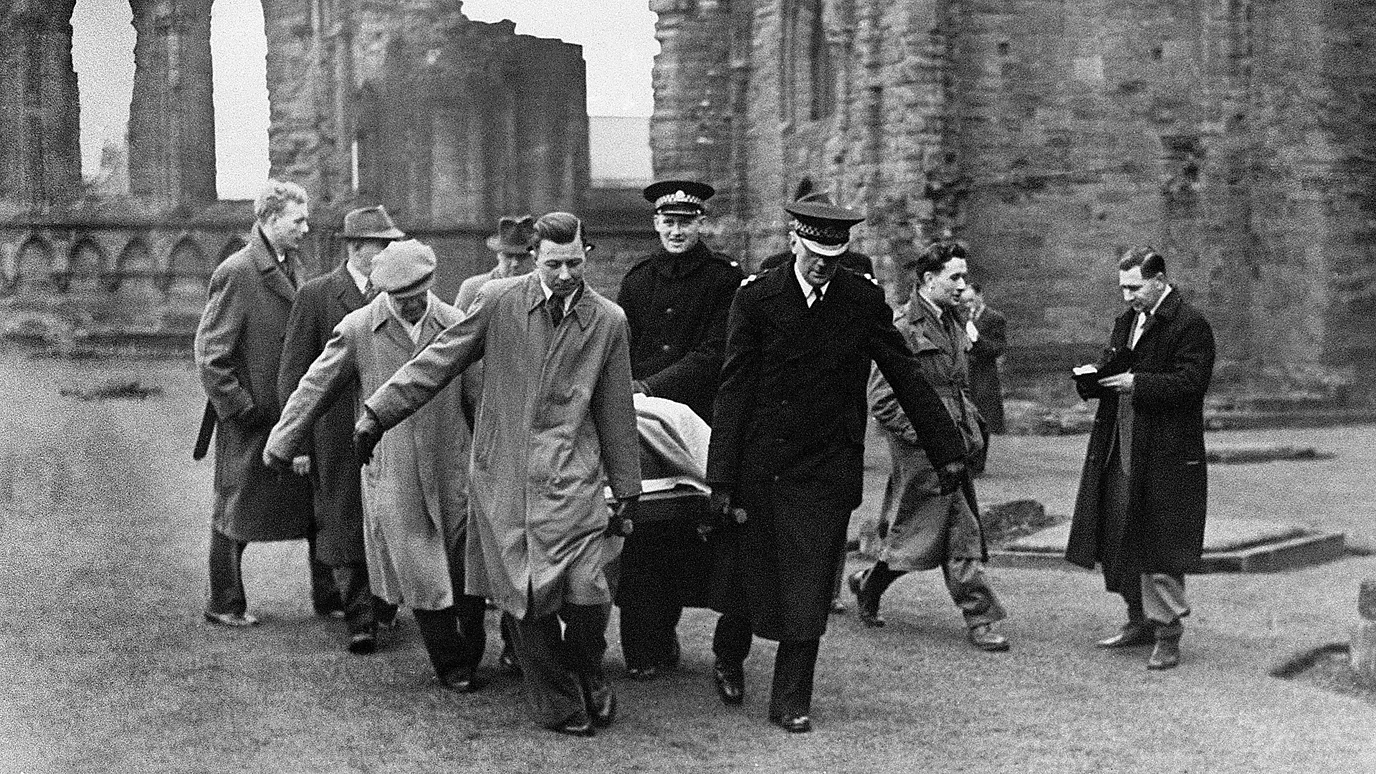
Seventy-five years ago, the Stone of Destiny, an ancient symbol of Scottish kingship, was stolen from Westminster Abbey by four daring university students in what has become one of Scotland’s most audacious historical acts.
Early on Christmas morning 1950, Westminster Abbey’s Dean, Alan Don, discovered the stone missing from the Coronation Chair, a fixture of royal ceremonies since William the Conqueror’s coronation in 1066. The 150kg red-sandstone block, also known as the Stone of Scone, had been taken by King Edward I from Scotland in 1296 and kept in England for centuries.
The theft triggered a national outcry. Speaking on BBC radio, Dean Don condemned the “senseless crime,” stressing the stone’s significance to millions across the Commonwealth and its connection to the Scottish lineage of the British monarch. Initial police investigations included roadblocks and searches of the Serpentine lake in Hyde Park, but the stone had vanished.
Hints soon pointed to Scottish nationalists. The initials “JFS,” scratched on the Coronation Chair, suggested “Justice for Scotland.” While the Scottish Covenant Association publicly denied involvement, it was later revealed that four of its young members – Ian Hamilton, Kay Matheson, Gavin Vernon, and Alan Stuart – had executed the raid.
Their plan began on Christmas Eve 1950. Hamilton, Vernon, and Stuart broke into the Abbey while Matheson waited outside in a getaway car. They prised the stone from the chair and improvised a drag method using Hamilton’s coat. During the escape, the stone broke in two. Hamilton carried a 41kg fragment through the Abbey, covering it with a coat. A police officer stopped briefly, but accepted their story of being young lovers on Christmas Eve and allowed them to leave.
The audacity of the heist and the symbolic reclamation of Scotland’s treasured relic captured the imagination of the public. In a BBC radio interview in May 1951, the students admitted their actions, framing the theft as a patriotic mission rather than a prank. The stone eventually returned to Scotland decades later, a lasting emblem of national pride.