Now Reading: Taliban Codifies Brutal Laws: Men Allowed to Beat Wives, Death Penalty for “Deviant” Acts
-
01
Taliban Codifies Brutal Laws: Men Allowed to Beat Wives, Death Penalty for “Deviant” Acts
Taliban Codifies Brutal Laws: Men Allowed to Beat Wives, Death Penalty for “Deviant” Acts

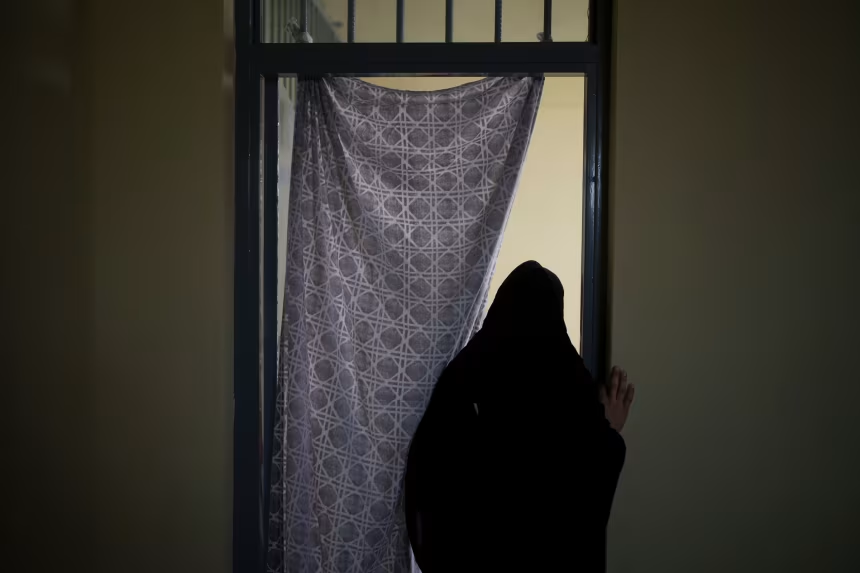
The Taliban in Afghanistan has issued a new decree that codifies extreme restrictions on women and harsh punishments for a wide range of offenses, sparking international condemnation from human rights groups.
Leaked to the Afghan rights organization Rawadari and later translated by the Afghanistan Analysts Network, the document details that men may physically discipline their wives, provided they do not cause broken bones or visible wounds. Human rights campaigners warn this formalizes violence against women and severely limits their access to justice.
“The men have the right to rule completely over the women,” Afghan rights activist Mahbouba Seraj said from Kabul. “His word is the word of law – that’s it.”
The decree also allows fathers to punish children for failing religious duties, teachers can face removal for excessively beating students, and insults toward Taliban leaders carry corporal and custodial penalties. Meanwhile, animal cruelty is punished more severely than spousal abuse, highlighting the stark gender inequalities enshrined in law.
Death sentences are authorized for a range of acts deemed “contrary to Islam,” including homosexuality, heresy, theft, sorcery, and non-vaginal sexual activity. Observers caution that the vague definitions leave religious minorities and women particularly vulnerable.
Since regaining power in August 2021, the Taliban have steadily restricted women’s rights, barring them from most employment and prohibiting secondary and tertiary education for girls. UNICEF estimates over two million Afghan girls are denied access to schooling.
United Nations human rights chief Volker Türk condemned the decree at the Human Rights Council in Geneva, calling it “legitimizing violence against women and children” and describing Afghanistan as “a graveyard for human rights.” He likened the gender-based segregation to apartheid, noting it constitutes persecution of women and girls.
Activists stress that under the new law, women’s legal testimony is worth half that of a man, and restrictions on movement make it nearly impossible to report abuse. “I cannot tell you the number of calls I’m getting from women who are desperate all over Afghanistan,” Seraj said. “Before, there was at least fear of the courts. Now, women have nowhere to turn.”
The decree represents the most explicit codification yet of the Taliban’s draconian policies since their return to power, drawing global scrutiny and renewed calls for international action to protect human rights in Afghanistan.