
Now Reading: Menai Strait Bridge Turns 200: How Telford’s Engineering Marvel Redefined Civil Design
-
01
Menai Strait Bridge Turns 200: How Telford’s Engineering Marvel Redefined Civil Design
Menai Strait Bridge Turns 200: How Telford’s Engineering Marvel Redefined Civil Design

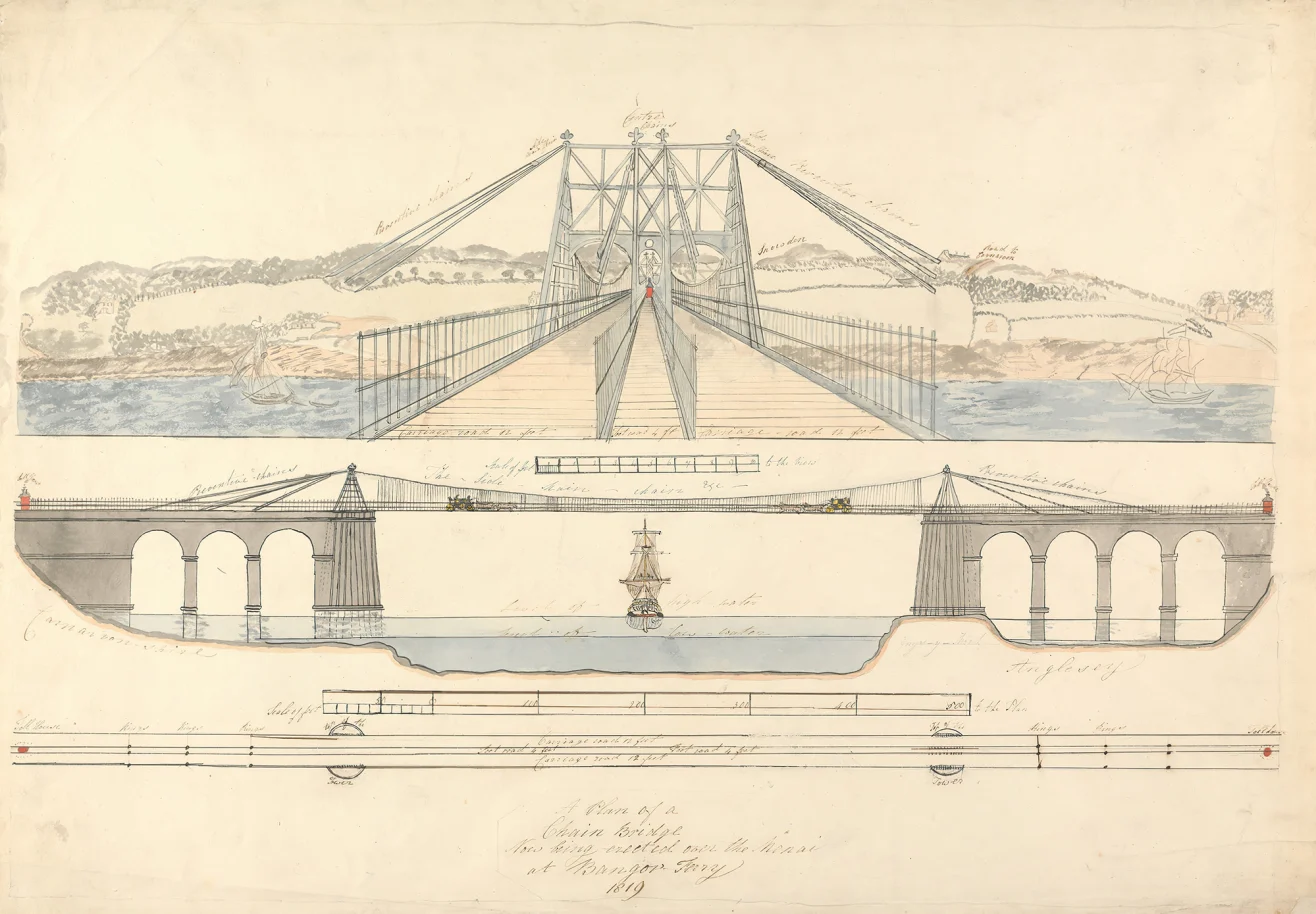
The Menai Strait Bridge, spanning the turbulent waters between mainland North Wales and Anglesey, celebrates 200 years as one of the world’s most groundbreaking engineering feats. Designed by Thomas Telford and opened in 1826, it was the longest suspension bridge in the world at the time, and it remains in daily use today.
Commissioned to connect the Irish Sea ferry port of Holyhead to mainland Britain, the bridge solved a longstanding transportation problem. The Menai Strait’s notorious currents made ferry crossings treacherous, with livestock and passengers often at risk. Telford’s solution was audacious: a suspension bridge with a 1,368-foot span hovering 102 feet above the water—twice the length of any previous road suspension bridge.
“It was a shot to the moon in civil engineering terms,” says Gordon Masterton, former president of the Institution of Civil Engineers. “Spanning that gap without obstructing shipping traffic was revolutionary.”
The bridge’s design relied on 16 massive iron chain cables, each 1,714 feet long and weighing 121 tons. Sourced from Telford’s collaborator William Hazledine, the chains were built with interchangeable links—a precursor to mass production techniques. Arches of limestone from Anglesey’s eastern tip and twin towers on each side provided both stability and elegance, combining function with aesthetic appeal.
Beyond its engineering brilliance, the Menai Strait Bridge formed a critical link in the London-to-Holyhead road, facilitating smoother transport between London and Dublin, and integrating Ireland with the newly formed United Kingdom.
“Few bridges last two centuries, and fewer still combine daring design with continued functionality,” notes Kerry Evans, the engineer managing the bridge today. “Telford’s work set a global standard for civil engineering innovation.”
Although the Union Chain Bridge in Scotland opened shortly after, the Menai Strait Bridge’s scale and technical ambition remain iconic, influencing generations of engineers and infrastructure projects worldwide. Two hundred years on, the bridge continues to carry traffic, a testament to foresight, ingenuity, and enduring design.