Now Reading: Months-Long Manhunt Ends as Fugitive ‘Sovereign Citizen’ Killed by Police in Victoria
-
01
Months-Long Manhunt Ends as Fugitive ‘Sovereign Citizen’ Killed by Police in Victoria
Months-Long Manhunt Ends as Fugitive ‘Sovereign Citizen’ Killed by Police in Victoria

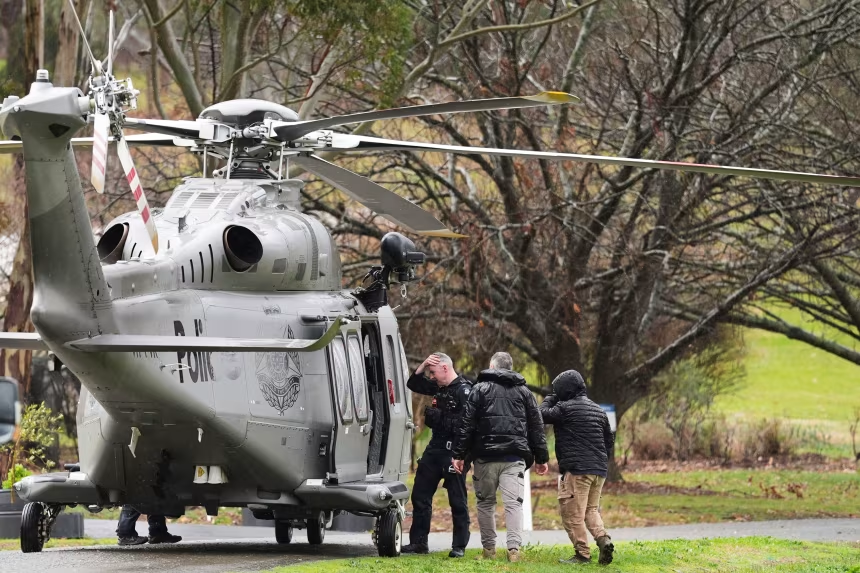
A seven-month manhunt for fugitive Dezi Freeman, a self-proclaimed “sovereign citizen,” concluded in northeastern Victoria, Australia, with police fatally shooting the suspect after a tense three-hour standoff at a rural property. Freeman, also known as Desmond Filby, had been on the run since last August following the killing of two police officers.
Authorities say Freeman opened fire on officers attempting to serve a search warrant regarding alleged sex crimes, disappearing into dense Australian wilderness near the town of Porepunkah. Hundreds of police, supported by dogs and helicopters, scoured the area amid fears that Freeman was heavily armed.
“There was an opportunity for him to surrender peacefully, which he did not,” said Victoria Police Chief Commissioner Mike Bush. “We strongly believe he was armed. The shooting is currently under investigation, but preliminary information suggests it was justified.”
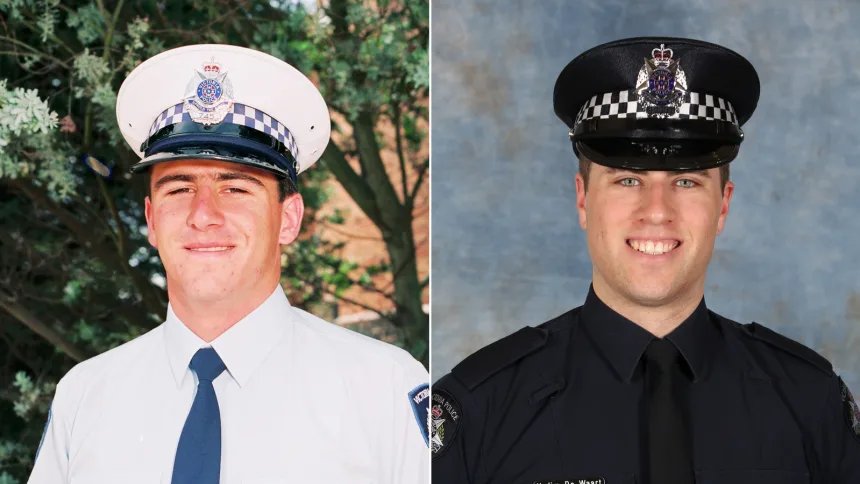
Families of the slain officers, Det. Leading Senior Constable Neal Thompson and Senior Constable Vadim De Waart-Hottart, were informed immediately following the operation. If formally confirmed as Freeman, authorities say this marks closure for one of Australia’s most tragic law enforcement incidents in recent memory.
The Threat of the Sovereign Citizen Movement
Experts highlight Freeman’s case as evidence that the sovereign citizen movement, originating in the United States, has taken root in Australia with potentially deadly consequences. Members reject the legitimacy of the law and often use pseudo-legal tactics to challenge police, judges, and other authorities.
Freeman had a long history of hostility toward law enforcement, previously referring to officers as “Nazis” and “terrorist thugs” in legal filings when contesting earlier convictions. The nationwide manhunt involved officers from all Australian states and territories, with support from New Zealand, following more than 2,000 leads to locate him.
“This has been one of the largest and most complex manhunts in Australian history,” Bush added, underlining the scale of the operation to capture Freeman.
The incident underscores growing concerns about armed anti-government extremist movements in Australia and the ongoing challenges for law enforcement in managing violent individuals who reject state authority.