Now Reading: Supreme Court to Hear David Mark Appeal in Explosive ADC Leadership Crisis
-
01
Supreme Court to Hear David Mark Appeal in Explosive ADC Leadership Crisis
Supreme Court to Hear David Mark Appeal in Explosive ADC Leadership Crisis

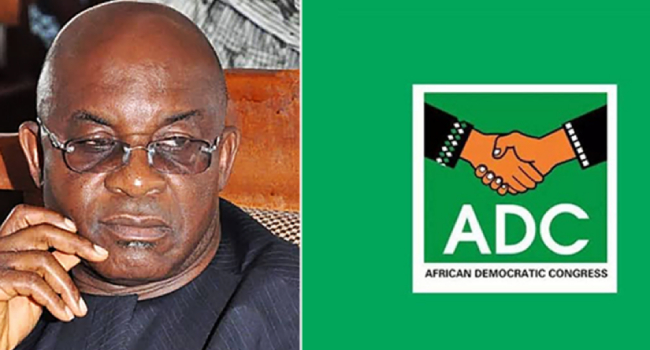
Nigeria’s African Democratic Congress (ADC) faces a deepening leadership crisis as the Supreme Court prepares to hear a high-stakes appeal filed by former Senate President David Mark over control of the party’s national structure.
The apex court is expected to hear the matter on Tuesday, with Mark seeking to overturn aspects of a Court of Appeal ruling delivered on March 12, which has intensified a long-running internal power struggle within the party.
At the centre of the dispute is a bitter contest over who holds legitimate authority within the ADC, with rival factions laying claim to the national leadership and deepening uncertainty across the party’s hierarchy.
In the appeal filed through his counsel, Realwan Okpanachi, Mark is asking the court to stay the execution of the appellate court’s judgment pending the determination of his case, effectively seeking to freeze any changes to the party’s leadership structure.
He is also urging the Supreme Court to restrain the Independent National Electoral Commission (INEC) from recognising or altering the current leadership arrangement, which his camp insists remains valid.
Additionally, Mark is seeking to halt further proceedings in a related case before the Federal High Court in Abuja, presided over by Justice Emeka Nwite, where parallel claims to the party’s leadership are also being contested.
The dispute traces back to earlier rulings and an ex parte application filed by Nafiu Bala Gombe, a party chieftain, which has since escalated into a wider legal and political battle over control of the ADC.
The crisis has already spilled beyond the courts, with INEC reportedly removing Mark’s name as national chairman from its records — a move that triggered strong protests from his faction.
A protest led by the Mark-aligned national working committee drew several high-profile opposition figures, including former Vice President Atiku Abubakar, former Osun State Governor Rauf Aregbesola, and former Anambra State Governor Peter Obi, alongside Rotimi Amaechi and other political actors.
In response, a rival faction led by the Gombe group staged its own counter-protest, demanding official recognition from INEC and insisting it represents the authentic leadership of the party.
The ADC’s internal struggle has now evolved into one of Nigeria’s most closely watched political and legal battles, with the Supreme Court’s decision expected to shape the party’s future direction ahead of the next election cycle.