Now Reading: UTME Exemption for Colleges of Education Sparks National Debate Over Nigeria’s Teaching Standards
-
01
UTME Exemption for Colleges of Education Sparks National Debate Over Nigeria’s Teaching Standards
UTME Exemption for Colleges of Education Sparks National Debate Over Nigeria’s Teaching Standards

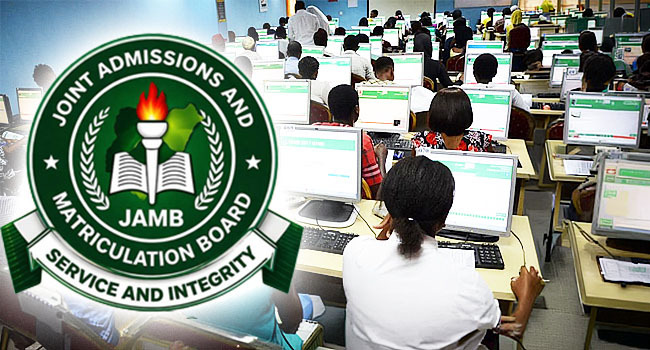
Nigeria’s decision to exempt admission seekers into Colleges of Education and some agriculture programmes from writing the Unified Tertiary Matriculation Examination (UTME) has triggered a fierce debate across the education sector, with teachers, lecturers and policy experts sharply divided over the implications for academic standards.
The Federal Government announced the policy last week as part of broader reforms aimed at expanding access to teacher education and agriculture-related programmes. Education Minister, Tunji Alausa, said candidates would still be required to register with the Joint Admissions and Matriculation Board for documentation and processing through the Central Admissions Processing System (CAPS).
The new policy also covers National Diploma programmes in non-technology agricultural courses. Government officials argue that the move is designed to increase participation in critical sectors while maintaining centralised admission oversight.
“This approach strikes a necessary balance between widening access and preserving the integrity of our admission system,” Alausa said, warning institutions against bypassing official admission channels.
But the announcement has unsettled major education stakeholders, many of whom fear the exemption could weaken the credibility of teacher training in Nigeria.
National President of the Colleges of Education Academic Staff Union (COEASU), Lawan Bazza, criticised the policy and accused the government of sidelining key stakeholders before making such a significant decision. He argued that reforms affecting teacher education should not be introduced through a “top-bottom approach” without proper consultation.
Bazza warned that lowering admission requirements for Colleges of Education could damage the quality of teachers produced in the long term. He maintained that while increasing enrolment is important, academic standards must not be sacrificed in the process.
The Nigeria Union of Teachers (NUT) also rejected the policy, describing it as potentially harmful to the professionalism of teaching. NUT President, Titus Amba, said removing UTME requirements sends the wrong message about the seriousness attached to producing qualified teachers.
“When admission into Colleges of Education is granted without standard entry evaluation, the public may begin to question the credibility of teachers being produced,” Amba said.
He added that teaching should not become a “stop-gap job” for unemployed graduates but should remain a structured profession requiring rigorous training and evaluation, similar to medicine or law.
Critics of the policy also include 2027 Social Democratic Party presidential hopeful, Adewole Adebayo, who described the move as a “deliberate lowering of standards.” According to him, weakening educational quality would worsen unemployment, insecurity and national decline.
However, supporters of the reform insist the policy has been misunderstood. Executive Secretary of the National Commission for Colleges of Education (NCCE), Angela Ajala, defended the initiative, saying it is intended to reposition teacher education rather than diminish it.
Ajala explained that the new Dual Mandate framework allows accredited Colleges of Education to offer a continuous five-year pathway where students first complete the Nigeria Certificate in Education (NCE) before advancing into degree programmes.
“It is not the death of the NCE but the strengthening of it. It is not lowering standards, it is creating access, structure and progression,” she stated.
Education analyst Dele Olaniyi also acknowledged the value of the five-year NCE-degree model but questioned the wisdom of exempting candidates from UTME. He warned that the policy could create the perception that NCE graduates are academically inferior to other undergraduates.
As reactions continue to pour in, the debate has exposed a deeper concern within Nigeria’s education system — how to attract more young people into teaching without compromising quality. For many stakeholders, the challenge is not just access to education, but restoring respect and professionalism to a sector widely seen as critical to the country’s future.