Now Reading: US House Moves To Block Trump From Expanding Iran War As Republican Revolt Deepens
-
01
US House Moves To Block Trump From Expanding Iran War As Republican Revolt Deepens
US House Moves To Block Trump From Expanding Iran War As Republican Revolt Deepens

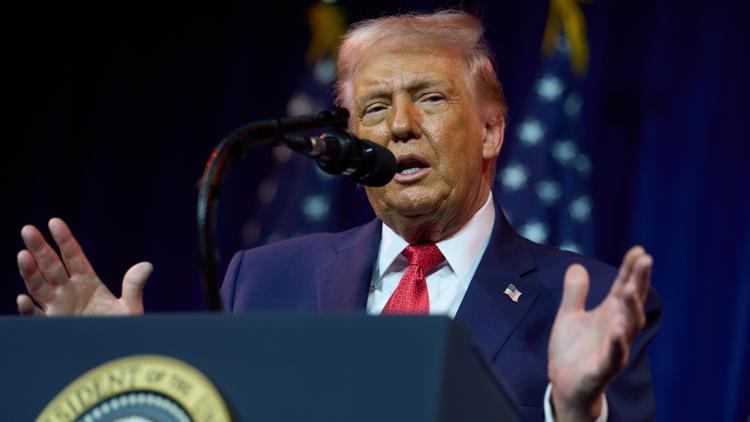
Pressure is mounting on Donald Trump after the US House of Representatives passed a measure aimed at stopping further American military action in Iran without congressional approval.
The resolution passed in a narrow 215-208 vote, exposing fresh cracks within the Republican Party as four GOP lawmakers joined Democrats to publicly challenge the president’s handling of the conflict.
The measure seeks to invoke the War Powers Resolution, requiring Trump to either withdraw US forces involved in the Iran conflict or obtain approval from Congress before escalating military operations further.
Although the move is largely symbolic for now, it represents one of the strongest bipartisan rebukes of Trump’s war strategy since fighting erupted in February between the United States, Israel and Iran.
The White House has already dismissed the resolution, describing it as an unconstitutional attempt to limit presidential authority as commander-in-chief. However, the vote signals growing political discomfort in Washington over the economic and geopolitical fallout from the war.
Fuel prices in the United States have surged in recent weeks, while public opposition to deeper military involvement in the Middle East has continued to rise. The war has also intensified tensions across the Gulf region after Iran responded to US and Israeli strikes with attacks targeting allied states and threats around the Strait of Hormuz.
Republican lawmakers Thomas Massie, Brian Fitzpatrick, Tom Barrett and Warren Davidson broke ranks to support the measure alongside Democrats.
Barrett defended his decision, insisting Congress alone has the constitutional authority to declare war.
“I vote my conscience for what I think is right,” he said when asked whether he feared backlash from Trump supporters.
Leading Democrat on the House Foreign Affairs Committee, Gregory Meeks, described the vote as a major warning to the White House.
According to him, Trump’s military campaign has failed to achieve its key objectives while making diplomatic efforts with Iran more complicated and expensive for ordinary Americans.
The conflict began after US and Israeli forces launched strikes against Iran in late February. Tehran retaliated with attacks targeting Israel and American allies in the Gulf region, while tensions around the Strait of Hormuz disrupted global shipping and energy markets.
Despite an initial ceasefire agreement reached in April, exchanges of fire have continued in recent weeks. The US recently carried out fresh strikes inside Iran, while Tehran responded with missile attacks targeting Kuwait, a key American ally.
Trump, however, maintained on Wednesday that negotiations with Iran were progressing positively and hinted that a broader agreement could be reached soon.
“In theory they’re pretty close to signing a paper,” the president told reporters at the White House, adding that his administration hoped to end the conflict “without killing everybody.”