Now Reading: Mexico Demands Probe Into Deaths of 17 Citizens in US ICE Custody After Fatal Texas Shooting
-
01
Mexico Demands Probe Into Deaths of 17 Citizens in US ICE Custody After Fatal Texas Shooting
Mexico Demands Probe Into Deaths of 17 Citizens in US ICE Custody After Fatal Texas Shooting

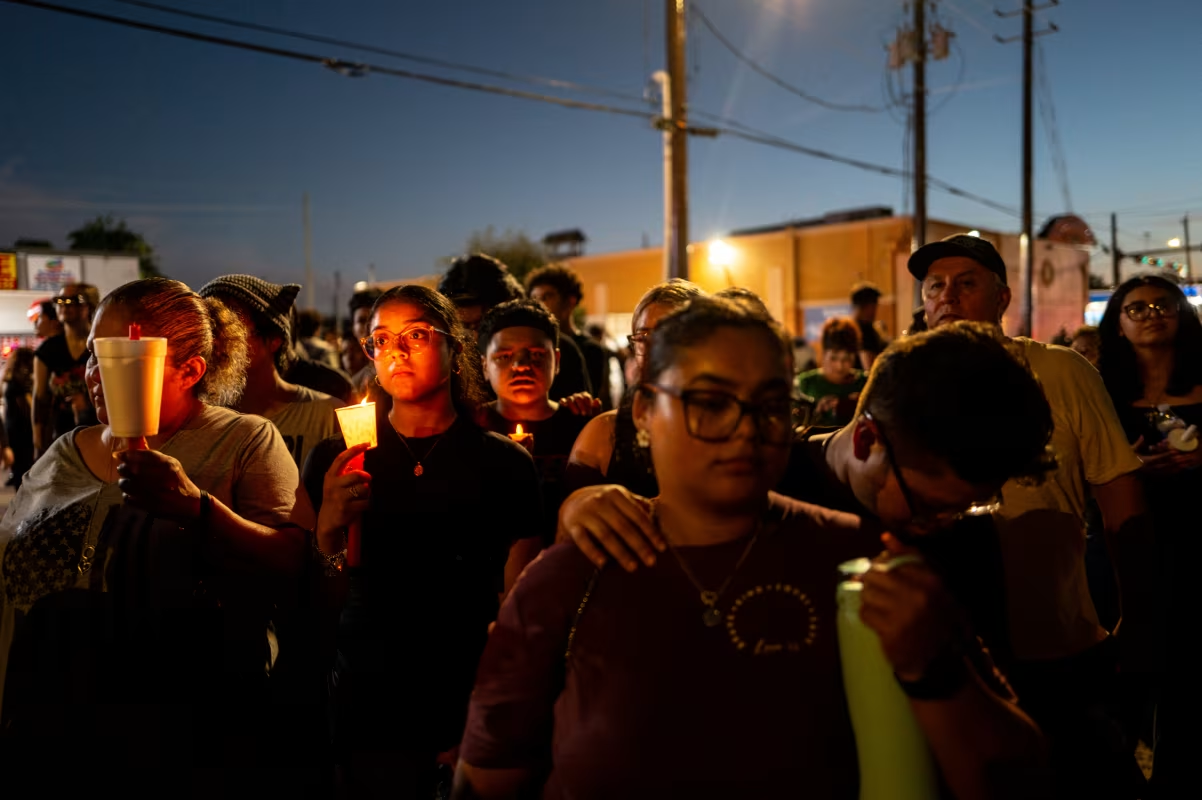
The Mexican government has intensified pressure on the United States after the fatal shooting of a Mexican immigrant by Immigration and Customs Enforcement (ICE) agents in Texas, demanding civil and criminal investigations into the deaths of 17 Mexican nationals linked to US immigration enforcement.
Mexican President Claudia Sheinbaum announced on Thursday that her administration is seeking investigations in the United States into the deaths of Mexican citizens that occurred during immigration operations or while in detention facilities. She said the move is aimed at protecting the human rights of Mexicans living in the US.
The renewed diplomatic push follows the death of Lorenzo Salgado Araujo, a 52-year-old Mexican national who was shot by ICE agents during a traffic stop in Houston last week.
According to ICE, Salgado Araujo, who officials said was living in the US illegally, rammed a law enforcement vehicle and ignored repeated verbal commands before officers opened fire. However, his family has challenged that account, insisting he would have stopped had he realised the vehicle following him belonged to law enforcement.
Speaking during a press conference, Sheinbaum also revealed that Mexico plans to submit petitions to the Inter-American Commission on Human Rights and the United Nations High Commissioner for Human Rights, seeking international scrutiny of the incidents.
Responding to the allegations, the US Department of Homeland Security defended the actions of its immigration officers, stating that ICE personnel are trained to use only the minimum level of force necessary to protect both officers and the public during dangerous situations.
The agency also maintained that individuals held in ICE detention receive due process, adequate food, water, medical care, and access to communicate with family members and legal representatives.
The latest dispute has further strained already fragile diplomatic ties between Mexico and the United States. Analysts say the controversy could complicate cooperation on key bilateral issues, including migration, border security and trade.
José Luis Valdés Ugalde, a researcher at Mexico’s National Autonomous University (UNAM), described the incident as a significant diplomatic challenge rather than an isolated case. Meanwhile, international affairs analyst Fausto Pretelin argued that although Mexico’s concerns are legitimate, the government’s public approach risks deepening tensions instead of resolving them through traditional diplomatic channels.
Mexico’s Foreign Ministry disclosed that it has already sent 11 diplomatic notes of protest to the United States over the deaths of its citizens during immigration enforcement actions.