
Now Reading: Chile Snow Crisis Forces Ski Resorts to Shut 90% of Slopes as Climate Change Threatens Tourism
-
01
Chile Snow Crisis Forces Ski Resorts to Shut 90% of Slopes as Climate Change Threatens Tourism
Chile Snow Crisis Forces Ski Resorts to Shut 90% of Slopes as Climate Change Threatens Tourism

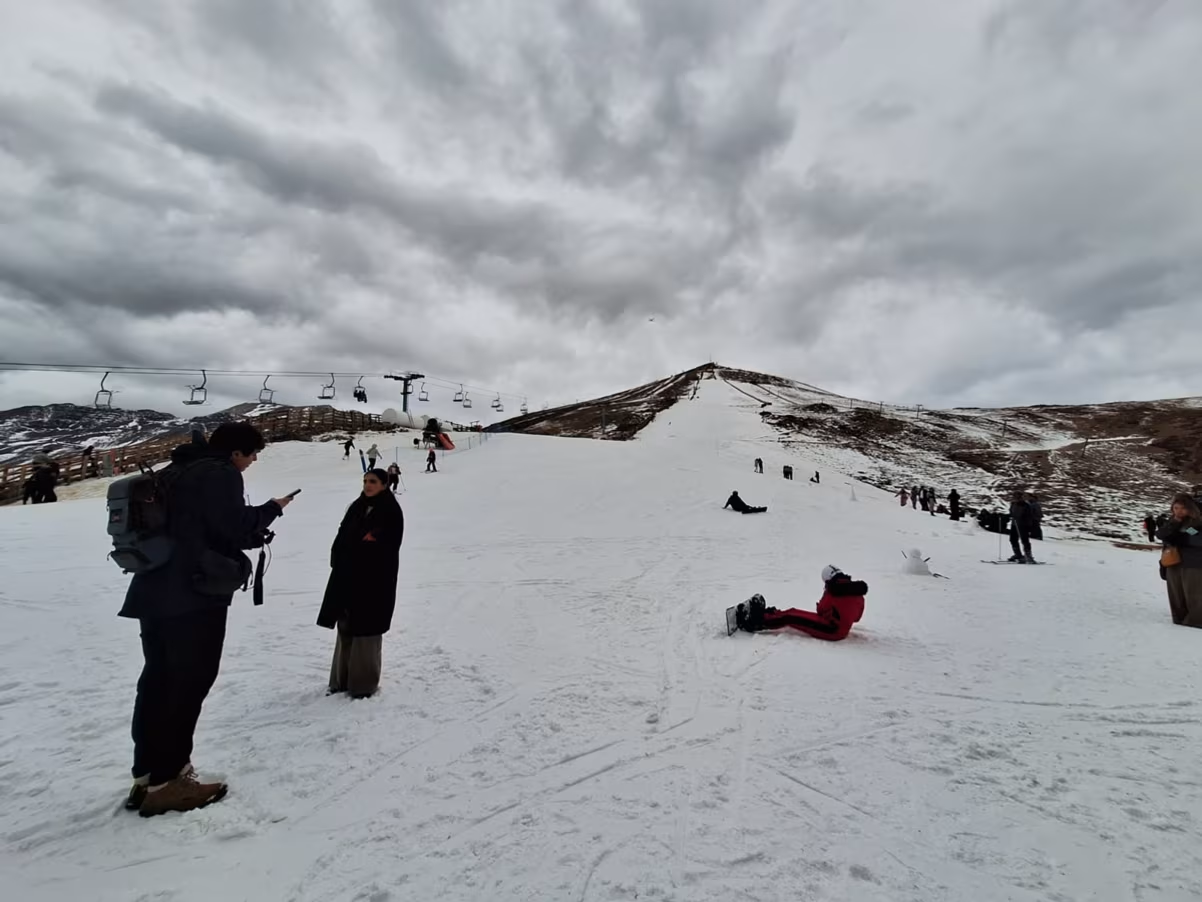
Chile’s famous winter tourism industry is facing one of its toughest seasons in years as an ongoing drought and declining snowfall force major ski resorts near Santiago to close up to 90% of their slopes, raising fresh concerns over the growing impact of climate change.
The prolonged shortage of snow has transformed what were once bustling ski destinations into partially operational resorts, threatening a sector that attracts thousands of international visitors every year, particularly tourists from the United States seeking winter sports during the Northern Hemisphere’s summer.
According to the Chilean Ski Resorts Association (ACESKI), the lack of snowfall has severely disrupted operations across the country’s main ski resorts. Despite the challenging conditions, operators have continued welcoming visitors by relying heavily on artificial snow production to keep limited sections of the slopes open.
Arnaldo Zúñiga, a meteorologist and spokesperson for Chile’s Meteorological Directorate (DMC), described the situation as highly unusual. He noted that the June 21 snowfall produced only 24 centimetres of snow—nearly 60 percent below what is typically recorded during a normal winter season in the Andes.
Zúñiga warned that climate change is expected to further reduce precipitation in the coming years, leading to less rainfall and, ultimately, less snowfall across Chile’s mountain ranges. The trend, he said, poses a long-term challenge for the country’s winter tourism industry.
To adapt, ski resort operators have invested in advanced snowmaking technology over the past 15 years. ACESKI President Michael Leatherbee said visitors can still enjoy ski lessons, panoramic chairlift rides and mountain restaurants, although the overall experience is now more limited due to the reduced snow coverage.
Government officials are also pushing for a broader tourism strategy that extends beyond winter sports. Chile’s Undersecretary of Tourism, María Paz Lagos, said authorities are promoting year-round mountain tourism, including hiking, nature excursions, wellness activities and culinary experiences that do not depend on snowfall.
The shift comes as the industry seeks to protect an important source of revenue and employment. ACESKI said Chile’s ski resorts welcomed more than 1.24 million skiers in 2025, generating an estimated $283 million in direct economic impact, with $228 million contributed by foreign tourists. The sector also supports approximately 18,000 jobs.
There is, however, cautious optimism for the remainder of the season. Chile’s Meteorological Directorate expects a cold weather system arriving from the south to bring fresh snowfall to higher elevations above 2,500 metres, offering hope that ski conditions could improve in the coming days.