Now Reading: Uber, Wayve Launch London’s First Public Robotaxi Service With Safety Drivers
-
01
Uber, Wayve Launch London’s First Public Robotaxi Service With Safety Drivers
Uber, Wayve Launch London’s First Public Robotaxi Service With Safety Drivers

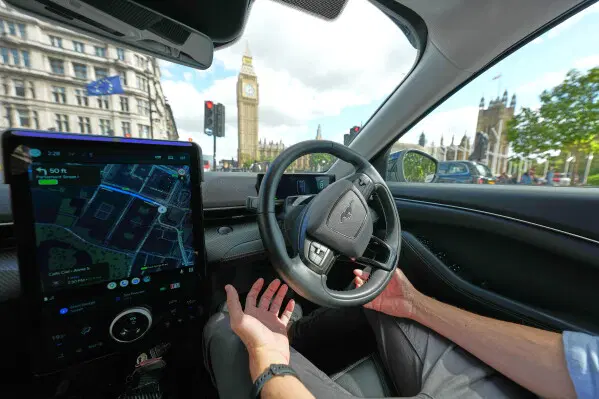
Uber and British autonomous-driving start-up Wayve have launched a commercial robotaxi service in London, marking a major step in the city’s move towards self-driving transport.
The service began on Thursday with a limited rollout, although passengers will still have a human safety supervisor behind the wheel. Uber’s head of product, Wendy Lee, said the initial fleet would consist of “dozens” of vehicles as the companies gradually expand the service.
The launch makes Wayve the first company to offer a robotaxi service to the public in London, putting it ahead of major competitors including Waymo, owned by Google parent Alphabet, and Baidu, which is working with Lyft on a planned service.
Autonomous taxis are already operating in parts of the United States and China. London becomes only the second European city to offer such a service, following Zagreb in Croatia, where Verne operates autonomous vehicles using technology from Chinese company Pony.ai, with safety supervisors on board.
The current London service remains supervised. During an AFP demonstration near Big Ben on Tuesday, a safety operator briefly took control of a vehicle at an intersection, highlighting why human oversight remains part of the initial London robotaxi rollout.
Wayve’s head of business development, Kaity Fischer, said having safety operators behind the wheel was an important part of the early deployment. “This is exactly why we start with safety operators behind the wheel. It’s to ensure that people are safe when they’re driving,” she said.
It remains unclear when Uber and Wayve will introduce fully autonomous vehicles with no human behind the wheel. Waymo, however, said it hopes to begin carrying passengers without a driver by the end of 2026, subject to government approval.
Transport for London (TfL) said guidelines for fully autonomous vehicles are expected shortly, but no operator has yet started the approval process. Uber and Wayve currently have safety authorisation for 15 supervised vehicles, while Lyft plans to launch a Baidu-powered service in London in 2027.
For passengers, the initial robotaxi fares will be the same as regular Uber rides. Wayve said London is its first mass-market deployment, with plans to expand to Tokyo before moving into 10 additional cities through its partnership with Uber.