Now Reading: Nasarawa 2027: Can Zoning Deliver Power to Nasarawa West or Will Voters Decide?
-
01
Nasarawa 2027: Can Zoning Deliver Power to Nasarawa West or Will Voters Decide?
Nasarawa 2027: Can Zoning Deliver Power to Nasarawa West or Will Voters Decide?

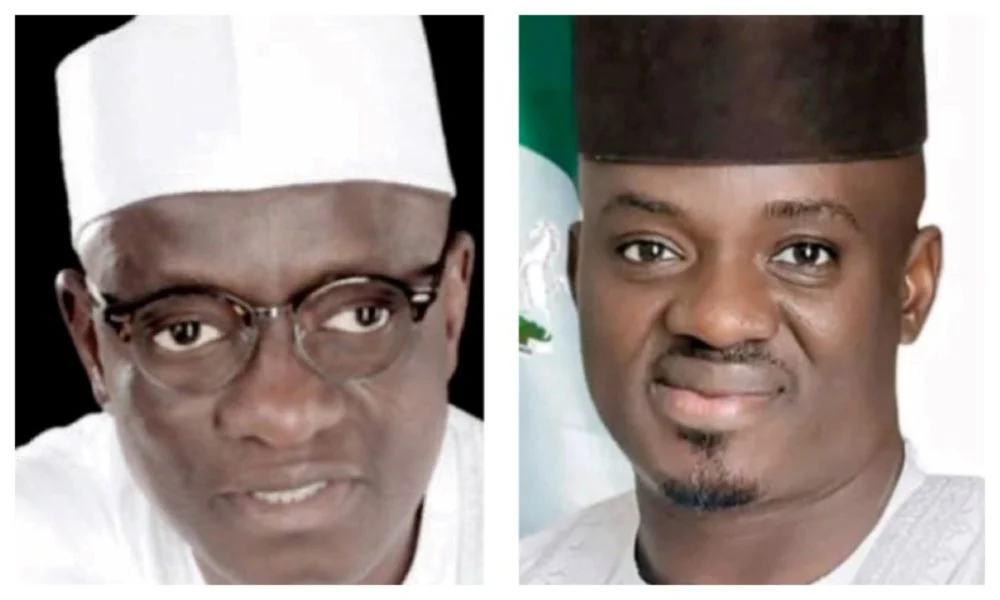
As the race to succeed Governor Abdullahi Sule gathers momentum, Nasarawa State is heading towards a 2027 governorship election that could determine not only who occupies Government House but also whether the state’s long-standing informal power-sharing arrangement still carries significant electoral weight.
Zoning has emerged as one of the major issues in the succession battle, with political leaders divided over whether the governorship should return to Nasarawa West or remain open to aspirants from across the state. Supporters of rotation argue that the district is due for another turn after being out of Government House since Abdullahi Adamu completed his second term in 2007.
Opponents, however, maintain that no provision of the Nigerian Constitution requires the governorship to rotate among Nasarawa’s three senatorial districts. While zoning can influence party decisions and voter sentiment, the eventual winner must still emerge through the electoral process.
Since Nigeria returned to democratic rule in 1999, each of the three senatorial districts has produced a governor. Abdullahi Adamu of Nasarawa West governed from 1999 to 2007, before Aliyu Akwe Doma of Nasarawa South took over until 2011. Tanko Al-Makura, also from the southern axis, governed from 2011 to 2019, while Abdullahi Sule of Nasarawa North has been governor since 2019 and is due to complete two terms in 2027.
That history forms the basis of the argument that Nasarawa West should produce Sule’s successor. Former governor and former APC National Chairman Senator Abdullahi Adamu has also spoken of an understanding among political stakeholders to rotate power in the interest of fairness, stability and peaceful coexistence. However, the arrangement remains political rather than legally binding.
Sule backs Nasarawa West
Governor Sule has made his position on the zoning debate clear, backing the movement of the APC governorship ticket to Nasarawa West.
In April 2026, Sule endorsed Senator Ahmed Aliyu Wadada as his preferred successor after consultations with political stakeholders. Wadada subsequently emerged as the APC candidate for the 2027 election.
The endorsement has strengthened the zoning argument while also giving Wadada the backing of the outgoing governor and the structure of the ruling party. His supporters can point to his previous electoral performance as evidence that he has a political base beyond the APC.
Wadada won the Nasarawa West senatorial seat in 2023 on the platform of the Social Democratic Party, defeating the APC candidate before later returning to the ruling party. However, winning a senatorial election is different from securing a statewide governorship mandate, and his biggest challenge will be extending his support beyond Nasarawa West.
Resistance to the zoning arrangement
The push to return power to Nasarawa West has not gone unchallenged. Some political stakeholders argue that qualified aspirants from other parts of the state should not be excluded because of an informal rotational formula.
Political interests in Nasarawa North have, for instance, advocated for Nasarawa-Eggon Local Government Area to produce the next governor. Such positions demonstrate that there is no unanimous statewide acceptance of the argument that 2027 automatically belongs to Nasarawa West.
The key question, therefore, is whether voters will regard rotational fairness as more important than other factors such as competence, party affiliation, performance, personality, development and grassroots appeal.
Ombugadu returns for another contest
Wadada’s major challenge from the opposition is expected to come from the Peoples Democratic Party candidate, David Emmanuel Ombugadu, who is returning for another bid for Government House.
Ombugadu contested the governorship in 2019 and 2023 and emerged as a major political force in the 2023 election. Governor Sule was declared winner with 347,209 votes against Ombugadu’s 283,016.
The 2023 result was followed by a prolonged legal battle. The Nasarawa State Governorship Election Petition Tribunal initially nullified Sule’s victory and declared Ombugadu winner, but the Court of Appeal reversed the decision. The Supreme Court eventually affirmed Sule’s election in January 2024.
Ombugadu’s return gives the PDP a candidate with significant name recognition and an established support base. But he must now persuade voters that the 2027 contest should be decided primarily by the candidates and their programmes rather than the geographical origin of the next governor.
What 2023 revealed about Nasarawa voters
The voting pattern recorded in Nasarawa during the 2023 general elections offers another reason to be cautious about predictions based solely on zoning.
Peter Obi of the Labour Party won the state in the presidential election with 191,361 votes, ahead of Bola Tinubu of the APC with 172,922 and Atiku Abubakar of the PDP with 147,093 votes.
The governorship election produced a different outcome, with the APC retaining Government House. The senatorial elections also produced a different pattern, as the APC failed to win any of the state’s three senatorial seats, with the SDP winning two and the PDP taking one.
Wadada himself won the Nasarawa West senatorial election on the SDP platform.
The results suggest that Nasarawa voters are capable of making different choices across elections. That could become significant in 2027 if voters consider candidate quality, party platforms and local interests more important than the zoning argument.
More candidates could reshape the race
The governorship contest is also unlikely to be limited to the APC and PDP.
The Independent National Electoral Commission has published candidate particulars for the 2027 election, including retired Major-General Nuhu Angbazo of the African Democratic Congress and Jonathan Gaza Gbefwi of the Labour Party.
The Social Democratic Party, meanwhile, faces an internal dispute over its governorship ticket. INEC published Musa Angbazo as the party’s candidate, while the camp of former Inspector-General of Police Mohammed Adamu maintains that the former police chief is the authentic candidate.
The outcome of that dispute could influence the wider opposition calculation, particularly because Adamu had previously opposed the zoning of the APC ticket to Nasarawa West before leaving the ruling party.
A fragmented opposition could benefit the APC, while a successful consolidation of opposition forces could make the race considerably tighter.
Can Sule transfer his political influence?
Another major issue is whether Governor Sule can successfully transfer his political influence to Wadada.
The incumbent’s endorsement gives the APC candidate access to the ruling party’s machinery and the political advantages associated with the outgoing administration. But endorsements alone do not guarantee electoral victory.
Wadada must still build support across Nasarawa’s different geographical, ethnic and religious constituencies while convincing voters that his candidacy represents both political fairness and effective governance.
The opposition, meanwhile, is likely to portray the election as a choice between the candidates and their records rather than an automatic endorsement of an elite succession arrangement.
The real test of zoning
For supporters of zoning, the case is based largely on the sequence of political power since 1999.
Nasarawa West held the governorship for eight years under Adamu. Nasarawa South then occupied Government House for 12 years through Doma and Al-Makura, while Nasarawa North has held the position since 2019.
By that calculation, advocates argue that the governorship should return to the West after Sule completes his second term.
But because zoning has no constitutional force, its success ultimately depends on whether voters accept it as a compelling political principle.
If enough voters believe Nasarawa West is genuinely due for the governorship, the argument could become one of Wadada’s strongest electoral assets. If voters prioritise other considerations, the zoning arrangement may have far less influence at the polling unit.
What voters may prioritise
The biggest uncertainty is what ordinary voters will consider most important when campaigns intensify.
Security, jobs, infrastructure, education, agriculture, healthcare, the economy and the performance of the Sule administration could all influence voting decisions.
Party loyalty, religion, ethnicity, community interests and the personalities of individual candidates may also play significant roles.
This makes it difficult to determine how much weight zoning will ultimately carry. Political leaders may reach agreements around power rotation, but those arrangements still have to translate into votes across the state’s 13 local government areas.
A defining election for Nasarawa
The 2027 governorship election could therefore become a referendum not only on the candidates but also on the future of Nasarawa’s informal approach to political power sharing.
An APC victory for Wadada could be interpreted as a strong endorsement of the argument that Nasarawa West deserves its turn after two decades outside Government House.
A victory by a candidate from another district could signal that voters have become less willing to treat zoning as decisive.
There is also the possibility that zoning will matter without determining the outcome on its own, with voters weighing geographical balance alongside competence, party affiliation, performance and personal appeal.
For now, political leaders can endorse candidates and parties can promote their preferred succession formulas. But the final decision will belong to voters.
The central question heading into 2027 is therefore clear: will Nasarawa voters honour the argument that it is Nasarawa West’s turn, or will candidate popularity and other electoral considerations override zoning?