
Now Reading: Europe’s Last Gender-Segregated Beach: Why Trieste Locals Refuse to Tear Down the Wall
-
01
Europe’s Last Gender-Segregated Beach: Why Trieste Locals Refuse to Tear Down the Wall
Europe’s Last Gender-Segregated Beach: Why Trieste Locals Refuse to Tear Down the Wall

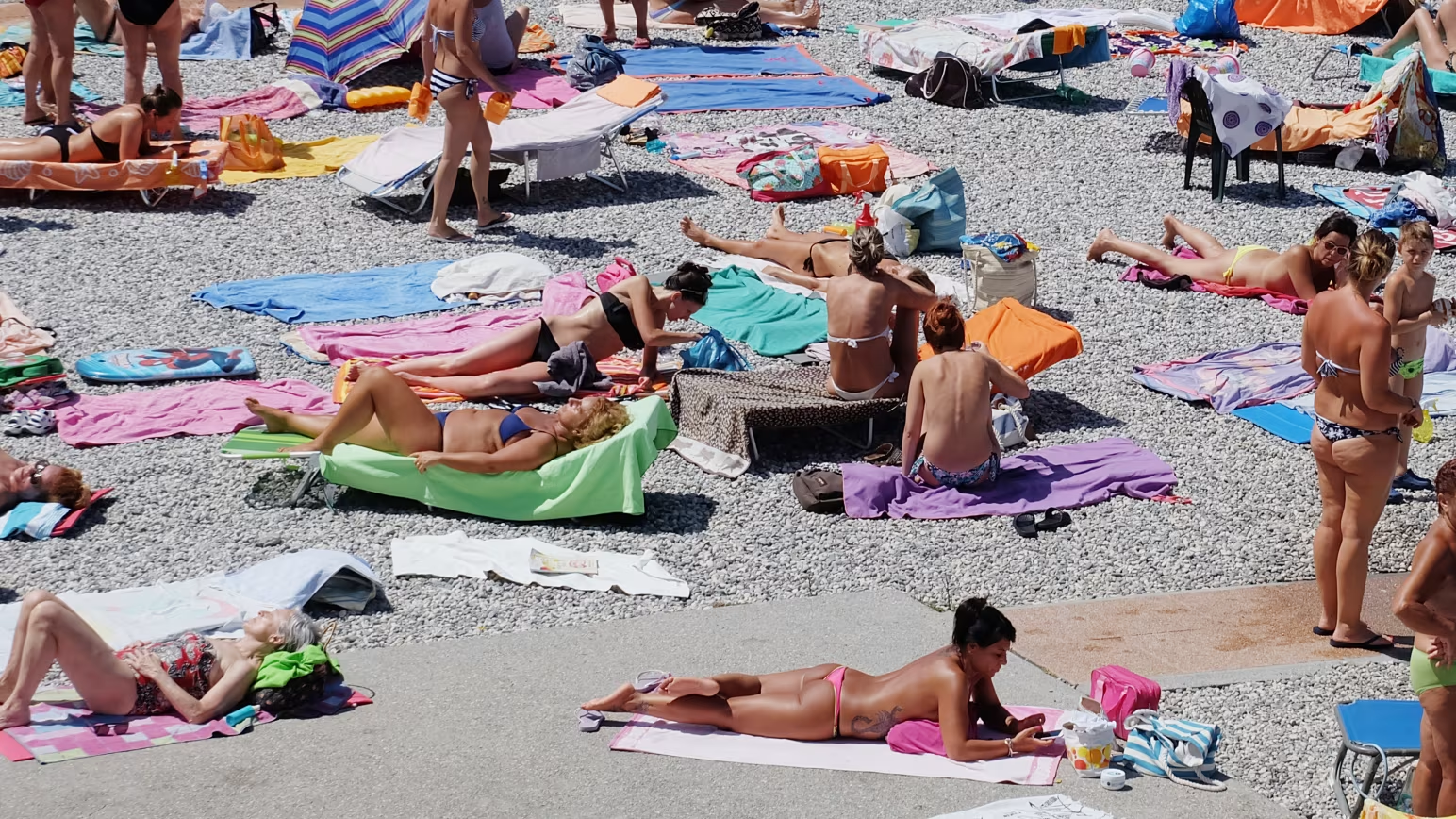
A small beach in northeastern Italy has become a global curiosity because men and women still sunbathe on opposite sides of a wall. La Lanterna, better known as El Pedocin, in the city of Trieste, has maintained its gender-segregated tradition for more than a century.
Visitors pay €1.20 to enter before choosing one of two entrances — women to the left and men to the right. The separate changing areas lead to two sections of the pebbled beach, divided by a wall roughly 10 feet high. Men and women can only freely mix once they swim beyond the end of the breakwater.
The unusual arrangement attracted international attention in June after two tourists from Milan reportedly complained about the rule. One of the women described the separation as “absurd and medieval” and demanded a refund, according to Italian newspaper Il Piccolo. But the controversy appears to have done little to reduce the beach’s popularity. Ticket sales reportedly jumped from 34,885 entries in July 2025 to 53,610 in July 2026, an increase of more than 50 per cent.
For many Triestini, however, El Pedocin is much more than a beach. It is a place tied to family memories and the history of the city. Award-winning novelist Mauro Covacich, who grew up in Trieste, recalls being taken there by his mother as a child. He said the beach was particularly convenient for women because of its central location and easy access by public transport.
The beach opened sometime between the late 19th and early 20th centuries, with 1903 traditionally cited as its opening year. At the time, Trieste belonged to the Austro-Hungarian Empire and had developed into a major port and wealthy commercial centre. Its multicultural character and strong tradition of education and physical activity helped shape the culture surrounding El Pedocin.
Historian and University of London lecturer Katia Pizzi links the beach’s history to the relatively strong position of women in Trieste. The city had an unusually vibrant culture of female education and participation in sports, including swimming and sailing. The separate beach, she argues, gave women a space where they could enjoy the sea without unwanted attention from men.
That sense of privacy remains one of the beach’s biggest attractions. Local journalist and author Micol Brusaferro says women can relax without worrying about their appearance or being judged. She describes El Pedocin as a place where different generations gather, talk freely and enjoy the beach on their own terms.
The beach also serves a practical purpose for modern residents. Women working in city-centre shops sometimes use it during lunch breaks, while many men on the other side are port workers. Lifeguard Samuele Miceli says the atmosphere is peaceful, with regular visitors, families, tourists and older men who spend time playing cards. The men’s section also has direct water access for wheelchair users.
As more tourists arrive after discovering El Pedocin through guidebooks and social media, locals say visitors should understand its traditions before judging them. Brusaferro believes removing the wall would destroy what makes the beach distinctive, while Pizzi argues that there is little reason to change a system that its regular users value.
For Trieste’s residents, the wall is therefore not simply a symbol of separation. It represents a piece of the city’s unusual history, its relationship with the sea and, for many women, a long-standing space of privacy and freedom. As Miceli puts it, the beach remains full, people are happy and many locals see no reason to tear the wall down.