Now Reading: Forest Guards: Tinubu’s First 950 Face Test of Securing Nigeria’s Forests
-
01
Forest Guards: Tinubu’s First 950 Face Test of Securing Nigeria’s Forests
Forest Guards: Tinubu’s First 950 Face Test of Securing Nigeria’s Forests

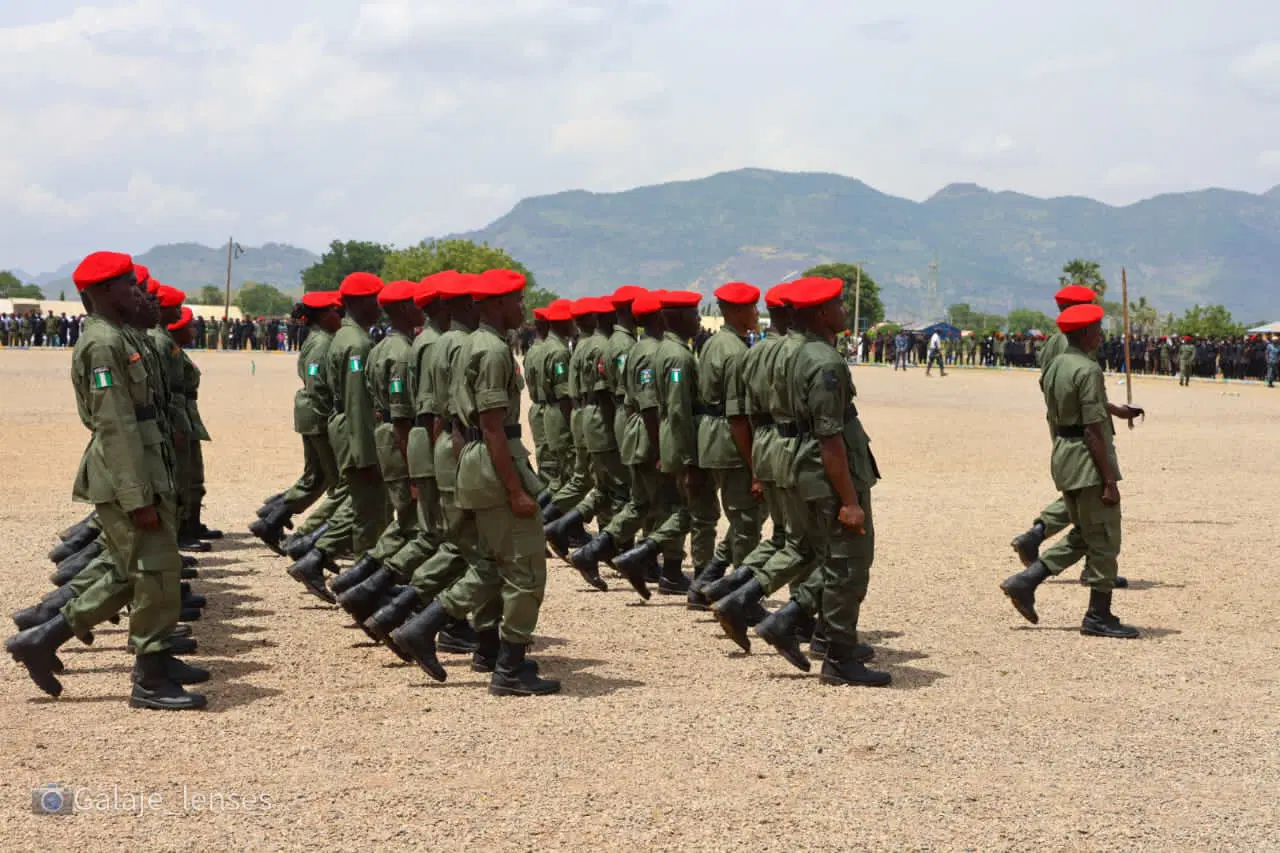
The graduation of the first batch of 950 Forest Guards under President Bola Ahmed Tinubu’s administration marks a new step in Nigeria’s prolonged battle against terrorism, banditry and kidnapping.
The initiative follows the government’s promise to strengthen security in forests and other ungoverned spaces where criminal groups have continued to hide, plan attacks, abduct citizens and sustain their operations.
But the graduation ceremonies, uniforms and official speeches are only the beginning. The real test will come when the new guards begin operating in the difficult terrain they have been recruited to secure.
The Presidential Forest Guards Initiative is designed to monitor forests and other vulnerable areas, deny terrorists, bandits and kidnappers safe havens, protect communities and improve intelligence-sharing with conventional security agencies.
Its responsibilities include forest surveillance, early warning, intelligence gathering, patrols, support for rescue operations, protection of biodiversity and natural resources, and assistance to the Armed Forces, Police, Department of State Services, National Park Service and other security agencies.
The guards are also expected to serve as a bridge between rural communities and the formal security architecture. That role could be particularly important in areas where local knowledge is critical to detecting suspicious movements and identifying threats.
However, the government must be realistic about the environment in which the guards will operate. Criminal groups possess sophisticated weapons, communication equipment, informants and detailed knowledge of difficult terrain.
For that reason, the Forest Guards will require more than basic firearms training. Reliable communication systems, night-vision equipment, body armour, medical kits, all-terrain vehicles, motorcycles, drones and digital tracking technology will be important if the initiative is to operate effectively.
GPS-enabled devices and secure geospatial platforms could also help authorities monitor patrols, identify movement patterns and coordinate rapid responses.
Technology and accountability will be equally important. Criminal groups can exploit uniforms to deceive communities, infiltrate operations or impersonate security personnel. Every guard should therefore be properly identified, digitally registered and placed within a verifiable chain of command.
The initiative should also expand substantially, with guards posted as far as practicable to their states, local governments and communities of origin. Their knowledge of local terrain, languages and communities could strengthen intelligence gathering and improve relationships with residents.
At the same time, local familiarity must be balanced with professional discipline and safeguards against collusion with criminal elements.
Beyond routine forest patrols, the guards should pay particular attention to schools, isolated settlements and the support networks that allow criminal organisations to operate.
Informants, suppliers, transporters, financiers and other collaborators should be identified through careful intelligence operations, with relevant agencies working to dismantle the networks that sustain criminal activity.
The Forest Guards could develop a specialised role within Nigeria’s wider security architecture because of their local presence and focus on terrain that conventional security agencies may not always be able to cover continuously.
Their effectiveness, however, will depend on more than recruitment numbers. Clear command structures, adequate funding, inter-agency coordination, human-rights compliance and measurable performance indicators will be essential.
The government should ultimately assess the initiative by its results rather than the number of personnel that graduate — including forests secured, communities protected, useful intelligence generated and criminal networks disrupted.
The graduation of the first 950 Forest Guards is therefore only the starting point. The real measure of the initiative will be whether those personnel can turn Nigeria’s vulnerable forests from hiding places for criminals into areas where communities can live and operate with greater security.