Now Reading: Otti: Four Years Not Enough to Fix Abia’s Decades-Old Challenges
-
01
Otti: Four Years Not Enough to Fix Abia’s Decades-Old Challenges

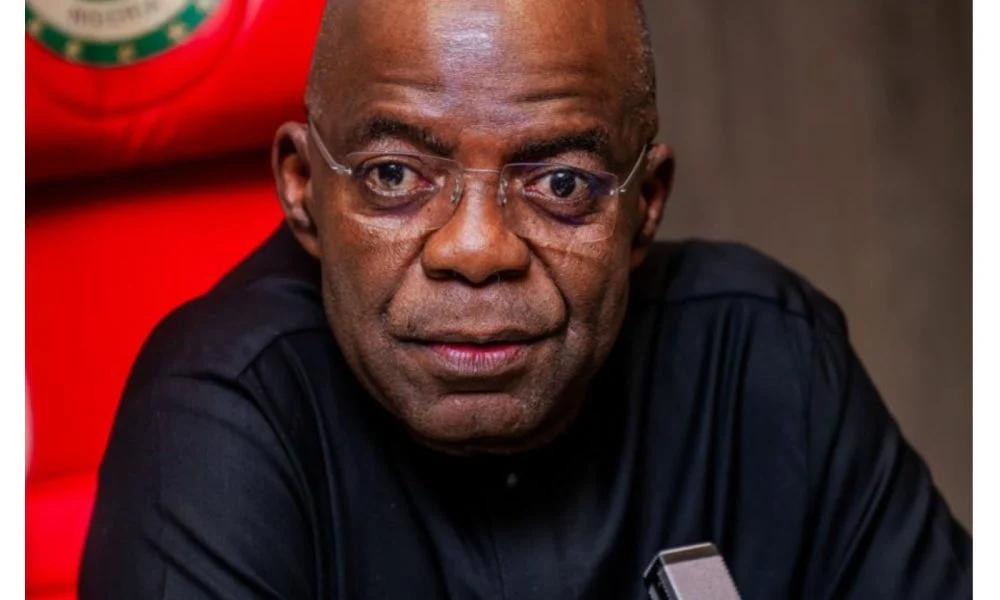
Four years may be enough to lay the foundation for Abia State’s transformation, but not enough to reverse decades of infrastructural decay and institutional challenges, Governor Alex Otti’s Senior Special Assistant on Public Affairs, Dr Ebere Uzoukwa, has said.
Uzoukwa made the submission while highlighting the Otti administration’s interventions in roads, healthcare, education, transportation, human capital development and institutional reforms since it assumed office in 2023.
According to him, the administration inherited a state facing significant infrastructural and socio-economic challenges, including deteriorated roads, neglected public facilities and weaknesses in critical sectors such as healthcare and education.
He said the scale of the problems meant that rebuilding Abia would require more than routine administration and sustained efforts beyond a single four-year tenure.
Road infrastructure has been one of the administration’s major areas of focus. By May 2026, Governor Otti said his government had completed 414 road projects covering about 864 kilometres, while another 82 projects spanning roughly 212 kilometres were at various stages of completion.
Major projects highlighted by the administration include the reconstruction of Port Harcourt Road and Ohanku Road in Aba, Aguiyi Ironsi Boulevard in Umuahia, Omenuko Bridge and the Umuahia-Uzuakoli-Abiriba-Ohafia corridor.
The health sector has also received attention. The administration initially launched a programme to rehabilitate and retrofit 200 primary healthcare centres across the state’s 184 wards. Subsequent government figures indicated that more than 277 PHCs had been retrofitted or functionalised, alongside the recruitment of nearly 1,000 healthcare professionals.
Education has similarly featured in the administration’s programme. Otti announced the recruitment of 5,394 teachers in 2025 and plans for an additional 4,000, bringing the projected number of new teachers to 9,394 amid increased enrolment following the introduction of free and compulsory basic education.
Uzoukwa, however, acknowledged that substantial challenges remain across the state. He noted that more roads still require reconstruction and maintenance, while drainage, healthcare, education and the wider economy require continued investment. He added that recent rainfall had exposed vulnerabilities in some communities.
While acknowledging that residents are entitled to demand more from government, Uzoukwa argued that the scale of the challenges inherited in 2023 made it unrealistic to expect all of them to be resolved within four years.
“Four years may be enough to begin a transformation, but not necessarily enough to right all the wrongs of the past,” Uzoukwa said.
He called for the completion of ongoing projects, consolidation of reforms and sustained investment across sectors, arguing that the gains recorded during Otti’s first term should be preserved and built upon.
Uzoukwa said the rebuilding of Abia should therefore be viewed as a continuing process rather than a task that can be completed within the tenure of one administration.
He said preserving completed projects, finishing those already underway and deepening institutional reforms would be critical to turning the current interventions into lasting development for the people of Abia.