Now Reading: France Faces Escalating Student Protests as Schools Shut Nationwide
-
01
France Faces Escalating Student Protests as Schools Shut Nationwide
France Faces Escalating Student Protests as Schools Shut Nationwide

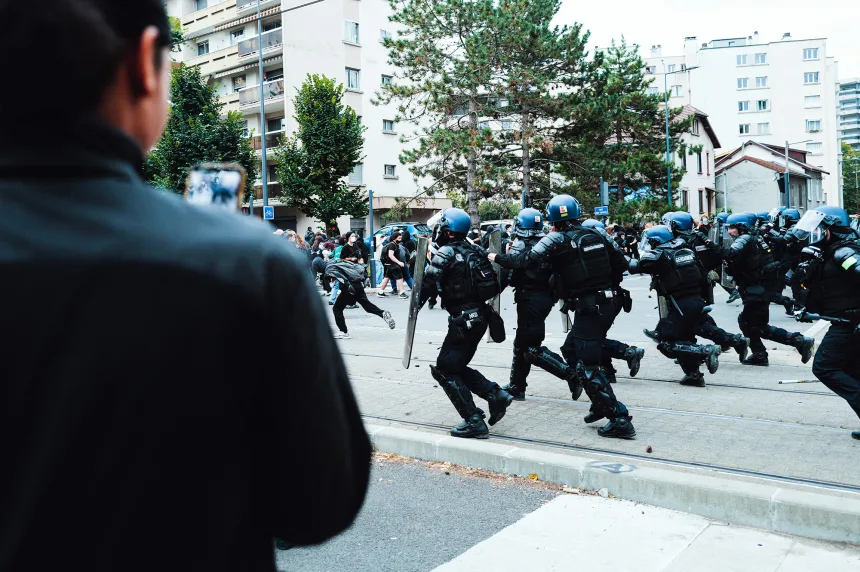
France is facing its biggest wave of student protests in decades, with demonstrations that began over complaints about poor staffing and resources at a suburban Paris high school spreading across the country.
Hundreds of schools have been forced to close or suspend activities, while more than 5,000 people have reportedly been taken into police custody, many of them minors with no previous criminal records.
Students, teachers and police officers have been injured during the unrest. In Lens, in north-eastern France, a student reportedly lost a hand after picking up a grenade, while another student in Tours reportedly suffered an eye injury.
The protests began on September 21 at Saint-Exupéry high school north of Paris, where students joined teachers in demanding more staff and resources. Although the immediate dispute was resolved after additional staff were provided, the demonstrations quickly spread to other schools.
Student leader Manès Nadel described the growth of the movement as unprecedented, saying the number of schools involved had overwhelmed the Education Ministry.
Students have since blocked school entrances in Paris and other cities, with demonstrations reported from Lille in the north to Marseille in the south.
More than 100 high schools have reportedly suffered damage since the protests began, while images of burning rubbish bins, barricades and clashes with police have intensified concerns about the scale of the unrest.
The police response has also come under scrutiny. Critics have accused officers of using excessive force, after footage emerged appearing to show a police officer placing a teenage girl in Alençon in a headlock, a restraint technique that is now prohibited in France.
At the heart of the protests are long-standing concerns about France’s public education system. Students and teachers have complained about overcrowded classrooms, inadequate facilities and staff shortages.
Secondary schools now have fewer teachers than they did in 2008, despite an increase of about 250,000 students. In the public sector, around 70 per cent of classrooms reportedly have more than 30 pupils.
Government Faces Pressure
The government has faced criticism over what protesters describe as a slow and heavy-handed response.
Much of the initial government reaction focused on the involvement of the far-left La France Insoumise party and its leader, Jean-Luc Mélenchon, who has defended the students’ right to protest.
Authorities have also focused on the cost of the unrest. Damage to schools in the greater Paris region alone has been estimated at about €7 million.
The government previously offered concessions over planned fees at technological high schools, but the measure was later removed from the 2027 budget.
The move has further angered student leaders, who say the government’s response demonstrates that their concerns are not being taken seriously.
The unrest intensified late last week, when the interior minister warned that some demonstrations were shifting from student protests towards wider urban violence. About 2,000 people were reportedly taken into custody in a single day.
Education Minister Edouard Geffray met student representatives on Friday, but the meeting ended without an agreement. Student leaders subsequently called for a major nationwide mobilisation on Tuesday.
Financial Crisis Complicates Response
The government is also dealing with severe pressure on France’s public finances as it attempts to pass a 2027 budget aimed at reducing the deficit to around 5 per cent of GDP.
France’s financial difficulties have limited the government’s room to respond to demands for increased education spending.
The country’s 10-year bond yield also briefly exceeded 5 per cent last week, its highest level since 2002, adding to concerns over the economic impact of the political and social unrest.
The protests are also taking place ahead of France’s presidential election next spring, potentially intensifying competition between the political far right and far left while the political centre struggles to maintain support.
Tuesday Marches Could Be Crucial
The next major test for the government is expected on Tuesday, when thousands of protesters are expected to join marches across France.
Student protests have historically posed serious challenges for French governments. The protests of May 1968 eventually developed into the largest general strike in French history.
But today’s protesters say they are not demanding radical change. Instead, they argue that they are asking for basic conditions that would allow them to receive a proper education.
Their central demand is simple: a school system with enough teachers, resources and facilities for students to learn.