Now Reading: Ogba-Urhie Festival Celebrates Urhobo Heritage, Darah Calls for End to Gas Flaring
-
01
Ogba-Urhie Festival Celebrates Urhobo Heritage, Darah Calls for End to Gas Flaring
Ogba-Urhie Festival Celebrates Urhobo Heritage, Darah Calls for End to Gas Flaring

The annual Ogba-Urhie Festival in Otughievwen Kingdom, Ughelli South Local Government Area of Delta State, has celebrated Urhobo cultural heritage, ancestral history and traditional spirituality, with literary scholar Professor Godini Gabriel Darah urging community leaders to preserve indigenous values for future generations.
The colourful celebration opened with Christian songs in the Urhobo language, followed by prayers to God through Jesus Christ for a peaceful event, reflecting the relationship between Christianity and traditional practices in the kingdom.
The festival brings together sons and daughters of Otughievwen Kingdom to celebrate their ancestry and give thanks for fertility and blessings in the land.
Darah, the Ogberianrien of Ughievwen Kingdom and chairman of the festival, led prayers over traditional kola nuts after the opening ceremony. The nuts were subsequently sliced and shared among guests, family representatives and neighbouring communities.
During the ceremony, Darah called on Urhobo leaders to protect their cultural heritage and ensure that its values were passed on to generations yet unborn. He also called for an end to gas flaring in Ughievwen, an oil- and gas-producing community, and across the Niger Delta.
He described Ogba-Urhie, meaning “The Mighty Power of the Waterways,” as a cultural institution through which the Ughievwen people reconnect with their origins.
In an earlier research account shared with participants, Darah traced the festival’s origins to the migration of the community’s ancestors from Ogobiri, in present-day Bayelsa State, to Otughievwen centuries ago.
According to the account, the ancestors travelled on wooden rafts during the early flood season, navigating dangerous creeks as tides moved towards the Atlantic. Mysterious marine forces were believed to have guided them to safety, a story that reflects the courage, resourcefulness and spirituality associated with the community’s history.
The festival featured traditional drum performances, Udje dancers, Urhobo musicians and Ike-li-ke dancers, transforming the gathering into a celebration of cultural identity and intergenerational heritage.
Traditional spirituality was also central to the event. An Ogba-Urhie shrine located near the festival ground attracted worshippers who offered thanksgiving, including rams and food items.
White powder and native chalk applied to faces and shoulders formed part of the traditional expressions of gratitude. A local participant, identified as Verere, said the festival was celebrated to appreciate the blessings bestowed on the land and its people.
A temporary market near the shrine displayed indigenous spiritual items, including beads, native chalk and raffia palms. Attendees purchased some of the items before proceeding to the shrine for prayers and blessings from the chief priest.
Traditional Pageantry and Indigenous Craft
Traditional pageantry by Ughievwen maidens was another highlight, showcasing the beauty, dignity and role of women in the community’s cultural life.
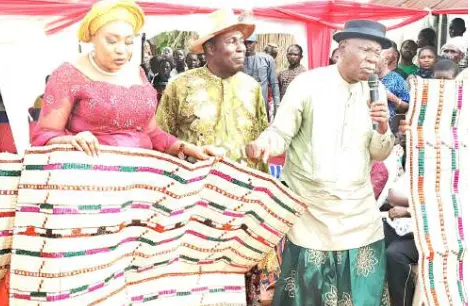
The festival also featured an exhibition of ghwre-pha, a hand-woven mat traditionally used to decorate special rooms for female virgins known as Opha following their circumcision rites.
Darah led Mama Akpaunuse Kelue, the mat weaver, to the centre stage, where participants contributed money in recognition of her craftsmanship and to encourage the preservation of the skill.
He disclosed that he had taken the hand-woven mat to the British Museum in London for documentation alongside historical accounts explaining its cultural significance. He added that scholars around the world had continued to express interest in the craft.
The event attracted prominent figures from Urhobo intellectual, professional and cultural circles, including Professor Christopher Orubo, petroleum sector figure Engineer Alex Neyin, Felix Kporhotor, Mrs Judith Omojevwe Nwachukwu, Engineer Abraham Mrakpor, Charles Utuama and several other community stakeholders.
The celebration continued into the evening without the cult-related violence reported at another community festival in the state.
While youths enjoyed music and dancing, older attendees relaxed to traditional tunes performed by a live band.
One celebrant, Gabriel, said the annual gathering was intended to express gratitude for blessings and good harvests rather than provide an occasion for violence.
He stressed that the festival was traditionally peaceful and should remain a celebration of the community’s heritage and prosperity.