Now Reading: NATO Commander Warns Adversaries: ‘We Are Ready to Fight Tonight’
-
01
NATO Commander Warns Adversaries: ‘We Are Ready to Fight Tonight’

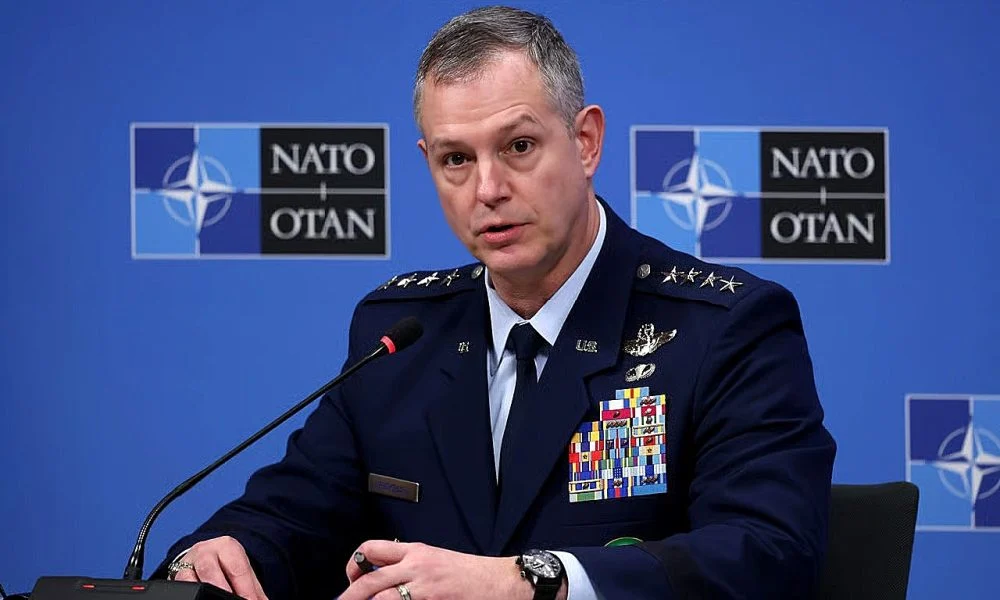
NATO’s Supreme Allied Commander, General Alexus Grynkewich, has warned that the alliance is prepared to respond militarily to any attack on its member states, declaring that its forces are ready for combat.
“If attacked, we are ready to fight tonight,” Grynkewich said on Monday in Poland, delivering a firm warning against any aggression targeting the alliance.
“We know how we will fight if a fight comes to us. And we know we will win,” he added.
The American general made the remarks at the 2026 Warsaw Security Forum, where he outlined NATO’s approach to deterring and responding to a potential military assault.
Grynkewich described his “theory of victory” as preventing an initial attack from achieving its objectives and, if the assault continued, blunting it and stopping enemy forces from advancing.
NATO Outlines Strategy to Counter Potential Attacks
The military chief said NATO’s objective was not to impose what Russia describes as a “strategic defeat” on its adversary, but to prevent an attack, break the enemy’s fighting capacity and deny it the ability to seize territory.
His remarks come amid continued tensions between Russia and Western countries over European security, military preparedness and support for Ukraine.
Moscow has repeatedly accused European governments of seeking to weaken Russia through measures including economic sanctions. Russia has also criticised efforts to persuade countries outside Europe to adopt similar punitive measures.
Grynkewich’s comments underscored NATO’s stated focus on deterring aggression and ensuring that its forces can respond effectively if a member state comes under attack.
NATO Official Urges Allies to Increase Defence Spending
The Warsaw Security Forum also featured discussions on strengthening Europe’s military capabilities, with NATO Deputy Secretary General Radmila Shekerinska joining Lithuanian Defence Minister Robertas Kaunas and Polish Defence Ministry Secretary of State Magdalena Sobkowiak-Czarnecka.
Shekerinska said stronger defence capabilities remained a major priority for the alliance, which has a collective responsibility to protect around one billion people across its member states.
She encouraged NATO members to increase investment in defence, pointing to the alliance’s commitment to spending 5 per cent of gross domestic product annually on defence and related security priorities.
The spending target reflects NATO’s push for greater military readiness and a stronger European contribution to the alliance’s collective security.
NATO Reaffirms Support for Ukraine
Shekerinska also reiterated NATO’s commitment to supporting Ukraine and condemned what she described as Russia’s hybrid campaign against European countries and the alliance.
She said such actions and threats were intended to weaken cooperation among NATO members.
“The real reason why Russia has opted for this kind of attacks or threats is because they want to undermine our unity,” she said.
Her comments highlighted NATO’s concern that pressure on individual member states could test the alliance’s cohesion, even as it seeks to strengthen military preparedness and maintain support for Ukraine.
The discussions at the Warsaw Security Forum reflected broader European efforts to improve defence capabilities, increase military investment and reinforce deterrence amid continuing tensions with Moscow.