
Now Reading: Five Baby Orangutans Found Abandoned in India Expose Global Wildlife Trafficking Network
-
01
Five Baby Orangutans Found Abandoned in India Expose Global Wildlife Trafficking Network
Five Baby Orangutans Found Abandoned in India Expose Global Wildlife Trafficking Network

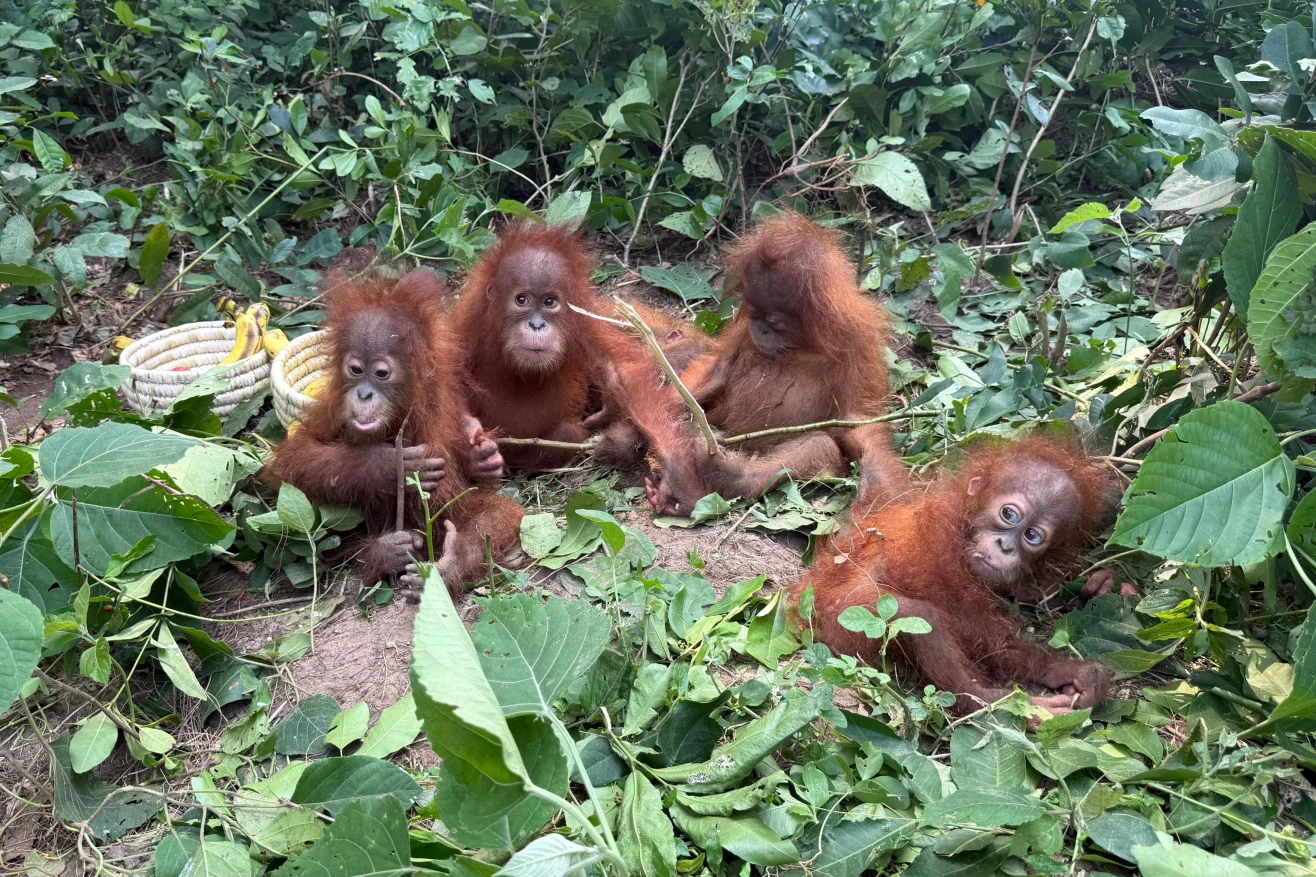
The discovery of five baby orangutans abandoned in a forest in eastern India has raised concerns over the illegal international wildlife trade, with conservationists warning that the animals may have been separated from their mothers and trafficked thousands of kilometres from their natural habitat in Indonesia.
The critically endangered apes, all believed to be younger than 18 months, were discovered in the undergrowth in Odisha state after villagers alerted forest officials. Their unusual appearance and presence in the region stunned residents and wildlife authorities, as orangutans are native to the rainforests of Borneo and Sumatra in Southeast Asia.
Pratik Prakash Indalkar, a forest officer from Balasore, described the discovery as very surprising. The animals were subsequently rescued and transported nearly 400 kilometres to Nandankanan Zoo, where they remain under quarantine and veterinary supervision.
According to Indonesia’s government, available evidence suggests the orangutans originated in Sumatra. However, the precise route through which they entered India remains unconfirmed.
The case has drawn attention to the scale of illegal wildlife trafficking, an international criminal enterprise driven by demand for exotic pets and other animals. Conservationists interviewed by CNN said the trade involves poachers, brokers, transporters and online sellers operating across national borders.
Poachers Often Kill Mothers to Capture Infant Orangutans
Wildlife experts believe the five infants were likely taken from the wild, a process that often involves killing their mothers.
Orangutans have exceptionally strong maternal bonds, with mothers caring for their young for years and teaching them essential survival skills. Females are known to defend their offspring fiercely, making it difficult for poachers to capture infants without killing or seriously injuring the mothers.
Lionel Hachemin, global director of the Wildlife Crime Program at the International Fund for Animal Welfare, said obtaining five orangutan infants of a similar age from legitimate breeding facilities would be extraordinarily difficult.
Binur D. Naibaho, director of Sustainable Landscape at Indonesia’s Orangutan Information Centre, said local hunters could receive up to 15 million Indonesian rupiah, approximately $846, for capturing a baby orangutan.
Femke den Haas, co-founder and director of Jakarta Animal Aid Network, explained that mother orangutans rarely abandon their young and will fight to protect them.
After capture, the infants may face weeks of confinement, hunger, dehydration and stressful transportation. Conservationists say some animals die during transit, while survivors can suffer lasting psychological trauma.
Suspected Trafficking Route From Indonesia to India
Although investigators have not established the exact journey taken by the five orangutans, experts familiar with regional trafficking networks have outlined possible routes based on previous cases.
The journey may have started in Indonesia’s Aceh province, in northern Sumatra, before the animals were transported by boat towards Thailand, a major regional hub for illegal wildlife trafficking.
From there, traffickers may have moved them overland through Myanmar before crossing into northeastern India. Manipur and Mizoram have been identified by wildlife experts as possible entry points because of their borders and established trafficking routes.
Another possibility is that the animals passed through Bangladesh. However, these routes remain investigative theories rather than confirmed details of the orangutans’ journey.
Jose Louies, chief executive of the Wildlife Trust of India, said the northeastern land border was a likely option because of its vulnerability to smuggling.
Data gathered by the organisation recorded 23 wildlife-trafficking-related seizures in northeastern India between 2015 and 2026. The cases involved items including pangolin scales, live pangolins and exotic non-native mammals such as primates.
Dwi Adhiasto, an Indonesian wildlife conservationist and criminologist, described Mizoram as an important transit point for wildlife originating in Indonesia and moving through regional trafficking networks.
Social Media Fuels Illegal Wildlife Sales
Conservationists say online platforms have made it easier for traffickers to advertise exotic animals and connect with potential buyers.
CNN reported finding public social media posts offering primates, including endangered species, for sale. Some posts displayed animals in cages, on leashes or dressed in clothing, presenting them as desirable pets.
A former wildlife trafficker interviewed anonymously by CNN said the trade depends on a network of poachers, intermediaries, sellers, couriers and specialist marketers.
The former trafficker, identified as Budi, said he began collecting exotic animals as a hobby before turning to the business for profit. His activities included trading baby gibbons, other primates, Komodo dragons, exotic birds and wild cats.
He said he was once offered an orangutan for 30 million Indonesian rupiah, approximately $1,668, and believed it could have been resold internationally for about ten times that amount. He declined the offer, citing the difficulty of keeping the animal alive.
Budi said some animals became sick or died while in traders’ possession, adding that traffickers sometimes discarded sick animals rather than seeking treatment.
He stopped trading wildlife in 2019 and now works as an informant on wildlife crime for a non-governmental organisation.
Indonesia revised its anti-wildlife-trafficking legislation in 2024, introducing tougher penalties, including fines of up to five billion rupiah and prison sentences of up to 15 years. Budi nevertheless claimed that some offenders return to the trade after serving prison terms.
CNN said it had contacted Indonesia’s Ministry of Forestry and national police for a response.
Baby Orangutans Begin Recovery in Odisha
At Nandankanan Zoo, the five rescued orangutans are receiving specialised care as veterinarians monitor their health and help them adjust to their new surroundings.
Zoo officials are tracking their temperatures and providing regular updates on their condition. The infants have also been given orangutan plush toys to offer comfort during their quarantine.
Pradeep Mirase, the zoo’s deputy director, said the slightly older animals had begun climbing and swinging, while the younger ones continued to cling to one another.
Forest officials said the journey to the zoo required careful handling to minimise stress and prevent injuries. The rescue team provided cushioning, bedding and items for the animals to play with during transportation.
Despite the encouraging signs, conservationists warn that recovery may take time, particularly if the infants experienced prolonged separation from their mothers and harsh conditions during trafficking.
Habitat Loss Adds to Orangutans’ Survival Crisis
All orangutan species are classified as critically endangered, with their populations threatened by habitat destruction, poaching and illegal trade.
According to figures cited by the World Wildlife Fund, an estimated 104,000 Bornean orangutans, 13,000 Sumatran orangutans and about 800 Tapanuli orangutans remain in the wild.
Deforestation has destroyed large areas of their natural habitat, leaving populations increasingly isolated and vulnerable to hunters. Fires in parts of Borneo have added further pressure to already threatened ecosystems.
International commercial trade in Sumatran orangutans is prohibited under the Convention on International Trade in Endangered Species of Wild Fauna and Flora, while Indonesian law also protects the species.
The discovery in Odisha illustrates how wildlife trafficking can connect remote forests to international markets, even when the animals involved are protected by national and international laws.
For the five rescued orangutans, their immediate future depends on continued veterinary care and rehabilitation. For conservationists, the case also reinforces the need for stronger border enforcement, cooperation between countries and action against online networks selling endangered wildlife.