
Now Reading: State Police Bill Advances as Presidential Working Group Submits Draft to Justice Ministry
-
01
State Police Bill Advances as Presidential Working Group Submits Draft to Justice Ministry
State Police Bill Advances as Presidential Working Group Submits Draft to Justice Ministry

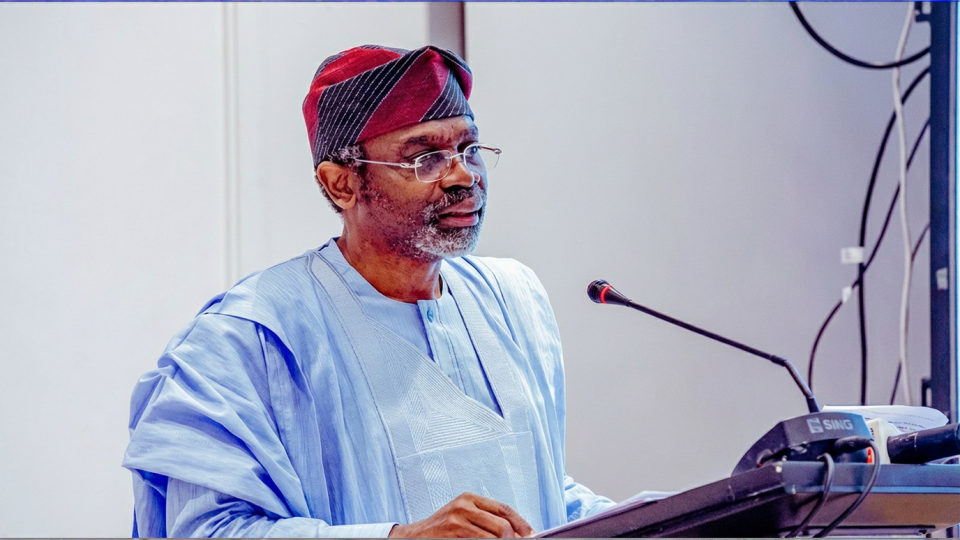
The Presidential Working Group on the National Policing Bill has submitted the draft National Policing Bill, 2026, and 29 related amendment bills to the Federal Ministry of Justice for legislative drafting review and validation.
The submission, made on Monday, October 19, was announced on Tuesday in a statement signed by the Chief of Staff to the President and Chairman of the Working Group, Femi Gbajabiamila.
The development comes as several state Houses of Assembly consider constitutional amendments required to establish state police services, with Ogun, Delta, Plateau and Kwara approving the proposal, while Adamawa lawmakers approved 24 of 26 clauses and rejected two. Edo, Osun, Oyo, Rivers and Zamfara had also previously endorsed the amendments, according to the report.
The proposed Constitution of the Federal Republic of Nigeria, 1999 (Sixth Alteration) Bill, 2026, seeks to amend Section 214 of the Constitution to replace the existing single Nigeria Police Force structure with a Federal Police Service and State Police Services.
According to the Working Group, the Ministry of Justice will examine the draft bills to ensure they comply with legislative drafting standards and conventions and do not conflict with existing laws. The ministry is expected to return the validated drafts by Friday, October 30, after which the group will conduct a final review before presenting them to President Bola Tinubu.
Gbajabiamila said the process was proceeding alongside the ongoing consideration of the constitutional amendment by state legislatures, whose approval is required before the proposal can advance through the constitutional process.
The President inaugurated the seven-member Working Group on July 7, tasking it with producing a technically sound and implementation-ready legislative framework for state policing. Its steering committee began work on August 3.
State Assemblies Advance Constitutional Amendment
In Ogun State, lawmakers unanimously adopted a resolution supporting the proposed constitutional amendment following consideration of a report by the Ad-hoc Committee on Constitutional Review, chaired by former Speaker Olakunle Oluomo.
Speaker Daisi Elemide described the decision as historic, saying state police could strengthen security and help protect lives and property. He directed that a clean copy of the resolution be transmitted to the National Assembly.
The Delta State House of Assembly also approved the proposed amendment, with all 23 members present voting in favour. Speaker Emomotimi Guwor said the reform could improve grassroots policing, strengthen intelligence gathering and create a safer environment for investment and development.
Kwara lawmakers similarly endorsed the proposal during plenary in Ilorin, supporting the establishment of state police services to bring policing closer to communities and improve security.
In Plateau State, the House adopted the recommendations of its ad-hoc committee, which cited prevailing security challenges, manpower shortages in the Nigeria Police Force and the need for stronger local policing arrangements.
Adamawa Rejects Two Clauses
The Adamawa State House of Assembly approved 24 of the 26 clauses presented for consideration, rejecting two provisions that lawmakers said were not sufficiently clear.
The Chairman of the House Committee on Information, Musa Kallam, said some members were not satisfied with the wording of the rejected clauses.
Kallam supported the broader proposal, arguing that state policing could help combat criminal activities. He also said constitutional provisions would define the limits of governors’ authority over state police, while leaving room for further amendments to strengthen safeguards.
Kebbi Assembly Begins Consideration
Meanwhile, the Kebbi State House of Assembly has received the constitutional amendment bill and referred it to the House Committee on Internal Security for further consideration.
The bill was transmitted by the National Assembly on September 16, following its passage by the Senate on June 24 and the House of Representatives on July 23, according to a letter read during plenary.
The National Assembly urged Kebbi lawmakers to consider the proposal promptly and communicate their decision. The state assembly is expected to deliberate on the provisions before formally conveying its position.
Under Section 9 of the 1999 Constitution, a constitutional alteration generally requires the support of at least two-thirds of the 36 state Houses of Assembly before it can be presented to the President for assent.
Justice Ministry Timeline and Senate Position
The Justice Ministry’s review timeline remains subject to its procedures. Kamarudeen Ogundele, media aide to the Attorney-General of the Federation, said the ministry would follow due process and declined to commit to a specific period beyond what the applicable procedures require.
The Senate has also declined to comment on the Executive’s proposed timetable, saying it would wait until it formally receives the bills before taking a position.
Senator Yemi Adaramodu, Chairman of the Senate Committee on Media and Public Affairs, said lawmakers would consider the relevant submissions and state assemblies’ responses through the legislative process.
He maintained that the 30-day period communicated to state assemblies was intended for them to submit their positions, adding that the Senate remained committed to concluding its consideration of the legislation before the end of the year.
The proposed state policing framework has generated debate across Nigeria. Supporters argue that decentralised policing could improve intelligence gathering and response times, while critics have raised concerns about political interference, possible abuse of power and the need for strong accountability mechanisms.
The outcome of the constitutional amendment process will determine whether Nigeria moves closer to establishing a dual policing structure comprising federal and state police services.