Now Reading: Russia-Africa Summit 2026: Trade, Technology and Energy Top Agenda as Analysts Question Benefits for Continent
-
01
Russia-Africa Summit 2026: Trade, Technology and Energy Top Agenda as Analysts Question Benefits for Continent
Russia-Africa Summit 2026: Trade, Technology and Energy Top Agenda as Analysts Question Benefits for Continent

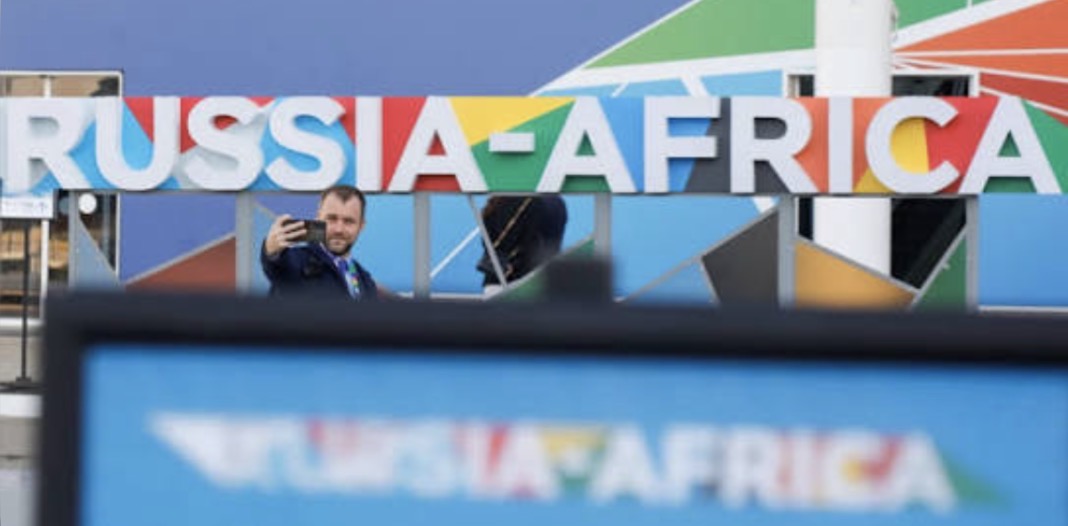
The third Russia-Africa Summit, scheduled to hold in Moscow from October 28 to 29, is drawing attention to the prospects for stronger economic and diplomatic relations between Russia and African countries, amid questions over the benefits the continent stands to gain.
Government officials, diplomats and analysts have expressed differing views on the extent to which Africa will benefit from Moscow’s proposals, particularly in light of the outcomes of the previous summits held in 2019 and 2023. However, stakeholders have expressed confidence that the forthcoming meeting could strengthen cooperation between both sides.
The summit comes amid changes in the global political and economic order, as well as ongoing international conflicts, highlighting the need for a long-term partnership that extends beyond diplomacy to trade, education, technology, energy and security.
Russian President Vladimir Putin, in a broadcast marking Africa Day on May 25, 2026, reaffirmed Moscow’s commitment to its longstanding relations with African countries. He congratulated African heads of state and government on the 63rd anniversary of the African Union and said the summit would expand mutually beneficial cooperation across various sectors.
Putin also highlighted growing cooperation within the African Union and sub-regional organisations, alongside efforts to develop collective responses to conflicts and crises and advance regional integration.
Russia’s Ambassador to Nigeria, Andrey Podelyshev, identified economic and technological cooperation as priority areas where Russia’s capabilities could benefit Nigeria and the wider African continent.
Speaking ahead of Russia Day on June 12, the ambassador cited Russia’s economic output and international trade as indicators of its capacity to deepen engagement with African economies. According to figures he provided, Russia’s nominal gross domestic product exceeded 201 trillion roubles, equivalent to about $2.5 trillion, at the end of 2024, while its GDP at purchasing power parity approached $7 trillion. He also put Russia’s foreign trade turnover for 2024 at approximately $717 billion.
Despite these figures, analysts have noted that Russia-Africa trade remains relatively modest at about $25 billion, compared with estimated trade volumes of $350 billion between the European Union and Africa and $280 billion between China and Africa.
They argued that Africa could benefit from Russian expertise in automobile manufacturing, electricity generation, nuclear energy, oil and gas, agricultural machinery, artificial intelligence, information technology, space exploration, aircraft engineering, refining and agriculture.
One analyst said African countries should prioritise trade facilitation and diplomacy to ensure the continent captures more value from its natural and agricultural resources.
The analyst called for expanded trade financing, local-currency settlements and joint investments in transport infrastructure, energy corridors and regional value chains to support local processing and industrial development.
Nigeria’s Minister of State for Foreign Affairs, Sola Enikanolaiye, has also stressed the importance of placing trade and economic cooperation at the centre of African diplomacy.
Speaking at a pan-African regional roundtable attended by representatives of the African Union Commission, AUDA-NEPAD, the African Continental Free Trade Area Secretariat, Afreximbank and regional economic communities, Enikanolaiye said a more integrated African market would create opportunities for manufacturers, farmers, innovators and service providers.
He reaffirmed Nigeria’s commitment to continental integration, citing the country’s population of more than 200 million people and its potential role in expanding trade and economic cooperation across Africa.
Meanwhile, Secretary-General of the United World Congress of Diplomats, Tunji Asaolu, called for greater investment in education, research, cultural exchanges and academic exchange programmes to strengthen relations between African countries and their international partners.
Leader of the Trans-Africa Tourism and Unity Campaign, Ras Mubarak, advocated visa-free travel arrangements to promote integration, economic growth and cultural exchange. He argued that restrictive visa policies limit opportunities for cooperation and movement across borders.
Former Minister-Consular at the Ghana High Commission in Abuja, Inusah Ziblim, also emphasised the need for collaboration, noting that broad-based support would be crucial to translating agreements into practical outcomes.
Analysts said the Moscow summit should aim to build a strategic partnership in an increasingly multipolar world, with emphasis on peaceful coexistence, respect for cultural diversity, mutual non-interference and inclusive economic growth.
Discussions are expected to assess existing cooperation and explore future opportunities in trade, education, security, human capacity development and energy, including technology transfer, knowledge sharing and people-to-people exchanges.
For African countries, analysts say the central test will be whether commitments made at the summit translate into measurable improvements in trade, investment, industrial development and technology access.