Now Reading: Ebola Threat: Senate Urges Mandatory Health Screening at All Entry Points
-
01
Ebola Threat: Senate Urges Mandatory Health Screening at All Entry Points
Ebola Threat: Senate Urges Mandatory Health Screening at All Entry Points

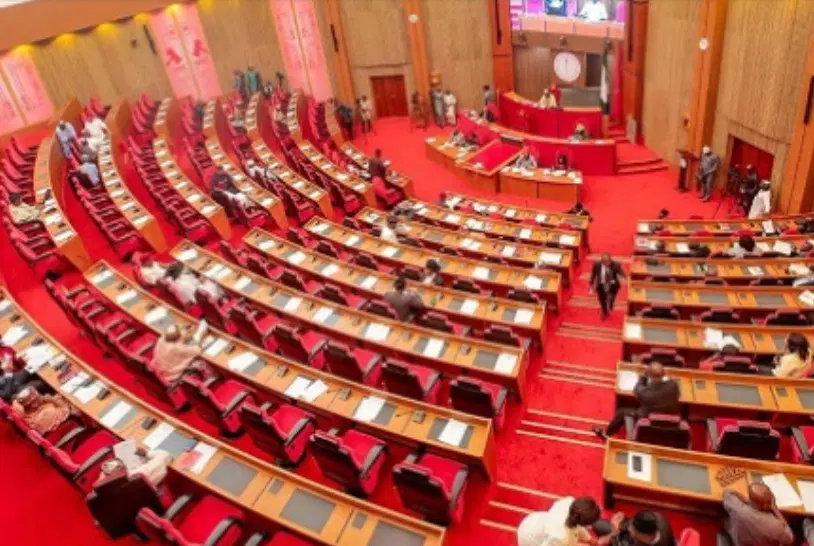
The Nigerian Senate has urged the Federal Government to introduce mandatory health screening for all international passengers arriving in the country through airports, seaports and designated land borders amid concerns over the potential importation of Ebola and other epidemic-prone diseases.
The lawmakers called on the Federal Ministry of Health and Social Welfare, the Nigeria Centre for Disease Control and Prevention (NCDC) and Port Health Services to ensure that every arriving international passenger completes a health declaration form and undergoes temperature checks and symptom screening.
According to the Senate’s resolution on Wednesday, enhanced screening should be conducted for passengers who have visited or transited through affected areas within the preceding 21 days, regardless of their nationality or country of departure. The chamber also called for exit screening for departing passengers during any declared public health emergency.
The Senate further urged the Federal Government, through the Federal Ministry of Budget and Economic Planning, to release emergency funding from service-wide votes to support agencies responsible for preventing and containing disease outbreaks.
It also called on the health ministry, the Federal Airports Authority of Nigeria and the Nigeria Immigration Service to equip all entry points with trained Port Health officers, thermal scanners, protective equipment and isolation rooms. The lawmakers stressed the need to ensure that isolation and treatment centres are prepared across all 36 states and the Federal Capital Territory.
The resolutions followed a motion titled “Urgent Need to Enforce Mandatory Health Screening at All International Airports and Other Entry Points to Prevent the Importation of Ebola and Other Epidemic-Prone Diseases into Nigeria.” The motion was sponsored by Senator Francis Adedayo Faduyile, representing Ondo South Senatorial District under the All Progressives Congress (APC).
The Senate also urged the National Assembly to work with the Ministry of Health to repeal and reenact the Quarantine Act, originally enacted in 1926, replacing it with a modern public health law aligned with the International Health Regulations (IHR 2005).
In presenting the motion, Faduyile cited concerns over the spread of the Bundibugyo Ebola strain and the possibility of infected travellers entering Nigeria through third countries. He also highlighted gaps in screening coverage, including inadequate staffing and equipment at some entry points.
The senator commended the Federal Government for introducing health declaration forms, establishing a Presidential Task Force and strengthening screening at entry points. However, he expressed concern that screening requirements had reportedly been narrowed on September 22, 2026, to travellers from listed countries that excluded Kenya.
Faduyile also drew attention to the pressure on Nigeria’s health system from other infectious diseases, including Lassa fever, cholera and diphtheria. He argued that strengthening border health controls would be more cost-effective than managing an imported outbreak.
The Senate called on Nigerians to maintain appropriate hygiene practices, including making hand sanitisers available at event centres, institutions, private premises and public places.
However, a proposal to mandate the Senate committees on Health, Primary Healthcare, Development and Disease Control, Aviation, Interior and Appropriations to visit major entry points and report back within four weeks was rejected by the chamber. The Senate instead mandated its Committee on Legislative Compliance to ensure that the adopted resolutions are implemented.
The motion followed a report claiming that a female traveller who arrived in Abuja from Uganda had tested positive for Ebola. The reported case, along with concerns over regional disease transmission, formed part of the context for the Senate’s call for stronger screening measures.
The proposed measures are intended to strengthen Nigeria’s preparedness against imported infectious diseases while ensuring that public health safeguards are implemented in line with international regulations and without discrimination.