
Now Reading: AI Helps Italian Police Recover Stolen Artworks Worth Over €203m
-
01
AI Helps Italian Police Recover Stolen Artworks Worth Over €203m
AI Helps Italian Police Recover Stolen Artworks Worth Over €203m

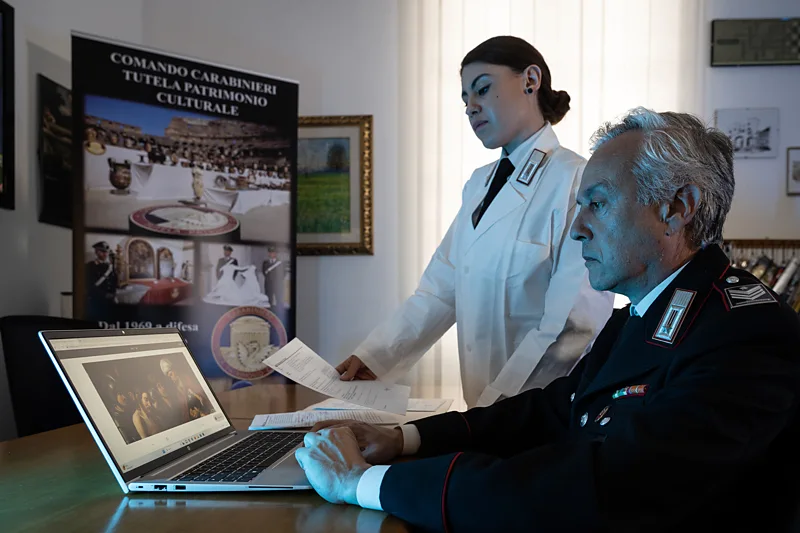
Artificial intelligence is helping Italian police uncover stolen artworks that might otherwise have escaped detection, leading to the recovery of more than 300 paintings and statues, alongside over 165,000 smaller cultural objects valued at more than €203 million.
The technology, known as the Stolen Works of Art Detection System (Swoads), was developed by Italy’s Carabinieri Command for the Protection of Cultural Heritage to identify stolen artefacts through image recognition. It can detect similarities in colours, patterns and shapes, even when artworks have been altered or photographed from different angles.
One notable breakthrough came in October 2024 during an antiques fair in Parma, Italy. Officers photographed artworks displayed by vendors and uploaded the images to their internal database for comparison with records of stolen cultural objects.
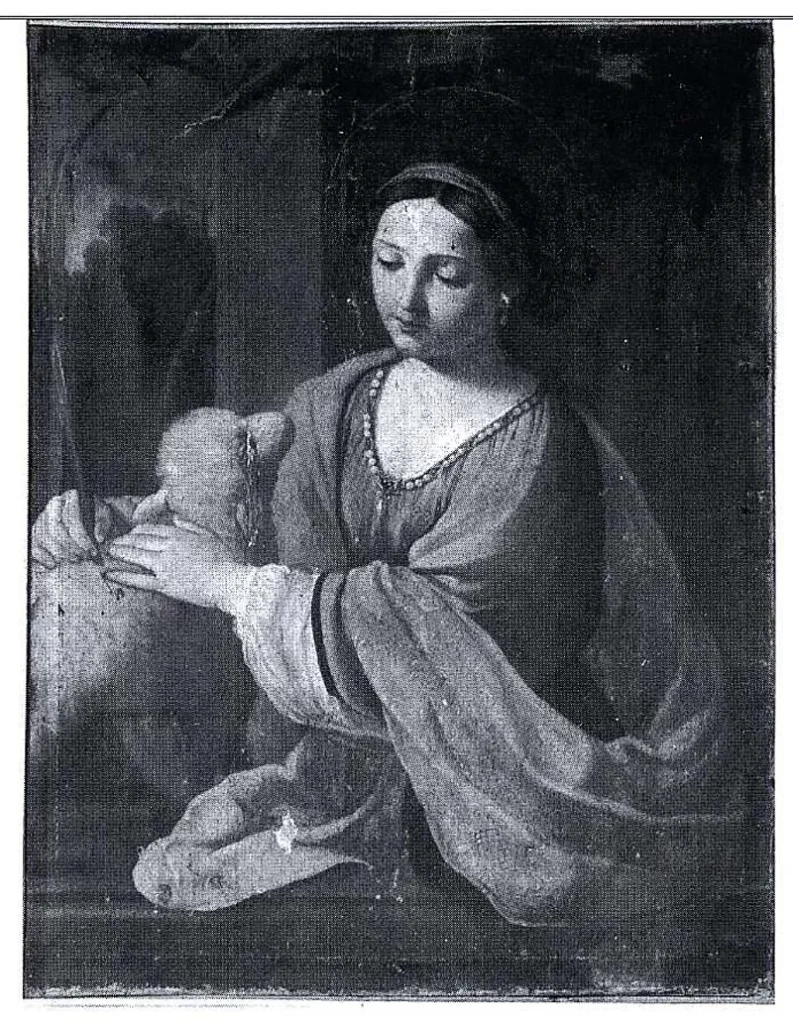
Within hours, the system flagged a painting showing a young woman dressed in aquamarine and red, holding a partly unravelled parchment scroll. Investigators initially noticed that something about the artwork appeared unusual, prompting officers to seize it for further examination.
Further checks revealed that the painting was actually a 17th-century depiction of Saint Agnese, stolen from the Virgo Potens church in Sulmona, near Naples, on August 11, 2004. The artwork had reportedly been altered to conceal its identity: the lamb and palm branch originally held by the saint had been replaced or removed, while her halo had also disappeared.
The discovery demonstrated how Swoads can identify stolen paintings even when their appearance has been deliberately changed. According to Lieutenant Colonel Salvatore Rapicavoli, the system recognises visual elements that remain connected to the original artwork, rather than relying solely on descriptions or keywords.
Italy has maintained a database of stolen cultural artefacts since 1969. It contains more than one million records covering paintings, archaeological objects, manuscripts, coins and other historical items. However, manually comparing artworks at auctions and antique fairs with the database was previously a slow and difficult process, particularly when the original photographs were old or of poor quality.
Rapicavoli’s team began developing Swoads in 2020, and the system has since expanded its work beyond physical art markets. It can continuously scan online catalogues, auction websites, e-commerce platforms and social media for images that resemble stolen objects.
In another recovery, the software helped investigators in Turin locate a painting by Italian artist Filippo Palizzi, titled Riposo Della Pastorella (The Rest of the Shepherdess). The artwork had been stolen from a modern art gallery in June 1972 and was later identified after appearing for sale on an auction website in 2026.
Despite its successes, experts warn that artificial intelligence cannot independently solve art theft cases. Carina Popovici, co-founder of Art Recognition, said the technology can identify possible matches but cannot arrest suspects or detect stolen works that were never entered into a database.
Timothy Carpenter, former head of the FBI’s Art Crime Team, also stressed that investigators must examine leads generated by the software. He noted that the technology still struggles with poor-quality records and three-dimensional objects photographed from different angles.
There are also concerns about distinguishing original artworks from copies. Interpol has explained that multiple versions of famous paintings can exist, including works produced by an artist’s followers or attributed to the original painter. As a result, a database match does not automatically establish that an artwork is authentic or that the item being examined is the stolen original.
Experts further warn that criminals can use artificial intelligence to manipulate artwork images, alter digital records and fabricate provenance documents, making investigations more complicated.
Several countries are now developing or using similar technology. Turkey, France and Germany have introduced AI-based tools for cultural heritage investigations, while researchers in the United States are applying machine learning to identify potentially stolen artefacts and trace artworks looted during the Nazi era.
Interpol also operates its ID-Art application, which uses image recognition to help identify stolen cultural property across international databases. The Spanish Guardia Civil has used the technology to recover Renaissance tables stolen more than 40 years ago, as well as three Roman-era gold coins reportedly worth up to €200,000.
Italy is also working towards an internationally connected identification network targeted for 2027, which would improve cooperation between countries tracking stolen cultural objects.
However, investigators caution that AI is less likely to recover highly valuable artworks stolen on commission, as such pieces are often hidden in private collections or secure storage facilities rather than offered through public markets.
The recovered Saint Agnese painting was eventually returned to the Virgo Potens church on May 20, 2025, where it is expected to be restored and displayed again. Although the theft was too old to support a criminal prosecution under Italian law, its recovery was still celebrated by the local community.