Now Reading: FG Launches Virtual Teaching Platform to Address Teacher Shortages in Nigerian Schools
-
01
FG Launches Virtual Teaching Platform to Address Teacher Shortages in Nigerian Schools
FG Launches Virtual Teaching Platform to Address Teacher Shortages in Nigerian Schools

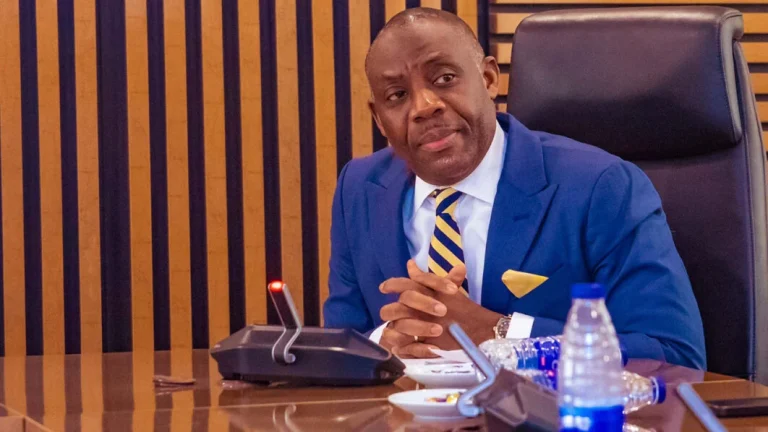
The Federal Government has introduced a virtual teaching initiative to provide pupils in underserved communities with access to qualified teachers, particularly in schools facing shortages of subject instructors.
The Minister of Education, Dr Tunji Alausa, said the programme, known as Inspire Live, would deliver live and interactive lessons remotely to pupils in primary, junior secondary and senior secondary schools across Nigeria.
Alausa disclosed this during an interview on Channels Television’s Politics Today on Tuesday night, where he outlined the government’s technology-driven plans to improve access to education and tackle manpower shortages in the sector.
Using Kaura Namoda in Zamfara State as an example, the minister explained that pupils in schools without English Language teachers could connect to live online lessons based on a centrally prepared timetable.
He said the platform would allow schools to access qualified instructors for subjects they could not teach locally, without having to wait for additional teachers to be recruited or deployed.
“Any school, say you are in Kaura Namoda today and you don’t have an English teacher, you can go online and log on when that teacher will be teaching English. You can log on to it in an interactive way,” he said.
According to Alausa, Inspire Live covers every subject in the national curriculum, including English Language, Mathematics, Social Studies, Civic Education, Nigerian History, Physics, Chemistry and Biology. Pupils can also access recorded lessons to revise topics or catch up on classes they missed.
To reduce the cost of accessing the service, the minister said the government had partnered with the Nigerian Communications Commission (NCC) to provide zero-rated data for users. The arrangement is expected to allow pupils to connect to live lessons without paying additional data charges.
“We have collaborated with the Nigerian Communications Commission. We have zero-rated data, free data, to log on to the site. You log on free, you get live teachers,” Alausa said.
The minister also acknowledged that electricity and internet access remain challenges in some communities. However, he maintained that the initiative was designed to reduce the impact of geographical barriers and shortages of teachers on pupils’ access to quality education.
Beyond supporting students, Alausa said the government was strengthening teachers’ professional capacity through digital platforms, including Ignite. He described Ignite as a cloud-based platform that provides educators with curriculum materials, lesson-planning resources and other tools to improve classroom instruction.
He also disclosed that the Federal Government was implementing a Teacher Preparedness Programme, which he said was supporting almost 50,000 teachers through continuous professional development.
“It’s been a remarkable, remarkable support for our teachers. They’re latching on to it,” he said.
The initiatives come amid persistent concerns over teacher shortages, uneven distribution of teaching personnel and overcrowded classrooms in Nigeria’s public schools. Data from the Federal Ministry of Education’s Digital Nigeria Education Management Information System, obtained in August 2026, showed that 31,827,244 learners in public schools were being taught by 592,077 teachers, representing a national learner-teacher ratio of 53.8 to one.
The figures also showed significant differences across states, with Kano recording 88 learners per teacher, Katsina 87.4 and Imo 82.2. The government says its digital interventions are intended to support both learners and teachers as it works to improve the quality and reach of education across the country.