Now Reading: Dorman Long: How a Nigerian Engineering Company Is Driving Local Industrialisation and Infrastructure Development
-
01
Dorman Long: How a Nigerian Engineering Company Is Driving Local Industrialisation and Infrastructure Development
Dorman Long: How a Nigerian Engineering Company Is Driving Local Industrialisation and Infrastructure Development

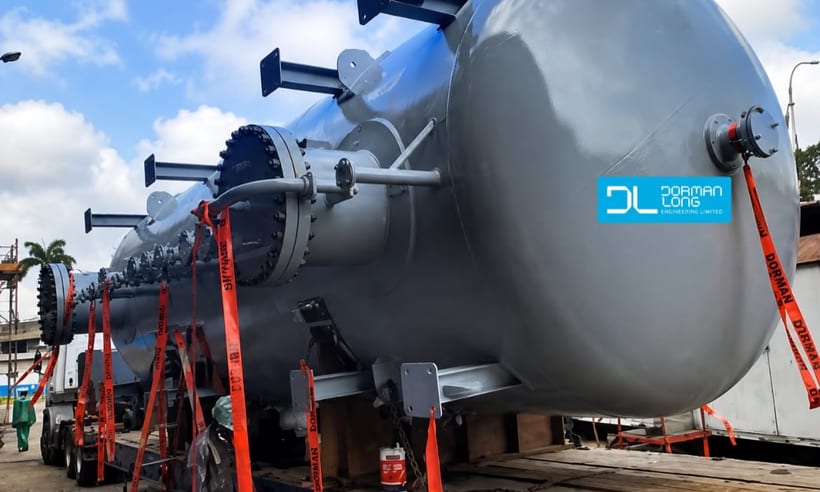
As Nigeria continues to grapple with an infrastructure deficit estimated at more than $100 billion, indigenous engineering company Dorman Long is positioning itself as a major player in the country’s drive towards industrialisation and local manufacturing.
According to the African Development Bank, Nigeria faces a significant infrastructure funding gap. Despite the oil and gas industry serving as a major source of foreign exchange, the country continues to depend heavily on foreign contractors for specialised engineering, fabrication and construction services.
This dependence means billions of dollars in potential economic value leave the country annually, limiting opportunities for local businesses, skilled workers and supporting industries to grow. However, companies such as Dorman Long are demonstrating that Nigerian firms can execute complex industrial projects to international standards.
With more than 75 years of operations in Nigeria, Dorman Long has participated in several major infrastructure and oil and gas projects. Its involvement in the sector reached a significant milestone in 2008 when Shell Nigeria Exploration and Production Company Limited (SNEPCo) awarded Dorman Long Engineering a $10 million contract, described in the report as a landmark deal for an indigenous company.
Since then, the company has executed contracts for several major operators in Nigeria, including Mobil, Addax, Agip, Nigeria LNG Limited (NLNG), Saipem and Chevron.
Local Capacity, Global Competition
Nigeria’s industrial sector continues to face a major challenge: while the country has the human resources and market demand to support a strong domestic engineering industry, many large-scale projects still rely on foreign contractors and imported components.
This limits the amount of money retained within the Nigerian economy and slows the development of local technical expertise.
Dorman Long has sought to address this gap through investments in modern fabrication facilities, digital design technology and precision equipment. Its facilities support heavy steel fabrication, offshore structures and pressure vessels designed to meet the demanding requirements of the international oil and gas industry.
The company’s workforce, comprising engineers, project managers and skilled welders, also plays a significant role in its operations, with training aimed at meeting international industry expectations.
International Standards and Project Delivery
In an industry where safety, quality and precision are essential, Dorman Long has adopted internationally recognised management systems to strengthen its project delivery.
The company maintains ISO 9001 certification for quality management and ISO 45001 certification for occupational health and safety.
These standards provide structured processes for quality control, workplace safety and operational efficiency, helping the company meet the requirements of major international oil and gas operators.
Its ability to deliver complex fabrication projects locally has also strengthened its position as an indigenous alternative to foreign engineering contractors.
Strengthening Nigeria’s Local Content Drive
Dorman Long’s operations align with Nigeria’s broader local content policy, which seeks to increase indigenous participation in the oil and gas industry and reduce dependence on imported industrial services.
Local fabrication allows more project spending to remain within the country while creating employment opportunities and supporting businesses in logistics, manufacturing and other related sectors.
The company’s agreement with SNEPCo in 2008 reflected the Federal Government’s push to promote local participation in the oil and gas industry.
More recently, Dorman Long signed a memorandum of understanding with the Nigerian Society of Engineers to support the training and development of young Nigerian engineers.
Such initiatives are expected to contribute to the country’s technical workforce and strengthen the capacity of indigenous companies to handle increasingly complex projects.
Industrialisation Beyond Oil and Gas
Nigeria’s dependence on imported industrial components exposes businesses to foreign exchange fluctuations, international supply disruptions and delays in project execution.
Expanding local engineering and manufacturing capabilities could help reduce these vulnerabilities while strengthening the country’s industrial base.
Although oil and gas remain important to Nigeria’s economy, the technical capabilities developed in the sector could also support emerging industries, including renewable energy and large-scale manufacturing.
Companies such as Dorman Long therefore have the potential to contribute beyond their traditional oil and gas operations by providing the engineering expertise and fabrication capacity required for wider economic development.
The Challenges Ahead
Despite the progress made by indigenous engineering companies, Nigeria’s industrialisation ambitions continue to face challenges, including unreliable electricity, regulatory bottlenecks and inadequate infrastructure.
Addressing these obstacles will require sustained investment, stronger government support and effective collaboration between public and private sector organisations.
For Dorman Long, the next phase will depend on continued investment in technology, workforce development and strategic partnerships.
Ultimately, Nigeria’s industrial transformation will require more than government policies and declarations. It will depend on the ability of local companies to design, manufacture and deliver the infrastructure needed to build a stronger economy.
Dorman Long’s experience offers an example of how indigenous engineering capacity could contribute to that ambition, one project at a time.