
Now Reading: Anambra Plans Recruitment of 250 Health Workers to Strengthen Primary Healthcare
-
01
Anambra Plans Recruitment of 250 Health Workers to Strengthen Primary Healthcare
Anambra Plans Recruitment of 250 Health Workers to Strengthen Primary Healthcare

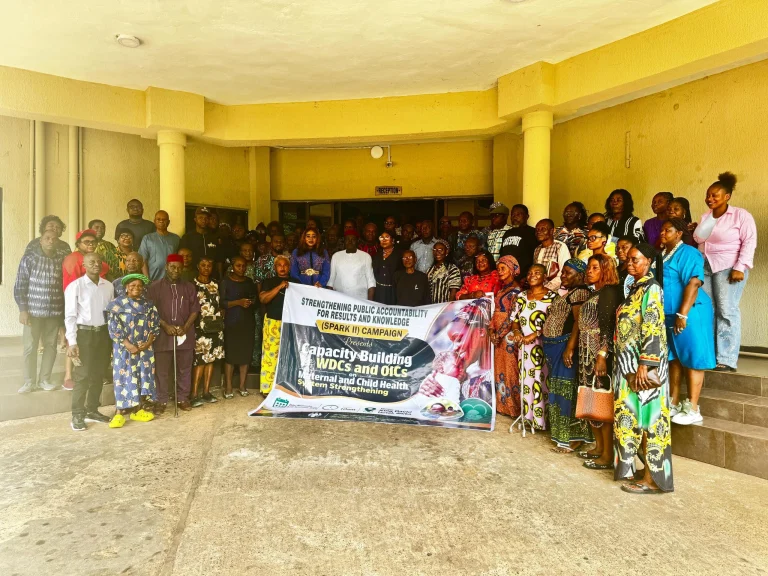
The Anambra State Government has announced plans to recruit 250 additional health workers to improve primary healthcare delivery across communities in the state.
The proposed recruitment will comprise 200 Community Health Extension Workers and 50 midwives.
The Executive Secretary of the Anambra State Primary Healthcare Development Agency, Dr Chizoba Ezeasor, disclosed this on Thursday in Awka during a capacity-building programme for members of Ward Development Committees and Officers-in-Charge of primary healthcare centres.
The programme focused on strengthening maternal and child healthcare services.
It was organised by Justice, Development and Peace Caritas, Nnewi, under the Strengthening Public Accountability for Results and Knowledge II project, supported by the International Budget Partnership.
Ezeasor said the recruitment would prioritise qualified and committed health professionals willing to reside in the communities where they would be deployed.
She warned against political interference in the selection process, stressing that only competent personnel genuinely prepared to serve should be employed.
The agency chief also raised concerns over reports of absenteeism among some Officers-in-Charge of primary healthcare facilities, urging health workers to demonstrate greater discipline and commitment to their duties.
According to her, the performance of the state’s healthcare system should not be assessed solely by the number of facilities constructed, equipment supplied or personnel employed, but by the quality of services delivered to patients.
She urged healthcare providers to ensure that pregnant women received timely attention, adequate information, privacy and respectful treatment during antenatal care, childbirth and postnatal services.
While acknowledging the state government’s investment in free antenatal care and delivery services at public health facilities, Ezeasor said such services must also be accessible, safe, timely and of acceptable quality.
She described community feedback as an important tool for identifying shortcomings in healthcare delivery, understanding patients’ experiences and ensuring that complaints resulted in corrective action.
Ezeasor assured the project’s implementing partners that the agency would work with them to incorporate the feedback system into its existing monitoring, supervision and accountability structures.
Earlier, the Executive Director of SIDEC, Ugochi Ehiaruhuike, said the SPARK II project was established to create a structured community feedback system to replace informal and poorly documented complaints about primary healthcare services.
She said the initiative would build the capacity of at least 50 Ward Development Committee members and 24 PHC Officers-in-Charge to collect, document, analyse and respond to patients’ experiences, particularly in antenatal care, childbirth and postnatal services.
According to Ehiaruhuike, the feedback mechanism would connect community members, WDCs, PHC officers, local government health authorities and the state primary healthcare agency to ensure that identified service gaps received attention.
She listed high drug costs, inadequate sanitation, poor facility maintenance and unsatisfactory patient experiences among the challenges the project seeks to address.
She added that standardised feedback forms, documentation guides and action-tracking tools would help community representatives submit complaints systematically and enable health authorities to monitor their responses.
In his welcome address, the Director of JDPC Nnewi, Reverend Father Benedict Okoro, said the programme was designed to strengthen community structures and healthcare providers to improve maternal and child health outcomes.
Although he acknowledged progress in reducing maternal mortality in Anambra, Okoro called for sustained efforts to prevent avoidable deaths among women and children.
The Executive Director of Civil Rights Concern, Okay Onyeka, described maternal healthcare as a shared responsibility and urged stakeholders to strengthen efforts to eliminate preventable maternal and child deaths.
Also speaking, the member representing Aguata II Constituency in the Anambra State House of Assembly and Chairman of the House Committee on Health, Tony Muobike, described primary healthcare as the foundation of an effective healthcare system.
He commended the state government’s investment in free antenatal care and delivery services but called for stronger oversight to ensure the interventions produced better health outcomes.
Muobike also expressed concern over alleged absenteeism among some PHC officers, claiming that certain personnel opened their facilities before leaving to attend to private businesses, while others reportedly delegated their duties to volunteers.
He urged health workers to demonstrate greater discipline and accountability, adding that the legislature would continue to support improved service delivery through its oversight responsibilities.
The SPARK II Programme Manager at JDPC Nnewi, Onyekachi Ololo, stressed the importance of collaboration between Ward Development Committees and PHC officers in preparing facility business plans based on identified service gaps and available resources.
He observed that some WDCs had become inactive despite retaining their positions and recommended replacing members who were unwilling or unable to carry out their responsibilities.
The workshop featured sessions on patient feedback tools, respectful and patient-centred care, documentation of maternal health experiences, data quality, feedback analysis and the identification of systemic challenges in primary healthcare delivery.
The organisers said the project would introduce a quarterly feedback and reporting system through which complaints would be documented, referred to relevant authorities, addressed and monitored.
They added that unresolved complaints would be escalated to local government health authorities and the Anambra State Primary Healthcare Development Agency.
The organisers expressed optimism that the initiative would strengthen community participation and institutional accountability while ensuring that patients’ experiences informed improvements in maternal and child healthcare across the state.