Now Reading: Nigeria’s Farm Output Rises 1.84% to 29.39 Million Tonnes in 2026
-
01
Nigeria’s Farm Output Rises 1.84% to 29.39 Million Tonnes in 2026
Nigeria’s Farm Output Rises 1.84% to 29.39 Million Tonnes in 2026


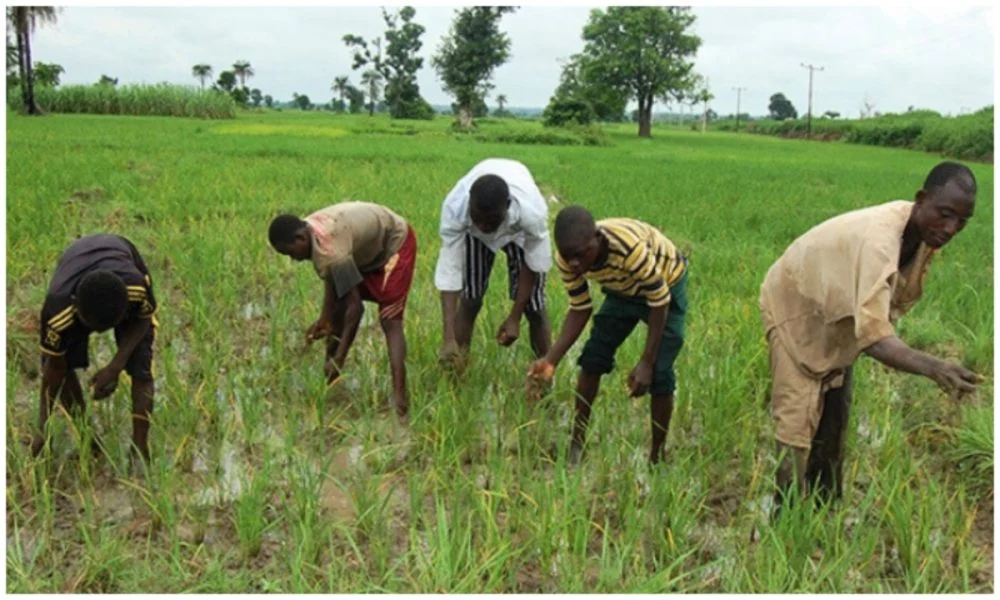
Nigeria’s agricultural output increased by 1.84 per cent to 29.39 million tonnes in 2026, according to the 2026 Food Survey and Wet Season Survey released by the Federal Ministry of Agriculture and Food Security.
The report, presented on Wednesday, showed that production increased for 14 of the 17 major food crops surveyed, indicating modest growth in the country’s agricultural sector despite persistent challenges.
However, severe flooding was reported in seven states during the season, threatening farmlands and disrupting planting and harvesting activities in affected communities.
The survey also highlighted a shortage of agricultural extension services, with each active extension agent serving an average of 4,982 farm families nationwide.
In its state-by-state breakdown, Kaduna State recorded the highest production of maize and ginger, while Niger State led in rice and yam production.
Kano State topped production of sorghum and onion, while Yobe State recorded the highest millet output. Gombe State led in cowpea production.
Benue State emerged as the leading producer of soya bean, sesame and cassava, while Bauchi State recorded the highest groundnut production.
Ebonyi State led in plantain production, while Katsina State topped cotton production.
Despite the overall increase in agricultural output, the report showed that ginger and millet production declined during the period.
The findings point to continued growth in several crop categories, but the impact of flooding and limited access to agricultural extension services remains a concern for farmers and food security planners.
The report highlights the need to strengthen agricultural support systems, particularly extension services, while improving measures to protect farmlands and farming communities against climate-related disruptions.