Now Reading: Cheryl Grimmer Cold Case: Man Confessed to Killing Missing Toddler — But Australian Law Still Shields Him
-
01
Cheryl Grimmer Cold Case: Man Confessed to Killing Missing Toddler — But Australian Law Still Shields Him
Cheryl Grimmer Cold Case: Man Confessed to Killing Missing Toddler — But Australian Law Still Shields Him

More than half a century after three-year-old Cheryl Grimmer vanished from an Australian beach, her family is still waiting for justice — despite a chilling confession made 55 years ago.
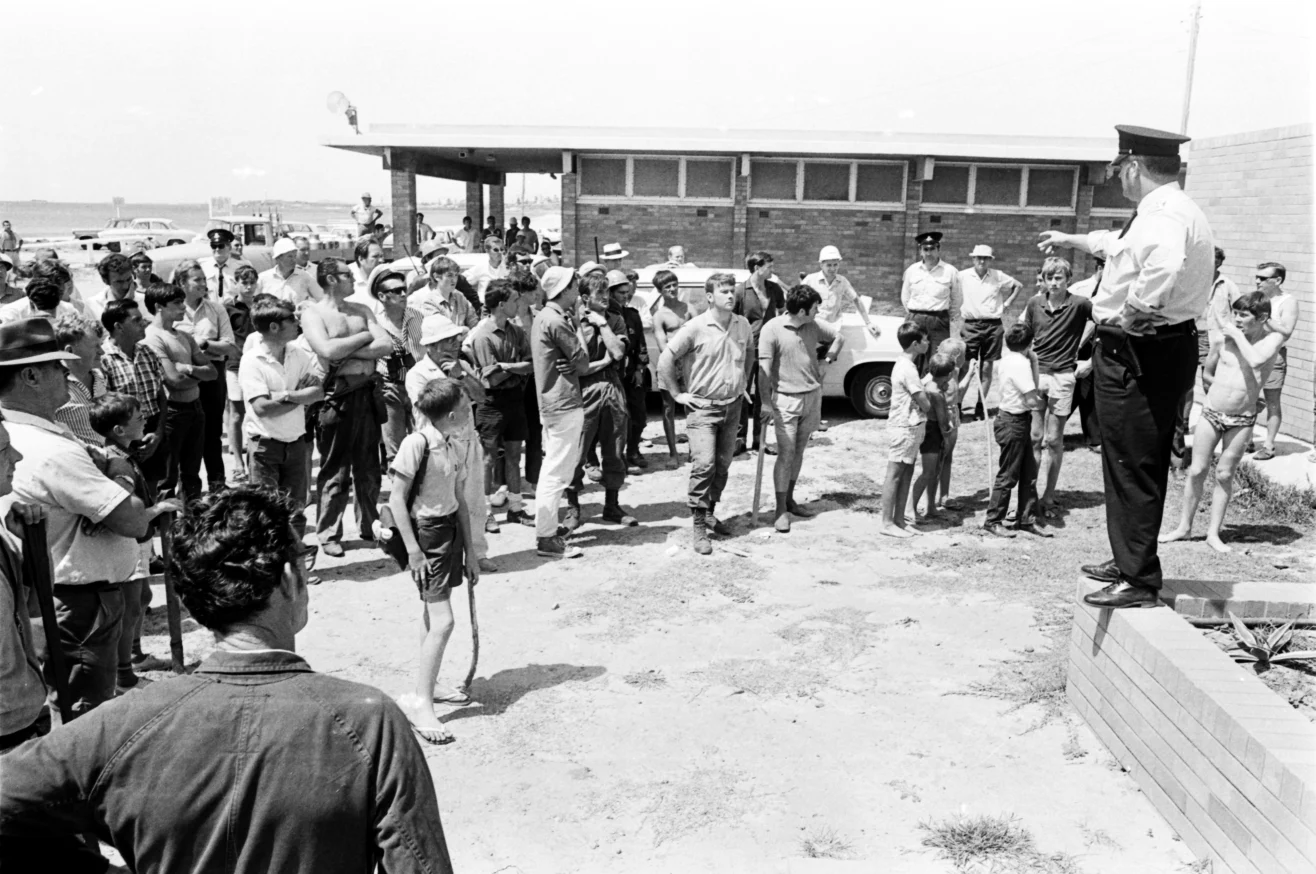
Cheryl disappeared on January 15, 1970, during a family outing to Fairy Meadow Beach, near Wollongong, south of Sydney. What began as a summer’s day trip ended in a mystery that has haunted Australia for decades.
Her body has never been found.
Today, a man who confessed to killing her remains free — protected by laws that prevent his name from being published because he was a minor at the time of the alleged crime.
The Day Cheryl Vanished
Cheryl had recently moved to Australia from the United Kingdom with her parents and three brothers. On that hot January afternoon, strong winds swept across the beach, prompting her mother, Carole Grimmer, to pack up.
Cheryl’s eldest brother, Ricki, then just seven years old, led his siblings to the beach showers to rinse off. He remembers urging his little sister to leave the women’s shower block. She teased him from inside, laughing.
When he returned to the beach with his brothers, expecting his mother to collect her, Cheryl was gone.
By shortly after 2 p.m., lifeguards had been alerted. Within hours, police and volunteers — reportedly close to 1,000 people — were scouring sand dunes, creeks and scrubland.
Newspaper reports described Cheryl as 3 feet 9 inches tall, with blonde hair cut square at the back and a full fringe, wearing a royal blue swimsuit.
She was never seen again.
A Confession — And No Conviction
Fifteen months after Cheryl’s disappearance, a 17-year-old gave police a confession.
“I did that to the little girl; I didn’t mean to do it,” he reportedly told officers in 1971.
Despite the admission, he was not charged at the time.
Police reopened the case decades later. In 2017, detectives reinvestigating the cold case formally charged the same man with murder. But in 2019, the prosecution collapsed and the charge was discontinued.
Under Australian law, his identity cannot be published because he was under 18 at the time of the alleged offence. Publicly, he became known as “Mercury,” an alias assigned by police after linking him to the confession.
He denies responsibility.
When contacted recently, the man confirmed his identity but declined to comment further about Cheryl’s case.
Legal Barriers and Public Outrage
Cheryl’s brothers, now adults, say the pain has never faded. For decades, the family barely spoke about her disappearance, consumed by grief and unanswered questions.
Paul Grimmer, who was four when his sister vanished, says the family believes the man known as Mercury is responsible.
“We want him to come forward and either plead guilty, or explain to us, why did he confess?” he said.
In recent months, a local lawmaker used parliamentary privilege to publicly reveal the suspect’s real name, his alleged confession, and the alias he has used for years — a move that reignited national debate over juvenile anonymity laws in historic cases.
The case has also raised broader questions about how cold cases are handled when suspects were minors at the time of the alleged crime.
Early Leads and Lingering Questions
In the days following Cheryl’s disappearance, witnesses reported seeing a “small man in a floppy hat” carrying a girl matching her description away from the beach.
A ransom note demanding 10,000 Australian dollars for her return was later sent to police, threatening another child would be abducted. Investigators suspected the letter was a hoax, possibly written by a teenager.
But no ransom was paid. No body was found. And no one has been convicted.
More than five decades later, the question that has haunted one family — and a nation — remains unanswered:
Where is Cheryl Grimmer?