Now Reading: China Cracks Down on Japanese Pop Culture as Diplomatic Tensions Surge Over Taiwan
-
01
China Cracks Down on Japanese Pop Culture as Diplomatic Tensions Surge Over Taiwan
China Cracks Down on Japanese Pop Culture as Diplomatic Tensions Surge Over Taiwan

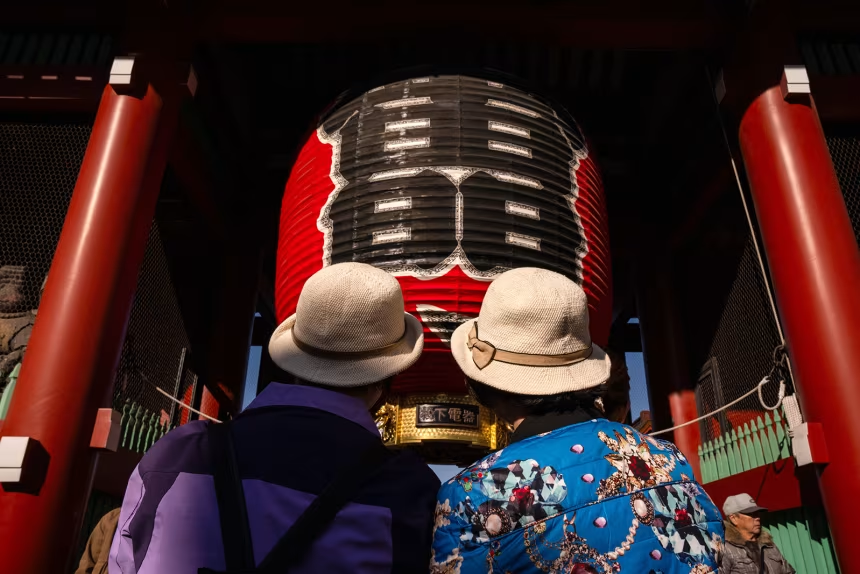
A wave of cancelled concerts and cultural events across China has left Japanese artists and their fans reeling, deepening strains in a region already on edge after Tokyo warned it could use military force if Beijing attempted to seize Taiwan.
What was meant to be a long-awaited night of music for Beijing resident Lily Chen turned into an abrupt disappointment. The 35-year-old had waited in the cold for the doors to open for J-pop singer Kokia’s concert — but they never did. Moments later, fans were told the show had been cancelled.
Organisers blamed “equipment failure,” but many attendees suspect the real cause lies in the escalating diplomatic row between China and Japan after Japanese Prime Minister Sanae Takaichi suggested Tokyo could respond militarily to any Chinese attempt to take Taiwan — a move Beijing considers a sovereign “red line.”
Dozens of Japanese Shows Cancelled Nationwide
Kokia’s cancelled performance is far from isolated. A CNN review of public statements shows that events featuring at least 30 Japanese performers — including J-pop icon Ayumi Hamasaki — have been abruptly halted in cities from Beijing to Shanghai.
Hamasaki issued an apology to fans on Instagram after her Shanghai concert was called off at short notice, sharing photos of herself and her dancers standing before an empty arena. She revealed that key staff were told only a day earlier that the show could not go ahead.
Separate event organisers told CNN that police appeared hours before their concerts, issuing last-minute conditions impossible to meet or cancelling the events outright without explanation.
Onstage Shutdown Sparks Outrage
One of the most dramatic cancellations involved Maki Otsuki, the singer behind the beloved One Piece anime theme song. Her Shanghai performance was stopped “abruptly” due to “force majeure,” her official website announced. Viral footage showed Otsuki stunned as staff removed her microphone mid-song and escorted her offstage.
The incident drew sharp criticism on Chinese social media, where users slammed the manner of the shutdown as “rude” and unprofessional. CNN has sought comment from event organisers and the venue.
Cultural Fallout Mirrors Political Tensions
The cancellations come as nationalist rhetoric intensifies on both sides of the China–Japan divide. Japanese cultural exports — from anime to J-pop — have long enjoyed a huge following in mainland China, but the latest diplomatic clash appears to be putting that fandom to the test.
Analysts warn that if tensions continue to rise, Japanese entertainment events may face a prolonged freeze — leaving fans and artists caught in the geopolitical crossfire.