
Now Reading: Early Childhood STEM Education Crucial to Closing Nigeria’s Gender Gap, Experts Warn
-
01
Early Childhood STEM Education Crucial to Closing Nigeria’s Gender Gap, Experts Warn
Early Childhood STEM Education Crucial to Closing Nigeria’s Gender Gap, Experts Warn

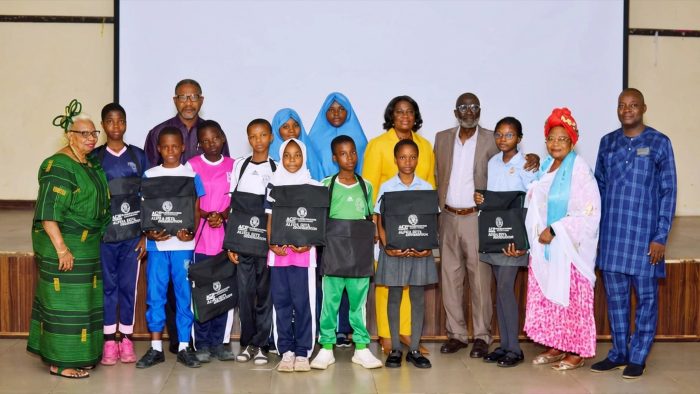
Education experts have emphasised that addressing Nigeria’s widening gender gap in Science, Technology, Engineering, and Mathematics (STEM) requires reforms starting from early childhood education.
The warning came during a joint celebration of the International Day of Education and the International Day of Women and Girls in Science in Lagos. Organised by the Association for Childhood Education Practitioners (ACEP), the event carried the theme: “From Vision to Impact: Redefining STEM by Closing the Gender Gap.”
Foundation of STEM Success Starts Young
ACEP National President, Haija Islamiat Oshodi, stressed that Nigeria’s long-term development remains fragile unless early learning structures are strengthened. She noted that the STEM gender gap begins in childhood, not at university, and highlighted how limited spaces in tertiary institutions force students, particularly girls, into courses they did not choose.
“Girls are not less capable; opportunity is the real barrier. Encouraging them early to see themselves as innovators and problem-solvers will reduce unemployment and underdevelopment,” Oshodi said.
Human Capital Over Funding
Economic and development specialist Dr. Yinka Masha described Nigeria’s education system as below global standards, citing poor learning outcomes, low enrolment, and a high number of out-of-school children. She stressed that human capital, not financial investment alone, drives real development, urging governments to modernise curricula, improve accountability, and ensure safe learning environments.
Redirecting Girls into STEM
Keynote speaker Prof. Kayode Oguntuashe, former University of Lagos don, called for deliberate policies to attract girls into STEM fields to prepare Nigeria for the digital economy.
“Without intentional action, Nigeria risks becoming a consumer nation in a world dominated by AI and technology,” he warned.
Government and Teacher Roles
Dr. Hakeem Babatunde Shittu, Chairman of the Lagos State Universal Basic Education Board (LASUBEB), reaffirmed Lagos State’s commitment to inclusive science and technology education for girls, urging stakeholders to break stereotypes and provide equal opportunities. Teachers, according to John Raphael of Maryland Nursery and Primary Inclusive School, must adopt mindsets that discover and nurture every child’s potential, while collaborating with government and NGOs to reach children outside formal systems.
Innovation at School Level
The event highlighted practical results of early STEM exposure. Abdulkabir Kareemah, an SS3 student at Al-Hakeem International School, showcased a solar-powered robotic vacuum cleaner and a motion-sensor security light, demonstrating that innovation can begin as early as secondary school.
Students also participated in cultural performances, project presentations, and received educational materials donated by ACEP, Alpha Zenta Organisation, and partner organisations.