Now Reading: Electoral Act Amendment: Senate Proceedings Stall Over 2027 Election Timetable Dispute
-
01
Electoral Act Amendment: Senate Proceedings Stall Over 2027 Election Timetable Dispute
Electoral Act Amendment: Senate Proceedings Stall Over 2027 Election Timetable Dispute

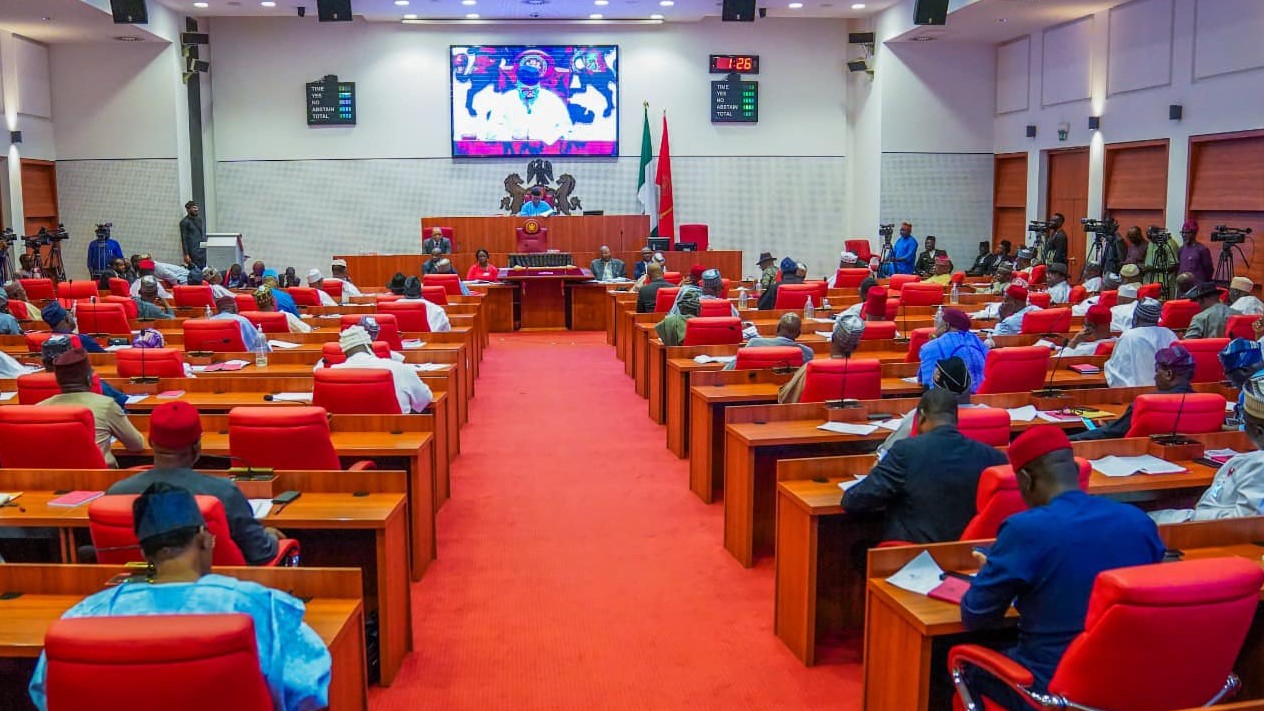
Tensions flared in the Nigerian Senate on Tuesday as debate over the proposed Electoral Act 2022 (Repeal and Re-Enactment) Bill 2026 was abruptly stalled following sharp disagreements about the timetable for the 2027 general elections.
Lawmakers had commenced clause-by-clause consideration of the bill after adopting a motion to rescind its earlier passage. The move effectively returned the legislation to the Committee of the Whole for fresh deliberation.
Motion to Rescind Sparks Fresh Debate
The motion to reverse the earlier amendment was moved under Order 52(6) of the Senate Standing Orders by Senate Leader Opeyemi Bamidele and was formally seconded on the floor.
Bamidele told colleagues that concerns had emerged following the announcement by the Independent National Electoral Commission (INEC), which fixed the 2027 general elections for February 2027 after consultations with the leadership of the National Assembly.
According to him, stakeholders warned that the newly passed amendments could create legal inconsistencies, particularly regarding the provision that elections must be scheduled no later than 360 days before the expiration of tenure.
Clause 60 Triggers Heated Exchange
The Senate, presided over by Godswill Akpabio, had begun reviewing the bill clause by clause when proceedings were interrupted at Clause 60.
Senator Enyinnaya Abaribe (ADC, Abia South) raised a point of order, drawing immediate attention and prompting murmurs across the chamber.
Lawmakers were seen engaging in side consultations and approaching the Senate President’s desk before the session abruptly shifted into a closed-door meeting.
Ramadan Timing Raises Sensitivities
At the heart of the dispute is Clause 28 of the amended bill, which prescribes a 360-day notice requirement for elections.
Bamidele noted that a strict application of this provision could push the scheduling of the 2027 Presidential and National Assembly elections into the Ramadan period — a development likely to spark political and religious sensitivities.
Before rescinding the earlier amendment, senators had already expressed reservations about both the timing of the 2027 polls and technical inconsistencies within the proposed legislation.
Uncertainty Over Electoral Framework
The temporary suspension of plenary underscores the complexity of aligning legislative amendments with INEC’s election timetable.
With the 2027 general elections approaching, lawmakers now face the delicate task of reconciling constitutional timelines, religious considerations and administrative feasibility.
Further deliberations are expected once the Senate reconvenes from its closed session.