Now Reading: Ethiopia’s Hayli Gubbi Volcano Erupts After 10,000 Years, Ash Clouds Disrupt Air Travel Across Asia
-
01
Ethiopia’s Hayli Gubbi Volcano Erupts After 10,000 Years, Ash Clouds Disrupt Air Travel Across Asia
Ethiopia’s Hayli Gubbi Volcano Erupts After 10,000 Years, Ash Clouds Disrupt Air Travel Across Asia

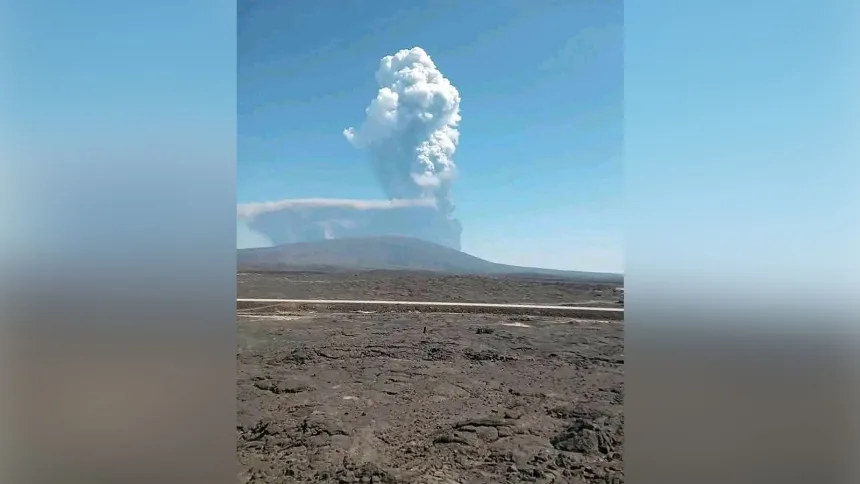
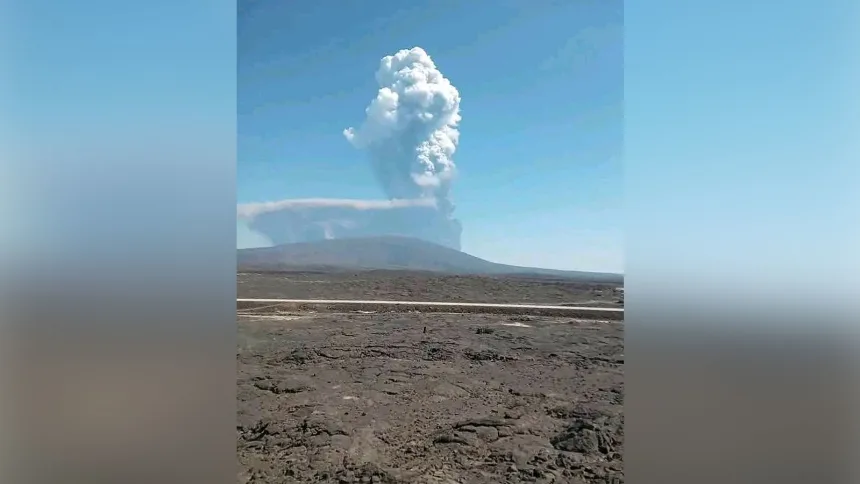
A volcano in Ethiopia erupted for the first known time in 10,000 years, sending towering ash plumes across the sky and affecting air traffic thousands of miles away.
The long-dormant Hayli Gubbi volcano, located in the Afar region of northeastern Ethiopia, came to life on Sunday, blanketing nearby villages in ash and creating challenges for local farmers and livestock herders.
Local authorities reported no casualties, but the eruption threatens grazing lands vital for the region’s pastoral communities, according to Mohammed Seid, a regional administrator. Residents described a terrifying blast at the moment of the eruption.
“It felt like a sudden bomb had been thrown with smoke and ash,” said local resident Ahmed Abdela.
NASA satellite imagery captured the eruption, showing ash plumes drifting across the Red Sea. Volcanic clouds extended over Yemen, Oman, Pakistan, and India, prompting warnings from meteorological authorities.
The Toulouse Volcanic Ash Advisory Center tracked the ash movement, while Pakistan’s Meteorological Department issued alerts as the clouds entered its airspace late Monday. In India, Air India cancelled several domestic and international flights for precautionary checks on planes that had flown over affected regions. Delhi, already grappling with severe air pollution, is not expected to face significant impact as the ash remains at high altitude, the Indian Meteorological Department said.
Hayli Gubbi, rising approximately 500 meters, is the southernmost volcano of Ethiopia’s Erta Ale Range, situated in an area of intense geological activity where two tectonic plates converge. Experts say such volcanic eruptions in the Afar region are rare but can have far-reaching consequences for the environment and regional air traffic.
“The eruption of a long-dormant volcano like Hayli Gubbi is a stark reminder of the geological volatility in this region,” noted a local geologist.
Authorities continue to monitor the volcano, and residents in surrounding communities have been advised to stay indoors and protect livestock and crops from falling ash.