Now Reading: Former South Korean President Yoon Suk Yeol Sentenced to Life for Leading Insurrection Amid Martial Law Crisis
-
01
Former South Korean President Yoon Suk Yeol Sentenced to Life for Leading Insurrection Amid Martial Law Crisis
Former South Korean President Yoon Suk Yeol Sentenced to Life for Leading Insurrection Amid Martial Law Crisis

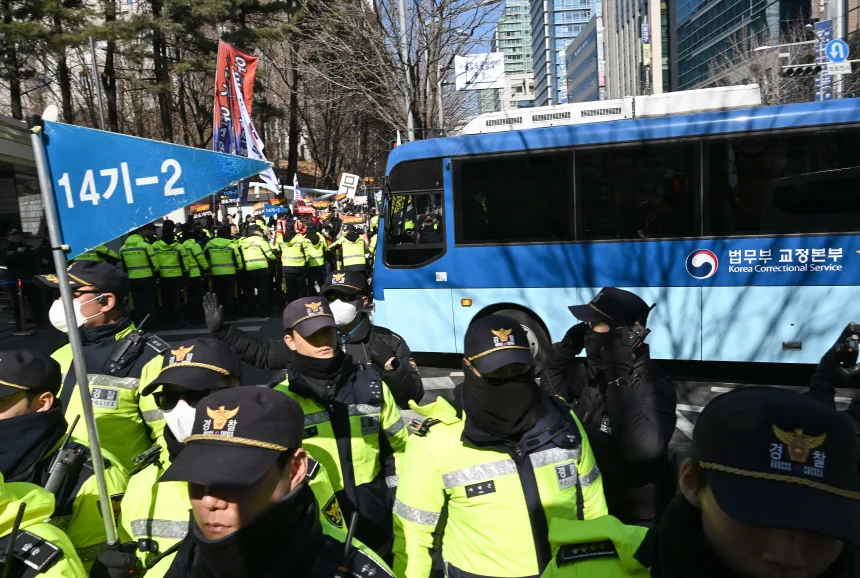
Seoul, South Korea – Former President Yoon Suk Yeol was sentenced to life imprisonment Thursday after a South Korean court found him guilty of orchestrating an insurrection during his brief and controversial imposition of martial law last December, an act that plunged the nation into political turmoil and tested the resilience of its democratic institutions.
Martial Law Sparks Chaos and Revives Authoritarian Fears
On December 3, 2024, Yoon, 65, declared martial law in a late-night televised address, claiming “anti-state forces” within opposition parties were collaborating with North Korea. Soldiers, transported by helicopter, attempted to storm the National Assembly, but lawmakers and staff barricaded the chamber, preventing access amid chaotic scenes broadcast live nationwide.
The swift reversal of martial law within six hours, following a unanimous parliamentary vote, averted a constitutional crisis, but the event deeply shook public confidence in South Korea’s democratic stability.
Court Rules Yoon Intentionally Paralyzed National Assembly
Presiding Judge Ji Gwi-yeon ruled that Yoon’s actions—dispatching armed soldiers and attempting to arrest political opponents, including opposition leaders and his own party’s top official—constituted insurrection.
Former Defense Minister Kim Yong-hyun, responsible for ordering the military enforcement, received a 30-year sentence, while four other ex-military and police officials were jailed for 3 to 18 years.
Public and Political Reactions
Outside Seoul Central District Court, crowds of Yoon supporters watched proceedings on large screens. Many citizens who had rushed to the Assembly last December praised the verdict. Song Hwa, 35, said it was an “extremely important decision that will send a powerful message to the public.”
Cho Kuk, leader of the liberal-leaning Rebuilding Korea Party, described Yoon as having “tried to destroy South Korea’s democracy” and emphasized that the people hold the power to defend democratic institutions.
Yoon’s Defense and Potential Appeal
Yoon’s legal team denounced procedural irregularities and argued the verdict lacked consistency. The former prosecutor maintained that martial law was intended to address political gridlock, not to arrest lawmakers. “The National Assembly brought about the national crisis and there was no other way but to awaken the people,” he said.
He denied the insurrection charge, calling it “a delusion and a work of fiction,” insisting that no serious casualties occurred, no heavy weaponry was deployed, and there was no intent to arrest legislators. Yoon retains the right to appeal the life sentence.
Implications for South Korea’s Democracy
South Korea, a vibrant democracy since the late 1980s, has experienced peaceful transfers of power, free elections, and robust civic participation. Yet, political polarization remains intense, with past presidents frequently facing impeachment, prosecution, and criminal investigations. Yoon’s conviction marks a historic moment in the country’s ongoing struggle to maintain democratic accountability.