Now Reading: INEC Registers Two New Political Parties Ahead of 2027, Warns of Rising Leadership Crises
-
01
INEC Registers Two New Political Parties Ahead of 2027, Warns of Rising Leadership Crises
INEC Registers Two New Political Parties Ahead of 2027, Warns of Rising Leadership Crises

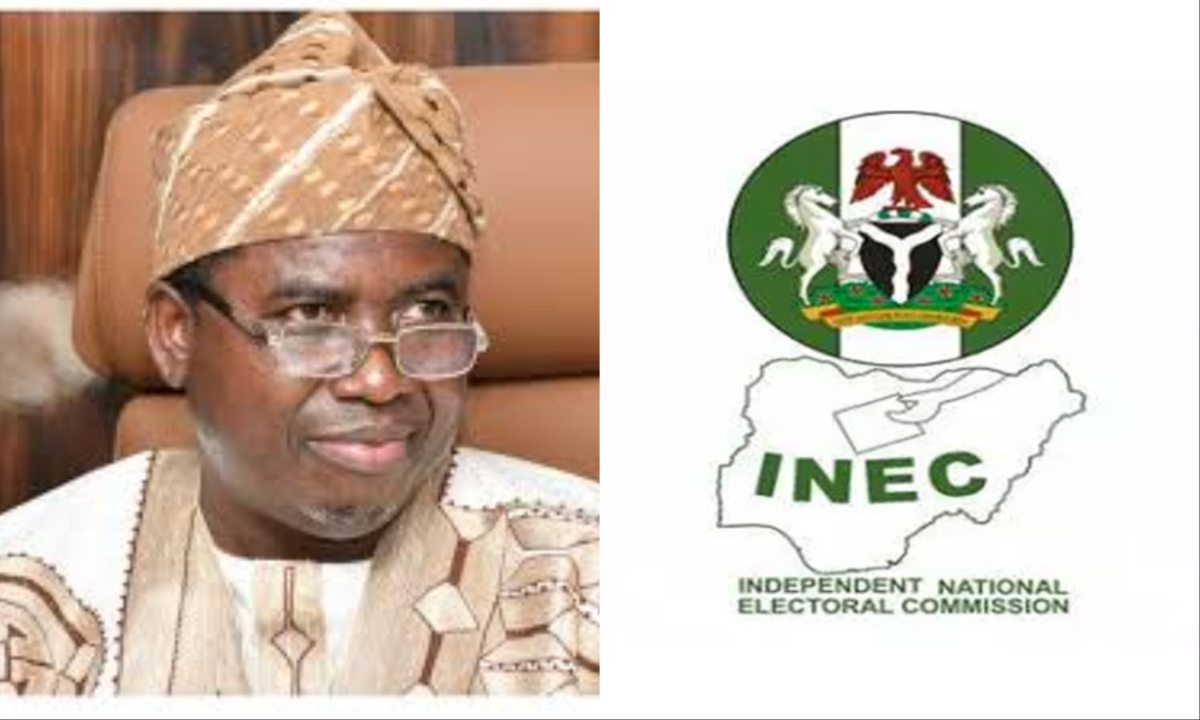
Nigeria’s electoral umpire, the Independent National Electoral Commission (INEC), has approved the registration of two new political parties as preparations gather momentum for the 2027 General Election, while issuing a stern warning over deepening leadership crises within existing parties.
The newly registered parties are the Democratic Leadership Alliance (DLA) and the Nigeria Democratic Congress (NDC), bringing the total number of recognised political parties in the country to 21.
INEC Chairman, Prof. Joash Amupitan, SAN, announced the development on Thursday at the Commission’s first regular consultative meeting with political parties, describing the expansion as part of efforts to widen Nigeria’s democratic space.
According to the Commission, the DLA secured registration after meeting all statutory requirements and passing a rigorous verification process, while the NDC was registered in compliance with a Federal High Court order.
Despite welcoming the new entrants, Prof. Amupitan expressed concern over what he called the growing culture of internal disputes within political parties, warning that recurring leadership battles pose a threat to democratic stability.
“Our collective commitment to the integrity of the electoral process is being challenged by the unfortunate and increasingly frequent leadership crises within political parties,” he said.
He noted that many of these disputes end up before the courts, placing pressure on the judiciary and diverting INEC from its constitutional responsibilities.
“These disputes often spill into needless litigations that tax the judicial system and divert the Commission from its core mandate,” Amupitan added.
The INEC chairman said the Commission is frequently drawn into party conflicts, a situation he warned undermines voter mobilisation and public confidence.
“Each litigation consumes time and resources and distracts from the important work of mobilising voters. Sometimes, one wonders whether it is sustainable to continue registering or retaining parties plagued by persistent leadership struggles,” he said.
Amupitan also expressed concern over Nigeria’s declining voter participation, describing the trend as alarming.
He revealed that voter turnout in presidential elections has steadily dropped from 53.7% in 2011 to 43.6% in 2015, fell to 34.7% in 2019, and reached a historic low of 26.7% in the 2023 General Election.
“Technology alone cannot cure voter apathy,” he said. “Citizens’ trust is eroded by the belief that their votes do not count or that democracy delivers little value. This narrative must change.”
INEC reaffirmed its readiness for the Federal Capital Territory (FCT) Area Council Elections scheduled for February 21, 2026, with 1,680,315 registered voters expected to cast ballots across 2,822 polling units.
The Commission also confirmed ongoing preparations for the Ekiti State Governorship Election on June 20, 2026, and the Osun State Governorship Election slated for August 8, 2026.
Looking ahead to 2027, INEC announced plans for a nationwide Voter Revalidation Exercise to clean up the voters’ register of 93.4 million entries, removing duplicates and deceased persons to strengthen electoral credibility.
Responding on behalf of political parties, Inter-Party Advisory Council (IPAC) National Chairman, Dr Yusuf Mamman Dantalle, urged INEC to remain neutral and strictly adhere to party constitutions to avoid accusations of bias.
He also renewed calls for far-reaching electoral reforms, including the abolition of State Independent Electoral Commissions (SIECs).
“IPAC reiterates its position that SIECs should be scrapped and INEC empowered to conduct all elections nationwide, given its institutional expertise,” Dantalle said.
He further advocated for mandatory real-time transmission of election results to the IReV portal and proposed that all elections be held on the same day to reduce costs, curb bandwagon effects and address voter fatigue.