Now Reading: Lagos Sanitation Exercise Returns: Sanwo-Olu’s Plan Sparks Legal Debate, Public Backlash Ahead of April Relaunch
-
01
Lagos Sanitation Exercise Returns: Sanwo-Olu’s Plan Sparks Legal Debate, Public Backlash Ahead of April Relaunch
Lagos Sanitation Exercise Returns: Sanwo-Olu’s Plan Sparks Legal Debate, Public Backlash Ahead of April Relaunch

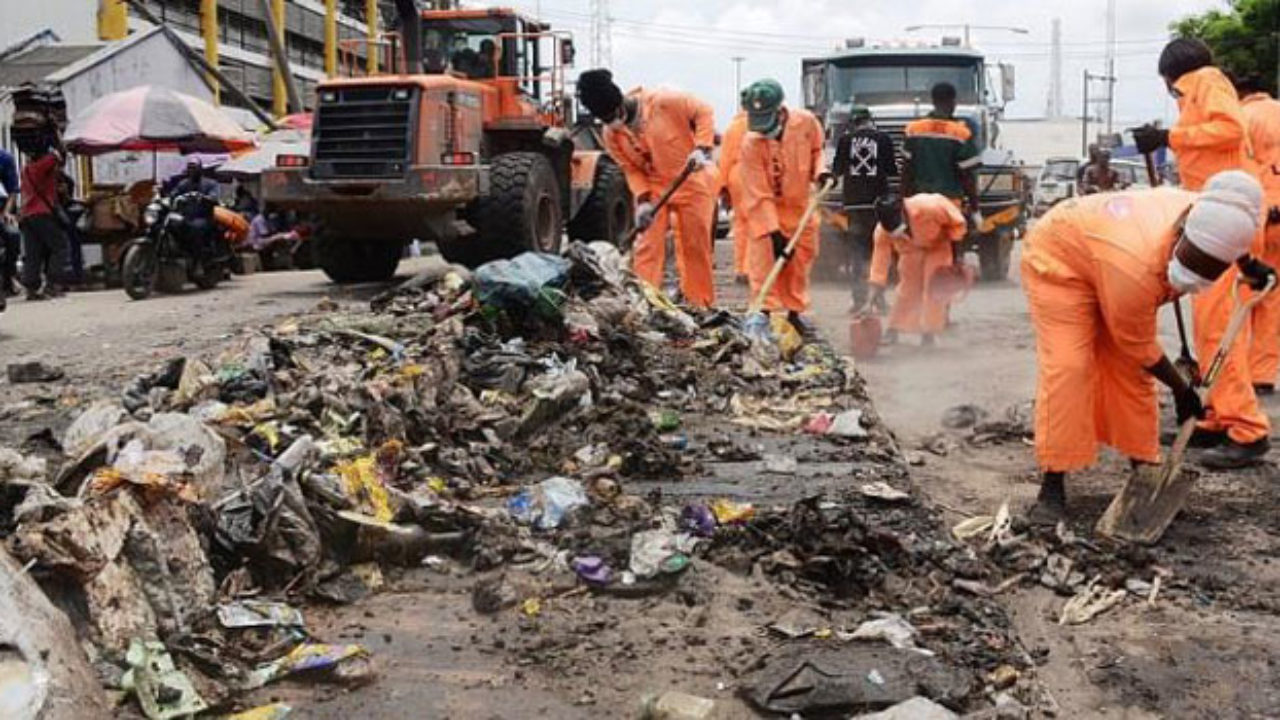
Mixed reactions trail reintroduction of monthly environmental sanitation as residents, lawyers question enforcement and legality
A fresh wave of debate has greeted the Lagos State Government’s decision to revive the monthly environmental sanitation exercise, with supporters praising the move and critics raising concerns over legality, enforcement, and economic disruption.
Governor Babajide Sanwo-Olu confirmed that the exercise will resume on Saturday, April 25, 2026, marking a return to a policy suspended nearly a decade ago following a landmark court ruling.
Authorities say the revamped sanitation programme will differ from its predecessor, shifting away from strict movement restrictions and focusing instead on public cooperation, awareness, and structured waste management.
Officials insist the initiative is essential to tackling persistent environmental challenges in Lagos, including poor waste disposal and flooding, while promoting a culture of civic responsibility.
“The exercise is not just about cleaning streets; it’s about instilling a culture of cleanliness,” said Adetayo Akerele, Chairman of the Task Force on Environmental Sanitation and Related Offences, who stressed that enforcement would be balanced with support for residents.
A policy shadowed by legal history
The sanitation exercise was halted in November 2016 after a Court of Appeal judgment declared compulsory lockdowns during the exercise unconstitutional.
The ruling, delivered in the case involving Faith Okafor, held that restricting movement between designated hours violated fundamental rights to personal liberty and freedom of movement. It further stated that directives issued by a governor do not carry the force of law to justify arrests or penalties.
Former governor Akinwunmi Ambode subsequently scrapped the mandatory aspect of the exercise, leaving sanitation efforts largely voluntary.
The latest move by the state government appears to acknowledge those legal boundaries, with officials emphasizing that the reintroduced exercise will not rely on blanket movement restrictions. Instead, enforcement will run between 6:30 a.m. and 8:30 a.m., supported by community engagement and waste collection systems.
Residents divided over impact
Public reaction has been sharply divided, reflecting the complexity of balancing environmental responsibility with economic realities in a fast-paced city.
Supporters argue that the policy is long overdue. Raymond Olugbenga, a trader in Ijora Badia, described the move as necessary to restore environmental order and reduce flood risks.
“Reintroducing the exercise will encourage people to take responsibility for their surroundings. A cleaner Lagos benefits everyone,” he said, adding that some level of enforcement may be required to ensure compliance.
Others draw parallels with past initiatives such as the War Against Indiscipline, noting that consistency and education will be key to success.
Critics, however, fear potential abuse and disruption to livelihoods. Christopher Chukwuka, a small business owner in Surulere, expressed concern that enforcement agents could exploit the exercise.
“This could become another avenue for fines or interference with businesses if not properly managed,” he warned.
Olawole Adeyemi, a Jakande Estate resident, questioned the practicality of the policy without improvements in waste collection.
“People already clean their surroundings, but if waste isn’t evacuated promptly, the exercise becomes symbolic,” he said.
Legal experts urge caution
Prominent human rights lawyer Femi Falana (SAN) warned that any attempt to reintroduce compulsory restrictions could face legal challenges.
“Past rulings are clear—movement restrictions during sanitation exercises are unconstitutional. Enforcement must respect citizens’ rights while encouraging voluntary compliance,” he said.
Legal analyst Ige Asemudara noted that the government appears to be treading carefully by removing strict lockdown measures, but stressed that enforcement must remain within constitutional limits.
A test for Lagos’ waste management system
Beyond the legal and social debate, analysts say the success of the exercise will depend largely on the efficiency of waste management systems.
The Lagos Waste Management Authority (LAWMA) has faced criticism over delayed waste evacuation and inconsistent service delivery, raising questions about the sustainability of the initiative.
Environmental advocate Akintayo Omotosho argued that without systemic improvements, the exercise risks becoming symbolic.
“Collected waste must be removed promptly. Community involvement and proper coordination are essential if this is to achieve lasting impact,” he said.
As the April 25 rollout approaches, the reintroduction of the sanitation exercise is shaping up to be more than a routine policy shift—it is a critical test of governance, civic responsibility, and the ability of Africa’s largest city to manage its growing environmental challenges.