Now Reading: Mexico Faces Security Storm After ‘El Mencho’ Killing Ahead of 2026 World Cup
-
01
Mexico Faces Security Storm After ‘El Mencho’ Killing Ahead of 2026 World Cup
Mexico Faces Security Storm After ‘El Mencho’ Killing Ahead of 2026 World Cup

Mexico City, Mexico — The killing of Nemesio “El Mencho” Oseguera, leader of the Jalisco New Generation Cartel, has ignited fears of a surge in cartel violence just months before Mexico hosts the FIFA World Cup, raising concerns about public safety and the nation’s readiness for the global sporting event.
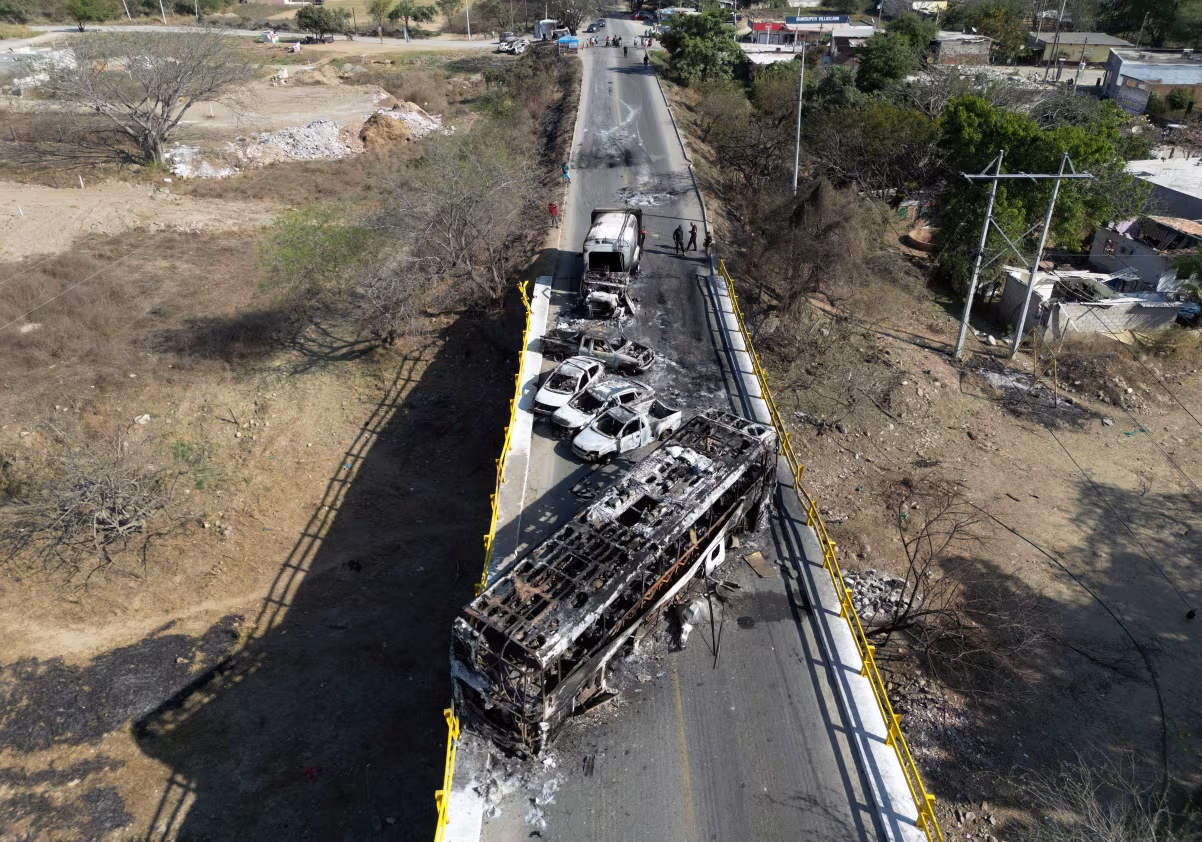
El Mencho, Mexico’s most-wanted drug lord, was killed by the military on February 23, prompting days of violent retaliation across Jalisco and other states. Burned buses, torched businesses, and armed clashes marked the immediate aftermath, prompting the US State Department to issue shelter-in-place advisories for travelers.
Jalisco: Epicenter of Violence
The violence, concentrated in Jalisco — home to the city of Guadalajara and key World Cup venues — has left authorities bracing for potential power struggles within the cartel. Security Secretary Omar García Harfuch warned that authorities are closely monitoring possible succession disputes among the cartel’s remaining commanders, including Audias Flores (“El Jardinero”), Hugo Mendoza Gaytán (“El Sapo”), Juan Carlos Valencia González (“El Pelón”), and Julio Alberto Castillo Rodríguez (“El Chorro”).
Analysts warn that if cartel factions perceive government operations as a threat, they may escalate violence further. “The cartel may assume a posture of total war against the Mexican state,” said security analyst David Saucedo.
World Cup Venues Under Scrutiny
Mexico will host 13 of the tournament’s 104 matches, with Guadalajara’s Estadio Akron set to stage four games and Mexico City’s Banorte Stadium hosting the opening match on June 11. Preliminary playoff and friendly matches, including Mexico vs Portugal on March 28, are the first real tests of security in the lead-up to the World Cup.
Despite recent violence, Jalisco Governor Pablo Lemus insisted World Cup matches would proceed as scheduled. “There is absolutely no intention on FIFA’s part to remove any venues from Mexico. The three venues remain completely firm,” he said.
Uncertain Future for Jalisco Cartel
El Mencho’s death leaves the cartel without a clear heir. His son “El Menchito” is imprisoned in the US, while other relatives failed to consolidate influence among senior commanders. Analysts say three scenarios are possible: a smooth leadership transition, a limited internal power struggle, or fragmentation of the cartel into smaller, competing factions.
“His role had a lot to do with maintaining the group’s unity. It was like this cult of personality,” said Victoria Dittmar, a researcher at InSight Crime. Any fracture could invite rival cartels to expand territory, raising the risk of widespread violence.
Other experts, however, suggest the cartel may initially restrain violence to avoid drawing state and international attention. Cecilia Farfán-Méndez of the Global Initiative Against Transnational Organized Crime said the scale of post-killing unrest is “unprecedented” for Jalisco, with incidents reported across more than 20 states.
Government Options: Force or Pact
Authorities face a delicate balance between hard enforcement and territorial pacification. Some suggest negotiating local truces with gangs to prevent further escalation, while others call for “massive deployment” of security forces to secure tourist areas and reassure global visitors.
With nearly 5 million tourists expected for the World Cup, officials must contend with both the threat of cartel retaliation and the logistical challenge of safeguarding large crowds across multiple venues.
As Mexico prepares for the world’s most-watched sporting event, the killing of El Mencho underscores the fragile intersection of organized crime, public security, and international attention.