Now Reading: Pakistan Launches Airstrikes on Afghan Soil, Targets TTP Militants Amid Cross-Border Attacks
-
01
Pakistan Launches Airstrikes on Afghan Soil, Targets TTP Militants Amid Cross-Border Attacks
Pakistan Launches Airstrikes on Afghan Soil, Targets TTP Militants Amid Cross-Border Attacks

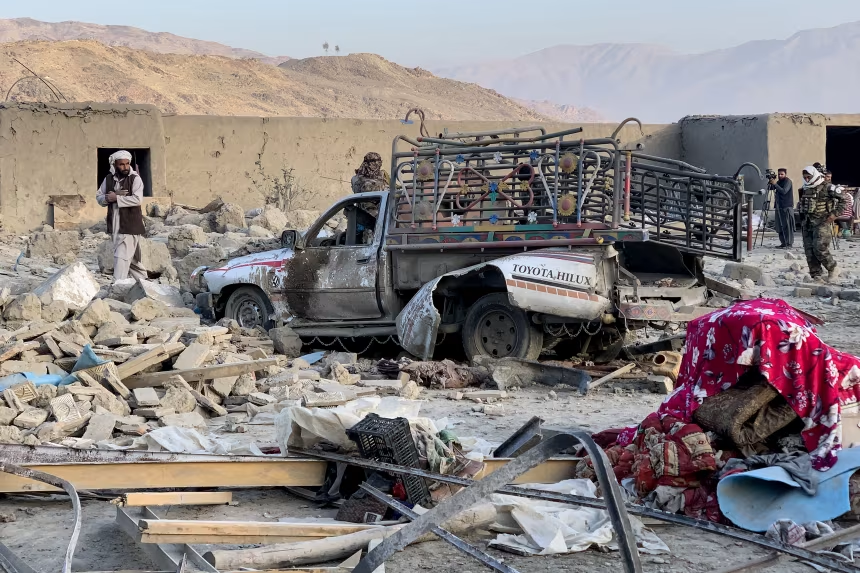
Islamabad – Pakistan carried out airstrikes on militant camps in Afghanistan on Sunday, escalating tensions with its eastern neighbor and threatening a fragile peace along the disputed border.
The Pakistani military said it conducted “intelligence-based, selective operations” against seven camps linked to the Tehrik-e-Taliban Pakistan (TTP) and its affiliates, as well as groups tied to the Islamic State, which Islamabad blames for a series of deadly attacks within Pakistan over the past month.
“We have conclusive evidence that these attacks were orchestrated by militants based in Afghanistan,” said Pakistan’s Information Ministry.
Civilian Areas Hit
Afghanistan’s Ministry of Defense confirmed the strikes, calling them a “blatant violation of national sovereignty” and a breach of international law. The airstrikes targeted civilian areas in Nangarhar and Paktika provinces, including a religious seminary and residential homes.
At least 18 people were killed, including women and children, according to Sayed Tayeb Hamad, a senior police official in Nangarhar. Rescue operations continued Sunday morning as authorities dug bodies from the rubble.
Escalating Border Tensions
The strikes follow a string of deadly attacks in Pakistan, including the killing of two soldiers, one a lieutenant colonel, and a suicide bombing at a Shia mosque in Islamabad earlier this month.
The new offensive tests a ceasefire established last October, after months of deadly clashes along the 1,600-mile border. Pakistan has long accused Afghanistan of harboring the TTP, an allegation Kabul denies. Retaliatory skirmishes along the border have previously left dozens dead and wounded.
Military Resolve
Pakistan’s Defense Minister, Khawaja Asif, previously stated in November that the country would use “whatever means are available” to neutralize the TTP leadership in Afghanistan. Sunday’s airstrikes underscore Islamabad’s resolve to dismantle the militant network.
The situation raises concerns about further escalation, the safety of civilians along the border, and the stability of peace efforts in the region.