
Now Reading: Plumber Turns Politician: Green Party Shocks Labour in Gorton and Denton By-Election
-
01
Plumber Turns Politician: Green Party Shocks Labour in Gorton and Denton By-Election
Plumber Turns Politician: Green Party Shocks Labour in Gorton and Denton By-Election

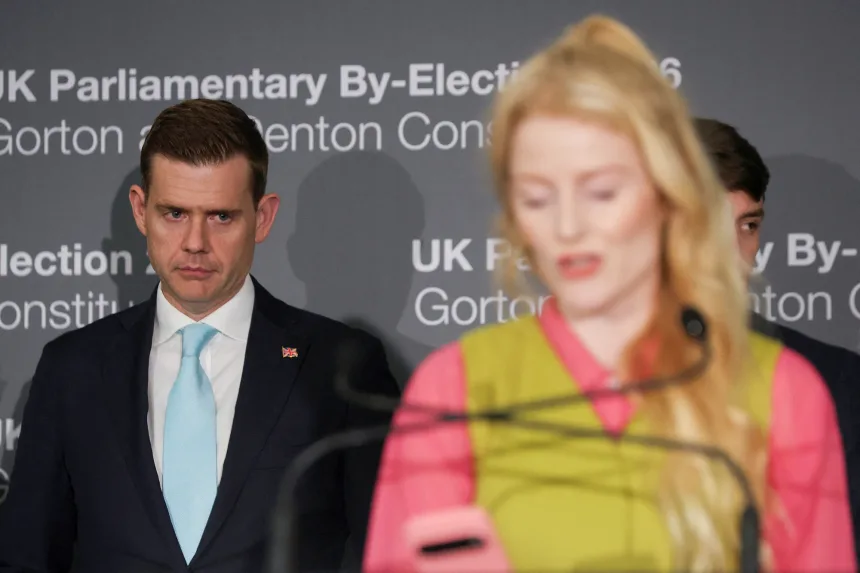
Hannah Spencer, a 34-year-old working-class plumber and local councillor, has pulled off a stunning political upset in northern England, winning the Gorton and Denton by-election and handing Labour leader Keir Starmer an embarrassing defeat in the party’s historic heartland.
Spencer, running for the Green Party, secured 14,890 votes—over 40% of the total—while Reform UK, the hard-right populist party, came second with 10,578 votes. Labour trailed in third with 9,364 votes, around 25% of ballots cast.
A Working-Class Voice Challenges the Status Quo
“I didn’t grow up wanting to be a politician. I’m a plumber,” Spencer said after her victory, apologizing to customers for having to cancel appointments as she prepares to take her seat in Westminster. She campaigned heavily on cost-of-living issues, arguing that hard work in today’s Britain often fails to secure even basic necessities for families.
“Working hard used to get you a house, holidays, a decent life. Now, it’s barely enough to feed your kids or put heating on,” she said.
Her campaign resonated with voters in a constituency made up of working-class residents, students, and a large ethnic-minority population—groups that have historically supported Labour.
Implications for Labour and Starmer
The result is a major embarrassment for Labour and Starmer, who had targeted Reform UK as the “real opposition.” Labour’s strategy of courting right-leaning voters with tougher policies on immigration appears to have backfired, as progressive and minority voters turned to the Greens.
Political analysts have suggested Labour misjudged northern voters, assuming the electorate would vote strategically to block Reform. Spencer’s victory challenges these assumptions, highlighting the growing appeal of the Greens in urban constituencies.
A Green Milestone
The win marks the first time the Green Party has captured a by-election seat, boosting its parliamentary representation to five lawmakers. It also positions the Greens strongly ahead of local elections in May, when voters will elect regional parliaments in Scotland and Wales, as well as local councils across England.
Green Party leader Zack Polanski hailed the result as “an existential crisis for the Labour Party,” emphasizing that the by-election sets the tone for upcoming elections.
Controversy and Electoral Dynamics
Labour’s decision to block former Greater Manchester Mayor Andy Burnham from standing may have contributed to its poor performance, with some MPs noting that Burnham would likely have won. Observers also raised concerns about high levels of family voting influencing results in the constituency.
Spencer criticized divisive political rhetoric, calling out opponents who scapegoat minority communities. The Green Party actively courted ethnic-minority voters, producing campaign material in Urdu and Bangla.
The by-election result raises broader questions about Labour’s electoral strategy, voter priorities, and the potential reshaping of the political landscape in northern England ahead of 2027.