Now Reading: Saif al-Islam Gadhafi Shot Dead in Zintan, Political Team Claims Assassination
-
01
Saif al-Islam Gadhafi Shot Dead in Zintan, Political Team Claims Assassination
Saif al-Islam Gadhafi Shot Dead in Zintan, Political Team Claims Assassination

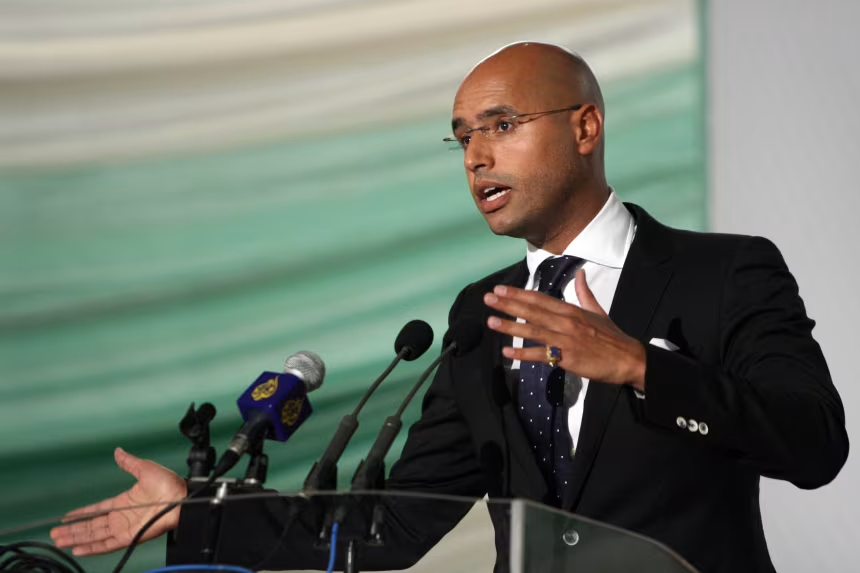
Zintan, Libya – February 4, 2026 – Saif al-Islam Gadhafi, son of Libya’s former ruler Muammar Gadhafi, has been shot dead at his residence in Zintan, according to a statement from his political team describing the killing as an assassination. He was 53.
Abdullah Othman, a political adviser to Gadhafi, said four masked gunmen stormed the property, disabled security cameras and opened fire in what he called a “treacherous and cowardly” attack. Libyan authorities have yet to issue official confirmation, and there has been no immediate comment from the International Criminal Court (ICC), which has long sought his arrest on charges of crimes against humanity.
A Controversial Figure After the Fall of a Regime
Born in Tripoli on June 25, 1972, Saif al-Islam was widely regarded as the most prominent of Muammar Gadhafi’s sons and once viewed as a potential successor. Educated abroad, including at the London School of Economics, he cultivated an image of a reform-minded figure during his father’s decades-long rule.
That image shifted dramatically during the 2011 uprising. In a televised address as protests spread, he warned that Libya faced civil war and chaos if demonstrations continued, aligning himself publicly with the regime’s crackdown. Months later, the ICC issued arrest warrants for both father and son over alleged crimes committed during the suppression of the revolt.
Capture, Release and Political Comeback Attempt
Following the fall of Tripoli in 2011, Saif al-Islam evaded capture for months before being detained by a militia in Zintan. He remained in custody until 2017, when the militia announced his release under a controversial amnesty law.
He resurfaced politically in November 2021, registering as a candidate in Libya’s delayed presidential elections. His return sharply divided opinion: supporters saw him as a symbol of stability in a fractured country, while critics viewed him as a reminder of authoritarian rule and unresolved allegations of war crimes. The elections were later postponed indefinitely amid political and security challenges.
Calls for Investigation
In recent months, associates said Saif al-Islam had been working on what they described as a “proposal for reconciliation” aimed at re-entering Libya’s political life.
His political team has now called on Libya’s judiciary, the United Nations, the international community and human rights organizations to launch an independent investigation into his killing and to bring those responsible to justice.