Now Reading: South Korea Jails Ex-PM Han Duck-soo for 23 Years After Court Rules Yoon’s Martial Law Was Rebellion
-
01
South Korea Jails Ex-PM Han Duck-soo for 23 Years After Court Rules Yoon’s Martial Law Was Rebellion
South Korea Jails Ex-PM Han Duck-soo for 23 Years After Court Rules Yoon’s Martial Law Was Rebellion

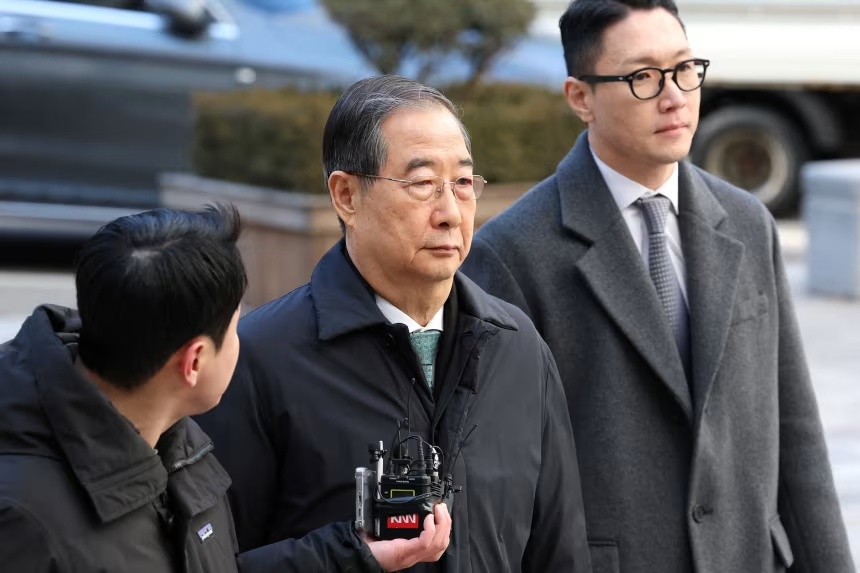
A South Korean court has sentenced former Prime Minister Han Duck-soo to 23 years in prison, ruling that the martial law decree issued by then-President Yoon Suk Yeol in December 2024 was an act of rebellion.
Han’s conviction marks the first major ruling against a top official from the Yoon administration in the political crisis that led to the president’s impeachment and removal from office. The verdict is also expected to shape upcoming trials involving Yoon and other senior officials accused of rebellion.
Court Calls Martial Law a “Self-Coup”
In a televised judgment, the Seoul Central District Court said Yoon’s order to deploy troops and police to the National Assembly and election offices amounted to a “riot” and a self-coup, designed to weaken the constitutional order.
The court said the move was serious enough to destabilise South Korea’s democratic system and described it as a direct threat to the country’s liberal constitutional framework.
Han, who served as one of three caretaker leaders during the crisis, was convicted for helping to legitimise the martial law decree by pushing it through a Cabinet Council meeting. The court also found him guilty of falsifying the martial law proclamation, destroying evidence, and lying under oath.
Han, 76, has denied most of the charges and insists he told Yoon he opposed the martial law plan. He could appeal the ruling.
Judge Lee Jin-gwan said Han neglected his duty as prime minister to protect the constitution, choosing instead to support a rebellion he believed might succeed.
“Because of the defendant’s action, the Republic of Korea could have returned to a dark past,” the judge said, referring to the country’s history of authoritarian rule.
Rebellion Charges Could Lead to Death Penalty
Rebellion is among South Korea’s most serious crimes. Prosecutors have already demanded the death penalty for Yoon, who is charged with masterminding the rebellion. The court is scheduled to rule on Yoon’s rebellion case on February 19.
Yoon has been detained for months and faces eight separate trials, including charges of defying arrest, fabricating the martial law proclamation, and denying cabinet members the right to deliberate on the decree.
He denies wrongdoing, claiming his actions were aimed at pushing back against opposition lawmakers who blocked his agenda.
Han’s Political Career and Crisis Role
Han Duck-soo is a veteran civil servant who served as prime minister twice over his 40-year career—first under former liberal president Roh Moo-hyun, and later under Yoon.
During the martial law crisis, Han became acting president after the National Assembly impeached Yoon. He was briefly removed from office amid political disputes, but later reinstated by the Constitutional Court. Han later resigned to run in the snap presidential election in June, but withdrew after failing to win his party’s nomination.
Martial Law Collapse and Political Fallout
Yoon’s martial law declaration sparked mass protests and drew international criticism. While the military and police were deployed to the National Assembly, lawmakers still managed to vote down the decree. The episode revived memories of South Korea’s authoritarian past and triggered political instability, hurting the country’s global reputation and financial markets.
Besides Han, several other former Yoon officials—including defence, justice, and security ministers, as well as military and intelligence chiefs—are also facing rebellion charges linked to the martial law decree.