Now Reading: Third Mainland Bridge Rehabilitation Cost N43bn, CCTV Centre N2.5bn — Works Minister Umahi
-
01
Third Mainland Bridge Rehabilitation Cost N43bn, CCTV Centre N2.5bn — Works Minister Umahi
Third Mainland Bridge Rehabilitation Cost N43bn, CCTV Centre N2.5bn — Works Minister Umahi

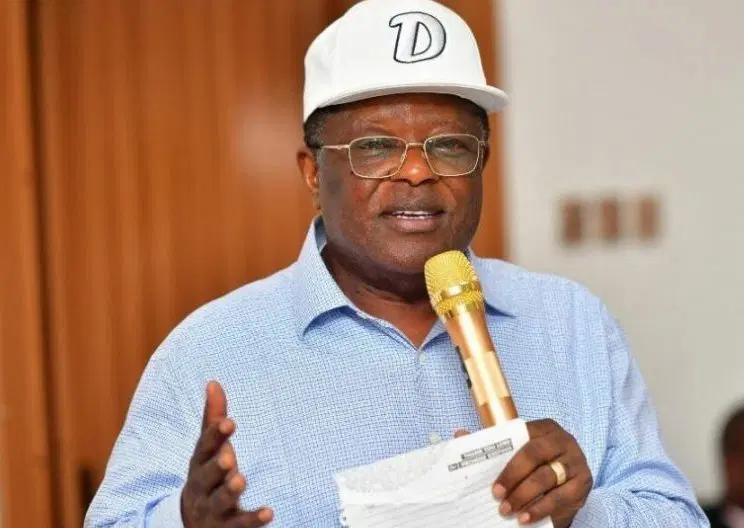
Nigeria’s Minister of Works, Senator David Umahi, has disclosed that the full rehabilitation of the Third Mainland Bridge in Lagos cost ₦43 billion, while the installation of a state-of-the-art Closed Circuit Television (CCTV) control centre added about ₦2.5 billion to the project.
Speaking to journalists in Lagos on Tuesday, Umahi said the rehabilitation covered the complete overhaul of a 14-kilometre stretch of the bridge, spanning two carriageways, each measuring 14 metres wide.
He explained that the CCTV control centre was an integral part of the rehabilitation contract, aimed at improving safety, surveillance and rapid response on one of Africa’s busiest bridges.
“It also includes rebuilding and repainting of concrete components, replacement of expansion joints and the installation of solar-powered street lighting,” the minister said.
Umahi described the condition of the Third Mainland Bridge and other key Lagos bridges when the current administration assumed office in 2023 as “very terrible,” citing structural and surface-level deterioration both above and below the waterline.
According to him, President Bola Ahmed Tinubu subsequently ordered a comprehensive re-evaluation and total rehabilitation of the Third Mainland Bridge, as well as critical repairs to the Carter Bridge and Iddo Bridge.
“The president directed the complete rehabilitation of the bridge surfaces and the replacement of the expansion joints,” Umahi added.
Nigeria’s First Bridge CCTV Control Centre
Also addressing journalists, the Federal Controller of Works in Lagos State, Olufemi Dare, said the newly commissioned CCTV centre is the first of its kind in Nigeria.
He explained that the facility is designed to support round-the-clock monitoring and rapid intervention on the bridge.
The centre is equipped with surveillance boats, two Hilux patrol vehicles, 240 solar panels, multiple inverters, a 300 KVA transformer, a standby power generator and fully air-conditioned monitoring rooms fitted with large surveillance screens.
Officials say the upgraded infrastructure is expected to enhance traffic management, security and emergency response on the bridge, which links Lagos Mainland to the Island and serves millions of commuters daily.