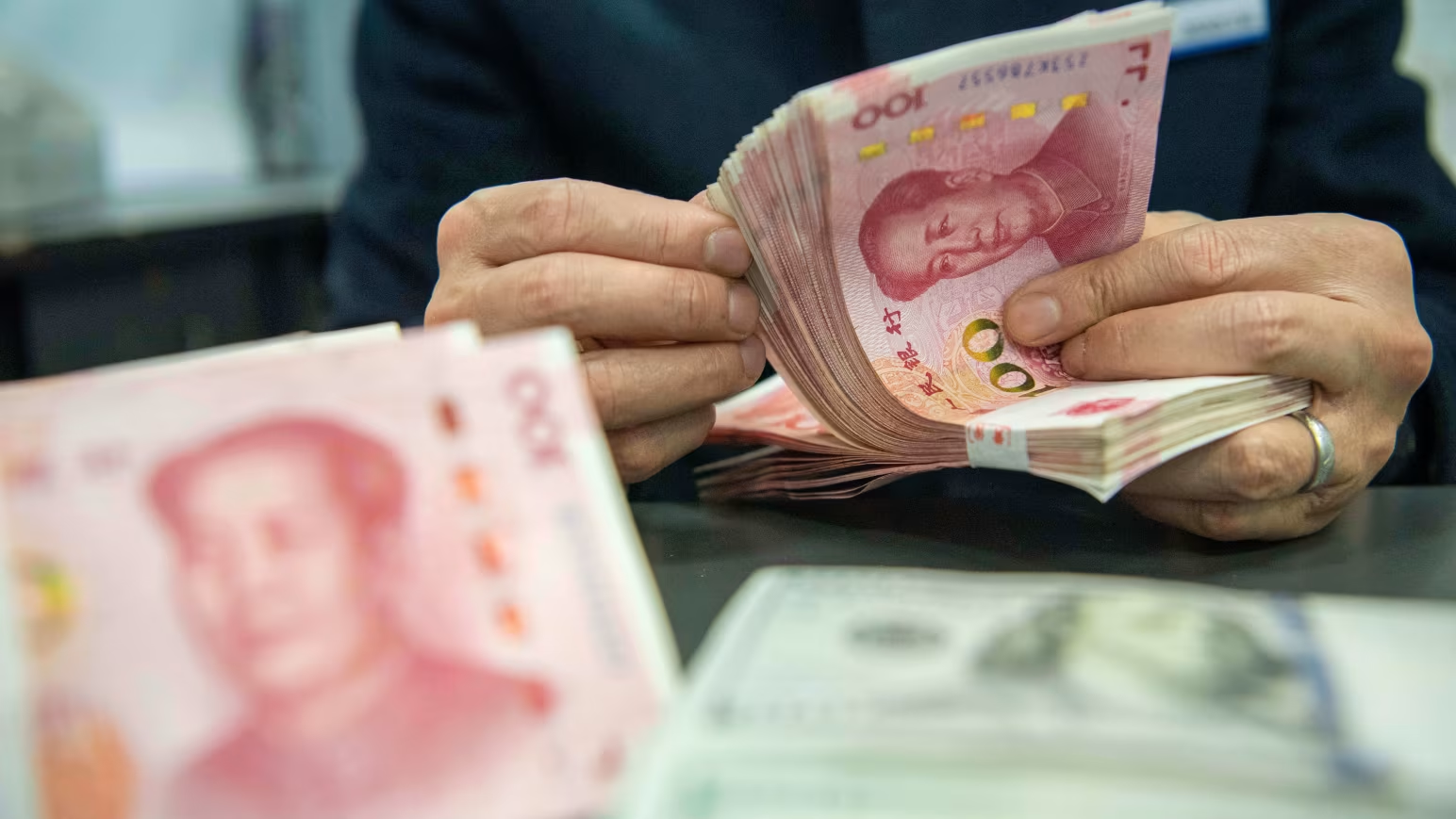
Now Reading: US Eyes Pakistan’s Critical Minerals as Militants Armed With American Weapons Threaten Mining Zones
-
01
US Eyes Pakistan’s Critical Minerals as Militants Armed With American Weapons Threaten Mining Zones
US Eyes Pakistan’s Critical Minerals as Militants Armed With American Weapons Threaten Mining Zones

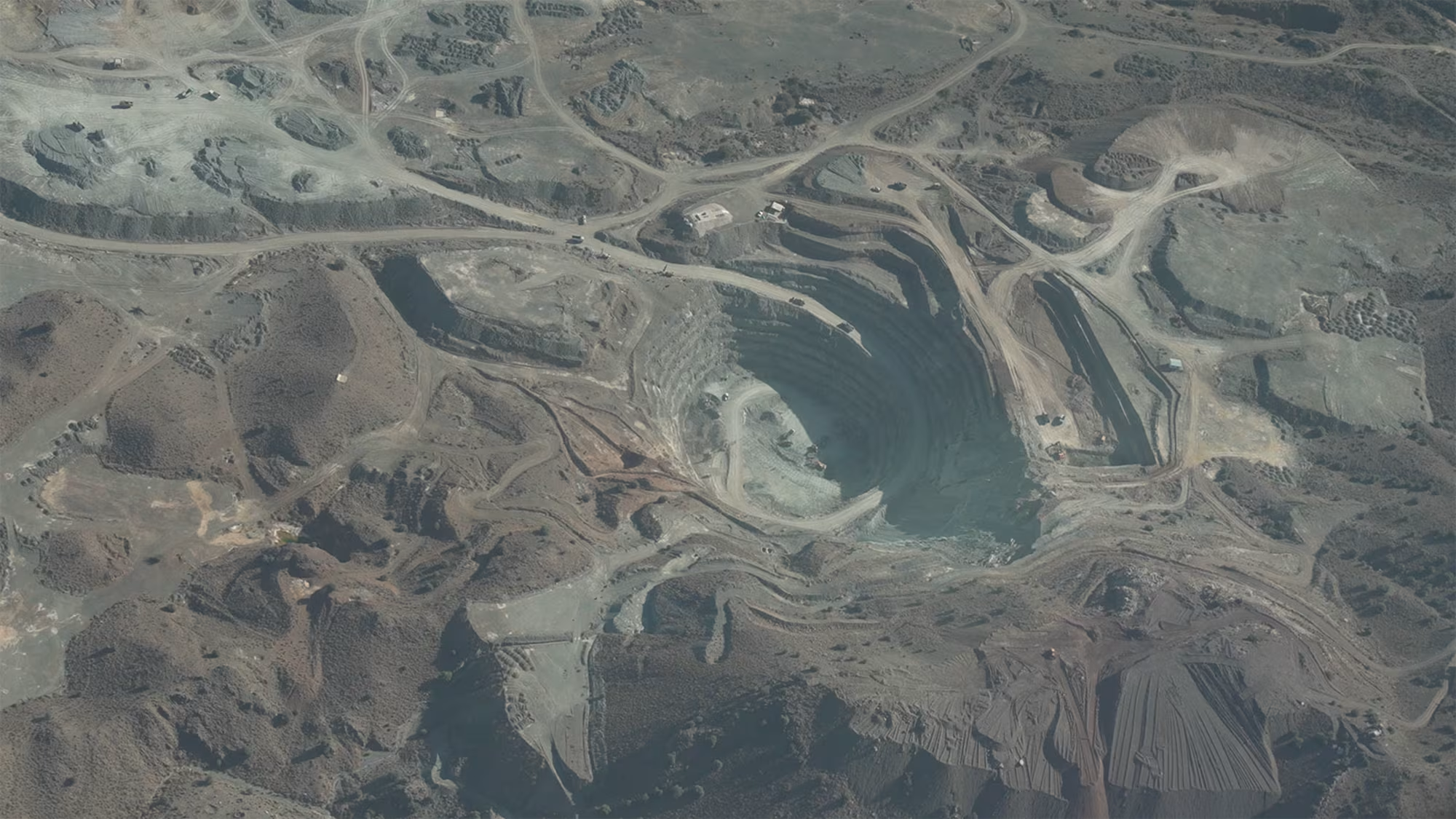
South Waziristan, Pakistan – February 3, 2026 – Vast copper and rare mineral deposits buried beneath Pakistan’s mountainous frontier have drawn the attention of the United States, eager to secure alternative sources of critical materials. Yet the same region sits at the heart of a worsening insurgency, where militants are now armed with weapons once supplied by Washington.
At the Muhammad Khel Copper Mine, carved into the Hindu Kush just miles from the Afghan border, Pakistan extracted 22,000 tons of copper last year—worth hundreds of millions of dollars and shipped largely to China. Officials say another nearby site could yield nearly ten times that amount, equivalent to about a fifth of America’s annual copper consumption.
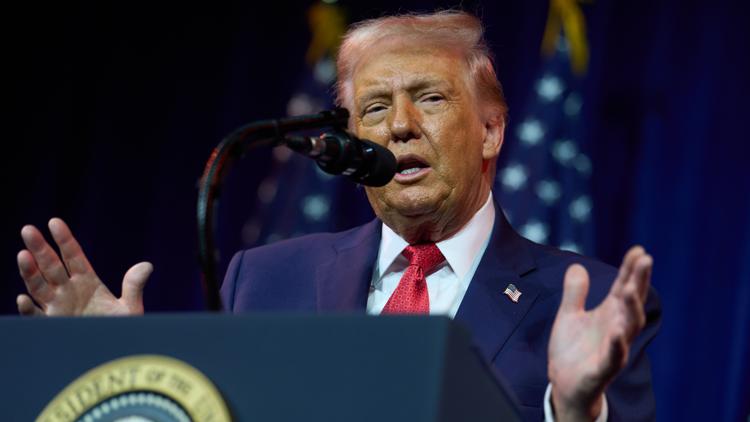
Islamabad estimates its underground reserves of copper, lithium, cobalt, gold, antimony and other strategic minerals to be worth as much as $8 trillion. Those claims have helped build an unlikely alignment with US President Donald Trump, who has placed critical mineral acquisition at the center of US foreign policy amid intensifying rivalry with China.
Minerals, Geopolitics and a Security Crisis
China currently dominates the global processing of rare earth elements, controlling more than 90% of refined output used in everything from smartphones to electric vehicles and military technology. Breaking that dominance has become a strategic goal for Washington, which has pursued mineral agreements with multiple countries across Asia-Pacific.
Pakistan has sought to position itself as a key partner. During a White House visit last September, Prime Minister Shehbaz Sharif and Field Marshal Asim Munir presented Trump with a display of rare earth samples said to have been mined in Pakistan. Weeks later, Trump publicly praised Munir, calling him “My favorite field marshal.”
Copper, vital for power transmission, artificial intelligence infrastructure and defense technologies, further strengthened Washington’s interest.
Weapons Left Behind, Insurgency Reinforced
The promise of mineral wealth, however, is overshadowed by instability. The mines lie in border provinces that have endured decades of jihadist insurgency, a situation worsened after the US withdrawal from Afghanistan in 2021 left behind large quantities of military hardware.
During a visit to the region, journalists were shown US-made rifles, machine guns and sniper weapons seized from militants. Outside a military college recently targeted by a Pakistani Taliban suicide bombing near Wana, officers displayed M-16 rifles stamped with the words: “Property of US Govt. Manufactured in Columbia, South Carolina.”
Security officials say such weapons are now fueling attacks across the region, complicating both Pakistan’s efforts to restore order and American ambitions to access the minerals beneath the conflict zones.
A Race Against Instability
For Washington, securing alternative supplies of critical minerals is central to reducing reliance on China. For Pakistan, mineral extraction offers economic hope in a fragile region.
But without improved security, the very areas rich in copper and rare earths may remain too dangerous for large-scale development—turning a strategic opportunity into a geopolitical dilemma.
SEO Keywords: Pakistan copper mine, US critical minerals, South Waziristan insurgency, American weapons militants, rare earths China dominance, Trump mineral policy, Pakistan rare minerals