Now Reading: Venezuela Grants Amnesty to Hundreds of Political Prisoners Amid U.S. Pressure – Critics Urge Caution
-
01
Venezuela Grants Amnesty to Hundreds of Political Prisoners Amid U.S. Pressure – Critics Urge Caution
Venezuela Grants Amnesty to Hundreds of Political Prisoners Amid U.S. Pressure – Critics Urge Caution

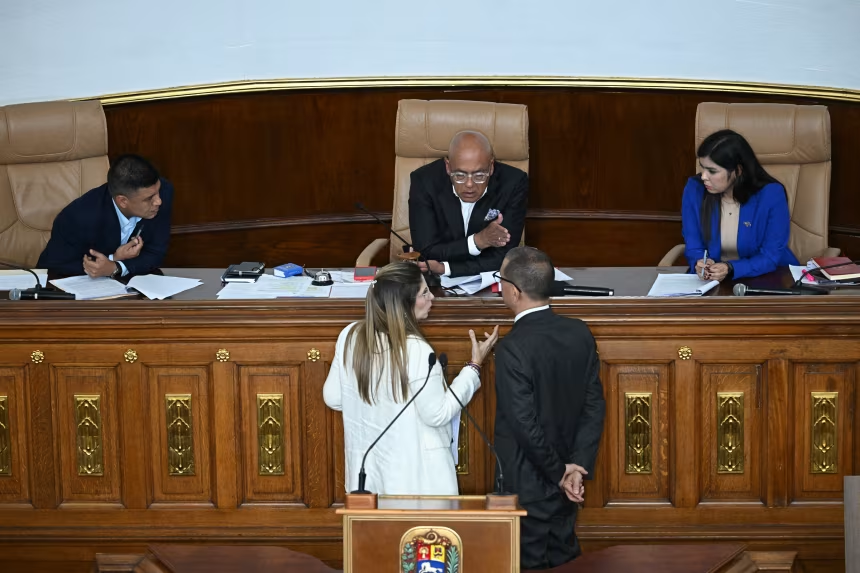
Caracas, Venezuela – Venezuelan lawmakers have approved sweeping amnesty legislation granting freedom to hundreds of individuals imprisoned for political reasons over the past 27 years. The move, seen as a response to U.S. pressure, has been cautiously welcomed by rights groups and opposition figures, who stress that transparency and accountability remain critical.
Amnesty Covers Opposition, Activists, Journalists, and Students
The new law, championed by acting President Delcy Rodríguez following the U.S.-backed removal of Nicolás Maduro, targets those prosecuted or convicted for political dissent since 1999, the start of Hugo Chávez’s presidency.
“This is an extraordinary opportunity for Venezuela to embrace coexistence, respect human rights, and move past hatred and intolerance,” Rodríguez said after signing the legislation.
Hundreds of political prisoners, including opposition leaders, journalists, and students detained during protests in 2014, 2017, and 2019, are expected to benefit. However, individuals convicted of homicide, drug trafficking, corruption, grave human rights violations, crimes against humanity, and war crimes are excluded.
Partial Releases Already Underway
Since the announcement, more than 400 prisoners have reportedly been freed, though official government figures suggest over 800 releases. Among them was a mother and her six-month-old baby, born while she was incarcerated.
Rights groups like Foro Penal emphasize that releases must be verified and conditions like travel restrictions, court appearances, or gag orders must not undermine true freedom. Rodríguez has invited the UN High Commissioner for Human Rights to oversee the verification process.
Opposition Skeptical of Government Intent
While opposition leader María Corina Machado acknowledged the U.S. influence in prompting the amnesty, she expressed doubts about Rodríguez’s capacity to facilitate a genuine political transition.
Concerns have also emerged following the brief re-arrest of opposition figure Juan Pablo Guanipa, who spent eight months as a political prisoner and was detained again shortly after release for allegedly violating conditions of freedom. Guanipa is now under house arrest.
Calls for Transparency and True Reform
Human rights organizations warn that amnesty should not be confused with a pardon or state grace. Alfredo Romero of Foro Penal described the legislation as positive if it is inclusive, non-discriminatory, and free of impunity, helping dismantle mechanisms of political persecution.
Thousands of students and relatives of detainees have protested in Caracas, demanding unconditional releases and broader political reforms. As Venezuela navigates this critical moment, the world watches to see whether remaining political prisoners will finally regain their freedom.