Now Reading: Why Gas Prices Aren’t Skyrocketing Despite the US-Iran Conflict
-
01
Why Gas Prices Aren’t Skyrocketing Despite the US-Iran Conflict

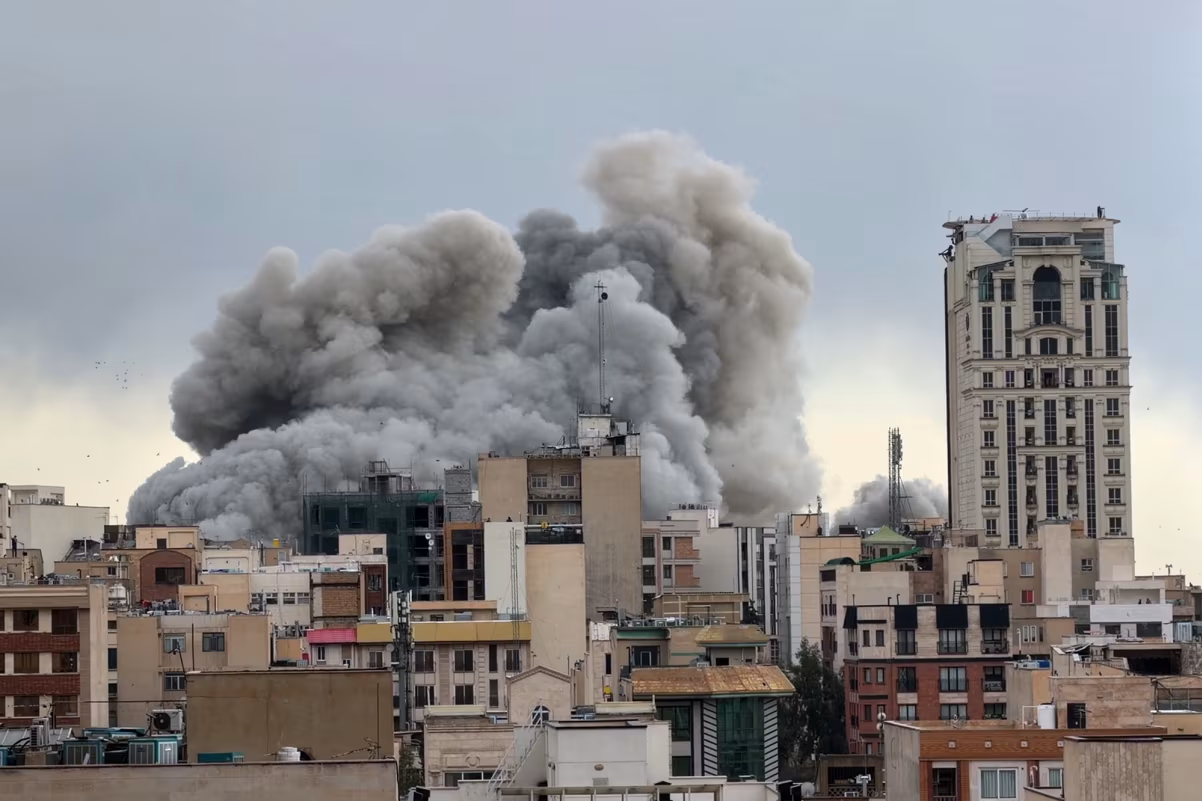
Oil markets have reacted cautiously to the ongoing US-Iran conflict, with crude prices rising moderately rather than spiking like they did when Russia invaded Ukraine in 2022. Despite the immediate threat to Middle Eastern oil supplies, gasoline in the United States remains far below the $5-per-gallon surge seen during the early weeks of the Russia-Ukraine war.
Why This Crisis Is Different
Unlike the unprovoked Russian invasion of Ukraine, the current conflict is led by the United States, giving Washington control over the duration and intensity of military action. Political considerations at home, including high living costs and voter sensitivities ahead of midterm elections, limit the potential for a prolonged energy shock.
“The US endgame remains unclear,” said Ed Mills, a Washington policy analyst. “President Trump can declare victory whenever he chooses.” Pentagon officials have also signaled that the military action is intended to be short-term, helping to calm energy markets.
Crude Supply Is Ample
Global crude availability has increased since 2022. OPEC+ nations have boosted production over the past year, ensuring a surplus even as energy demand remains steady. Tom Kloza, an independent oil analyst, noted, “There’s more crude oil… than there is demand for it.” West Texas Intermediate, the US benchmark, traded around $76 per barrel as of Monday.
Risks Remain
Although the immediate price impact is muted, analysts warn the conflict could still trigger supply disruptions. Iran controls the northern side of the Strait of Hormuz, a critical shipping route through which 20% of global oil flows. Tanker traffic has fallen sharply, raising concerns about potential long-term shortages.
Jim Burkhard of S&P Global Energy warned, “If oil flows via the narrow Strait of Hormuz remain low or come to a halt, this could be the largest oil supply disruption in history.”
Emergency Measures and Market Buffers
The US holds large Strategic Petroleum Reserves (SPR), although they are about 30% smaller than in 2022. Unlike during the Russia-Ukraine crisis, the administration has not yet considered releasing reserves. Meanwhile, US oil production remains at record highs, and alternative supply channels, including Venezuelan crude, provide additional cushioning.
“Conflicts happen, but severe supply interruptions don’t always materialize,” said Bob McNally, president of Rapidan Energy Group. “If Iran continues to engage, however, this could become an authentic energy crisis the likes of which we haven’t seen in modern times.”