Now Reading: 2027 Presidency: Tinubu, Opposition Enter Coalition Race as Political Battle Intensifies
-
01
2027 Presidency: Tinubu, Opposition Enter Coalition Race as Political Battle Intensifies
2027 Presidency: Tinubu, Opposition Enter Coalition Race as Political Battle Intensifies

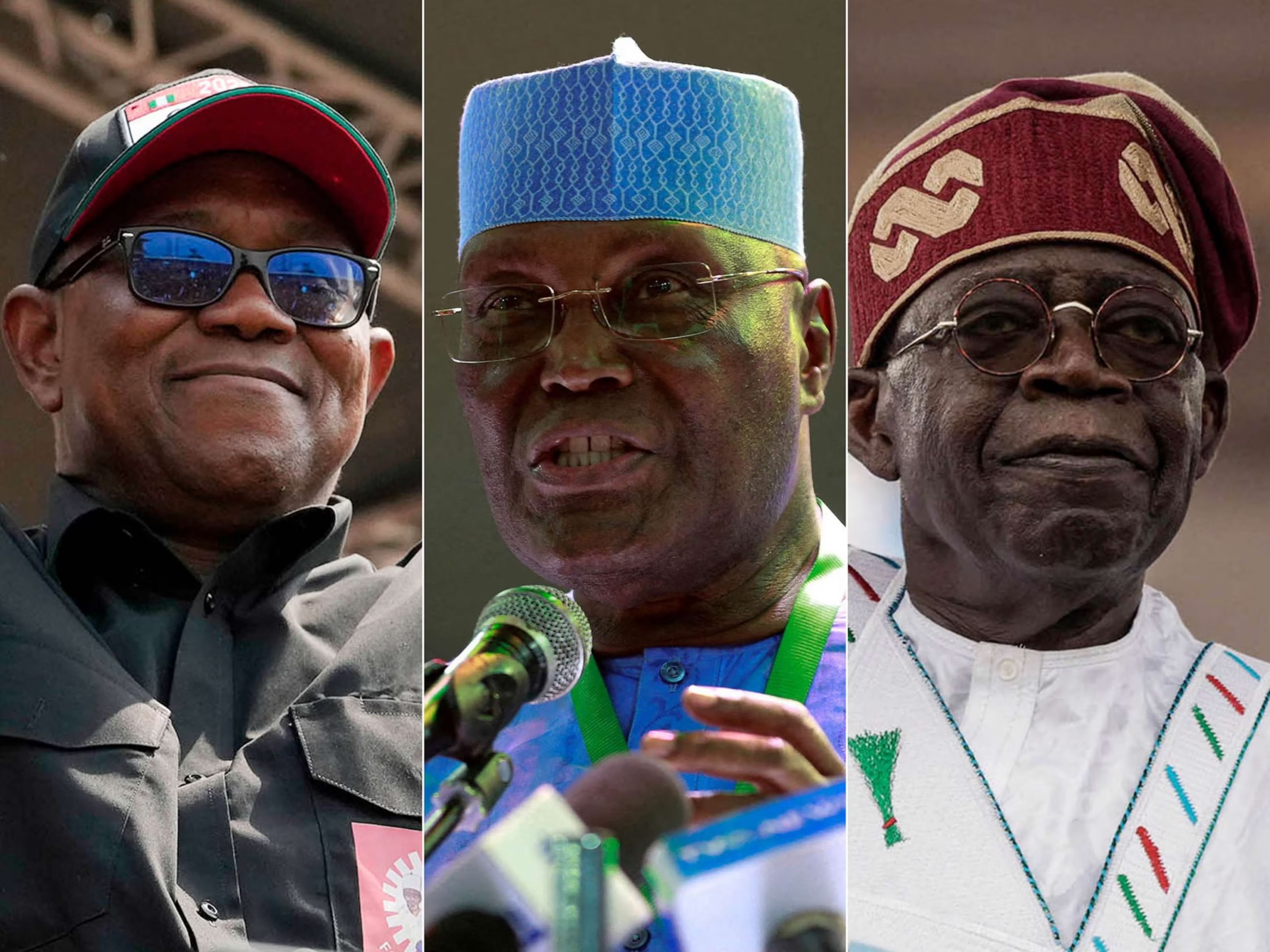
Nigeria’s 2027 presidential contest has entered a new phase, with President Bola Tinubu and opposition forces increasingly focused on building broad political coalitions ahead of the election.
The ruling All Progressives Congress, APC, starts from a position of considerable strength. The party controls 31 of Nigeria’s 36 state governments, giving Tinubu a wide political and organisational network as he seeks a second term.
The opposition, however, is betting on widespread dissatisfaction over economic hardship, insecurity and the cost of living. Several opposition figures are pushing for a single presidential candidate, but turning public discontent into a united electoral force remains a major challenge.
The coalition debate has also expanded to Tinubu’s camp. FCT Minister Nyesom Wike has spoken of a proposed “massive Rainbow Coalition” backing the President’s re-election. The development signals an emerging contest not only between political parties, but between rival alliances seeking to bring together politicians and structures from across party lines.
The recent Osun governorship election has added another dimension to the calculation. Governor Ademola Adeleke defeated the APC candidate and subsequently held meetings with both Tinubu and Wike. While Wike has publicly linked Adeleke to his political camp, Adeleke’s camp has described his engagement with the President as a courtesy visit, leaving his long-term political alignment open.
For the opposition, the challenge is bringing together politicians with different ambitions and regional bases. Former Vice President Atiku Abubakar offers extensive political networks and experience, while Peter Obi retains significant support, particularly among younger and reform-minded voters. Other political actors could provide important regional structures if a wider alliance takes shape.
The political map also presents different challenges across the country. The South-West remains crucial despite the APC’s strong structure there, while Obi remains a major factor in the South-East. Wike’s influence could shape calculations in the South-South, with the North-Central potentially serving as a key bridge between competing regional alliances. The North-West and North-East, with their large voting populations, are likely to remain central to any successful presidential coalition.
Ultimately, political agreements will have to translate into votes. The APC’s incumbency and control of 31 states give Tinubu a major advantage, but the Osun result shows that electoral dominance does not guarantee victory. With both camps now working to assemble wider alliances, the crucial question heading into 2027 is which coalition can build the broadest and most credible national support among Nigerian voters.