Now Reading: Samsung Posts 19-Fold Profit Surge as AI Chip Demand Drives Record Quarterly Earnings
-
01
Samsung Posts 19-Fold Profit Surge as AI Chip Demand Drives Record Quarterly Earnings
Samsung Posts 19-Fold Profit Surge as AI Chip Demand Drives Record Quarterly Earnings

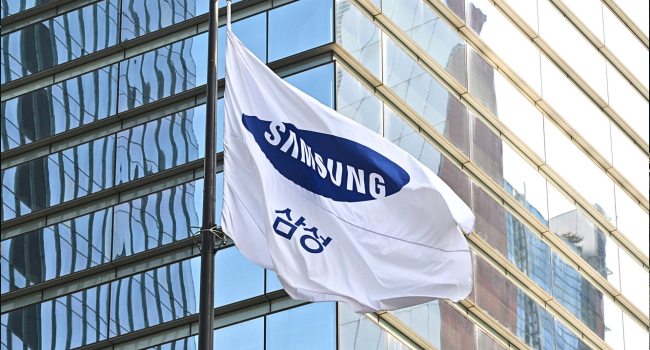
Samsung Electronics has reported a dramatic rise in second-quarter earnings, posting a 19-fold increase in operating profit as soaring global demand for artificial intelligence (AI) memory chips continued to fuel its strongest financial performance in years.
The South Korean technology giant announced on Thursday that its operating profit for the April-to-June quarter climbed to 89.5 trillion won (about $62 billion), representing an increase of more than 1,800 percent compared to the same period last year.
The company’s revenue also recorded impressive growth, rising 130 percent year-on-year to 171.5 trillion won, while net profit jumped nearly 1,300 percent to 71.6 trillion won. The results matched analysts’ expectations, according to South Korea’s Yonhap News Agency.
Samsung’s blockbuster earnings come as demand for advanced memory chips used in AI data centres continues to soar. The company, alongside domestic rival SK hynix and U.S.-based Micron, dominates the global market for high-bandwidth memory (HBM) chips, which power AI applications such as chatbots and image-generation systems.
Despite the strong earnings, AI-related technology stocks have experienced sharp volatility this week. Samsung shares lost more than 12 percent on Wednesday before rebounding by around 3 percent on Thursday, while SK hynix shed nearly 20 percent amid growing investor concerns that expectations surrounding the AI boom may have become overly optimistic.
In a statement, Samsung said its memory chip division delivered “another record-breaking quarter,” driven primarily by robust demand for server products. The company added that it expects server demand to remain strong through the second half of 2026 as businesses continue investing in AI infrastructure and adopt more autonomous AI systems.
Chief Financial Officer Park Soon-cheol said Samsung expects the global memory chip shortage to worsen in 2027 and remain tight into 2028. He also confirmed that the company’s semiconductor facility in Taylor, Texas, is on track to begin operations later this year, while construction of a second plant is expected to start before the end of 2026, with full-scale production targeted for 2030.
Samsung recently strengthened its AI ambitions by announcing a strategic partnership with U.S. chipmaker Broadcom to supply advanced memory solutions, including HBM chips, for next-generation AI accelerators. Industry analysts estimate the collaboration could exceed $200 billion over the next five years.
Meanwhile, South Korea is doubling down on its semiconductor ambitions. The government has confirmed plans for Samsung and SK hynix to invest a combined 800 trillion won in four advanced semiconductor fabrication plants in Gwangju. Analysts, however, caution that the long-term project faces uncertainty if the current semiconductor boom slows before the facilities become operational.