Now Reading: Buchi George: Trade Can Help Nigeria Break Ethnic Divisions and Build Stronger Regional Ties
-
01
Buchi George: Trade Can Help Nigeria Break Ethnic Divisions and Build Stronger Regional Ties
Buchi George: Trade Can Help Nigeria Break Ethnic Divisions and Build Stronger Regional Ties

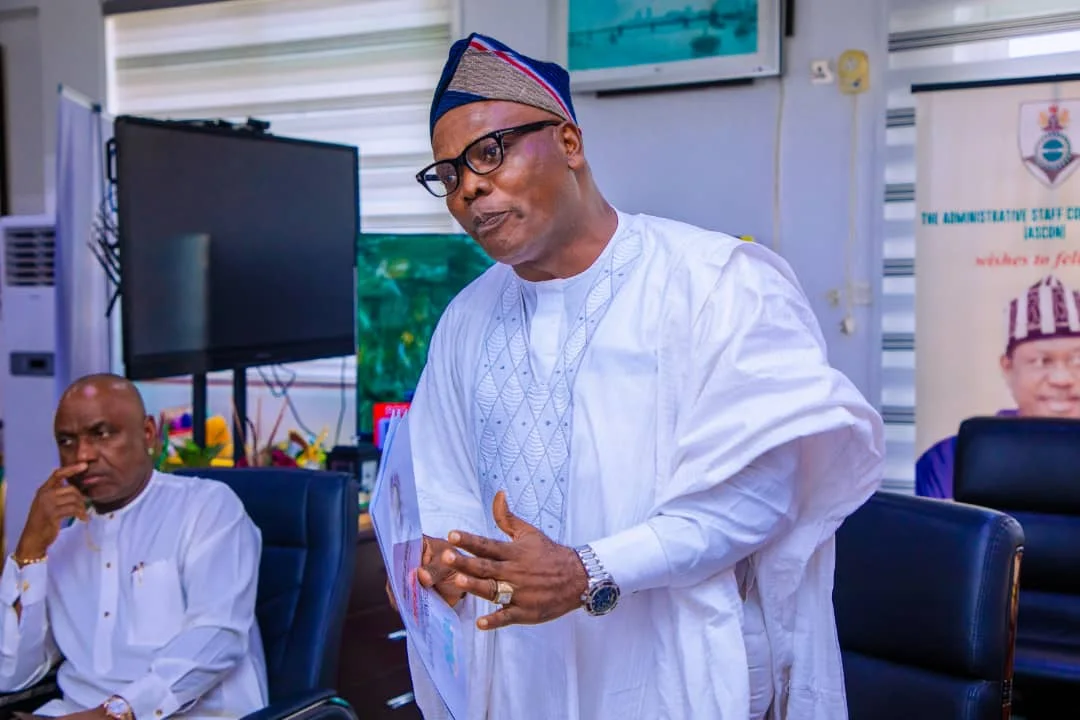
Nigeria could make greater progress towards national unity by building stronger economic ties between its regions rather than focusing mainly on the differences that divide them, businessman and trade advocate Nwabueze Buchi George has said.
George believes commerce can create practical links between communities that political calls for unity have often struggled to establish. When Nigerians depend on other regions for food, clothing, manufactured goods, markets and logistics, he argues, they develop economic interests that encourage cooperation.
“Trade is a tool for healing and unity in Nigeria,” George said.
His argument centres on a straightforward question: what if Nigeria paid as much attention to what its different regions produce as it does to their ethnic and political differences? George points to Aba, Onitsha and Lagos, alongside the agricultural strength of Northern Nigeria and the Middle Belt, as examples of economic assets that could form a stronger national supply chain.
Aba has built a reputation for footwear, garments, leather products, fabrication and indigenous manufacturing, while Onitsha remains a major trading and distribution centre. Lagos, meanwhile, brings together manufacturing, finance, ports, logistics and access to one of Africa’s largest consumer markets. Northern and Middle Belt communities contribute significantly to the production of grains, livestock, tubers and other food products consumed across the country.
George sees these activities as interconnected rather than isolated regional strengths. A trader in Lagos dealing in goods made in Aba is linked to manufacturers in the South-East, just as families buying food produced hundreds of kilometres away depend on the farmers and communities responsible for that supply. Transporters, distributors, financiers and consumers complete the chain.
He acknowledges that trade cannot automatically eliminate Nigeria’s ethnic, political or religious tensions. However, he believes economic interdependence gives communities a practical reason to protect relationships that support their livelihoods. Disruption to one part of the supply chain, he argues, can quickly affect people far beyond the region where the problem occurs.
From Local Products to Global Standards
George’s campaign is not limited to encouraging Nigerians to buy locally produced goods. He insists that Nigerian manufacturers must improve their competitiveness if the country is to build a stronger production economy.
That includes better quality, packaging, branding, certification and consistency, as well as the ability to meet international specifications. He also stressed the need for improvements in electricity, roads, security, logistics, financing and industrial infrastructure to give businesses a fair chance against imported products.
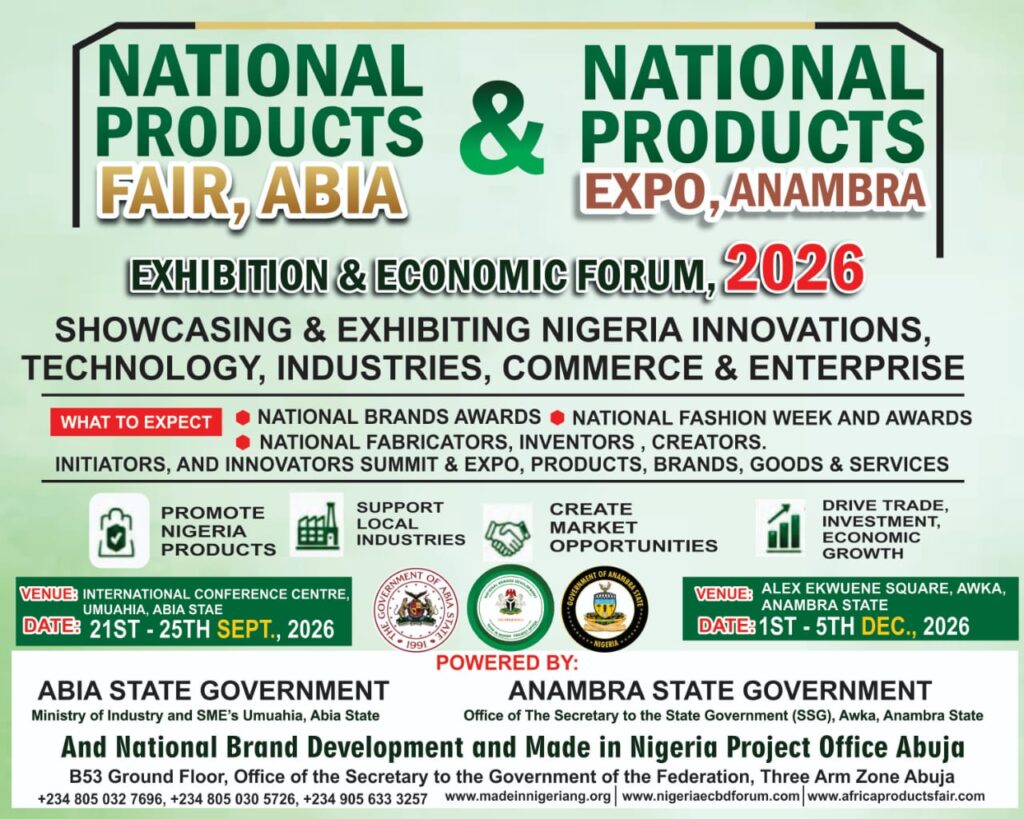
Those issues will form part of the wider conversation at the National Products Fair 2026, scheduled for September 21 to 25 at the International Conference Centre in Umuahia, Abia State. The event is expected to bring together manufacturers, SMEs, innovators, investors, policymakers and other business stakeholders to showcase Nigerian products and create new commercial opportunities.
For George, hosting the fair in Abia is significant because it places the national conversation close to one of Nigeria’s most recognised indigenous manufacturing centres. But he says visibility should lead to measurable improvements rather than simply producing exhibition stands, speeches and photographs.
Manufacturers should ideally emerge with stronger business contacts, improved packaging, certification opportunities, access to finance, new distributors and clearer routes into domestic and international markets. The broader goal is for consumers to choose Nigerian products because they compete on quality and price, rather than because they feel pressured to buy them out of patriotism.
George’s Shift From Entertainment to Trade
George’s focus on trade also reflects a significant change in the direction of his career. OtownGist’s coverage of him dates back to 2012, when he was active in Owerri’s entertainment, fashion, pageantry and events circles.
By 2020, his activities had increasingly shifted towards trade promotion and international business development, including work associated with Trade Nigeria and the Globe Chamber of Commerce and Industry. His projects later became more closely linked to Made-in-Nigeria campaigns, industrial promotion and efforts to connect Nigerian businesses with international markets.
That progression has shaped his current emphasis on visibility. His argument is that Nigeria must not only produce more but also become better at presenting those products to its own citizens and the rest of the world.
Changing Nigeria’s Economic Story
George also sees a branding challenge in how Nigeria presents itself. Political disputes, ethnic tensions, insecurity and scandals often dominate conversations about the country, while less attention is given to its manufacturing, agricultural and entrepreneurial capacity.
He wants that balance to change.
If Aba produces competitive footwear, he argues, that capability should be promoted. If farmers in Northern Nigeria and the Middle Belt play a major role in feeding the country, their production strengths should attract infrastructure, investment and greater visibility. The same approach, he said, should apply to Nigerian food processors, garment makers, fabricators, technology companies, beauty brands and automobile manufacturers.
The ultimate ambition is for “Made in Nigeria” to become associated with quality and production capacity rather than a request for consumers to overlook weaknesses.
George does not claim trade can resolve every division in Nigeria. His proposition is that the country can strengthen its social ties by identifying what each region does well, investing in those strengths and connecting producers with markets across regional boundaries.
If that happens, the farmer in the North, manufacturer in Aba, trader in Onitsha and distributor in Lagos become more than separate regional success stories. They become interconnected parts of one Nigerian economy.