Now Reading: Power Cuts: NISO Blames Transmission Line Failures, Not Generation Shortage
-
01
Power Cuts: NISO Blames Transmission Line Failures, Not Generation Shortage
Power Cuts: NISO Blames Transmission Line Failures, Not Generation Shortage

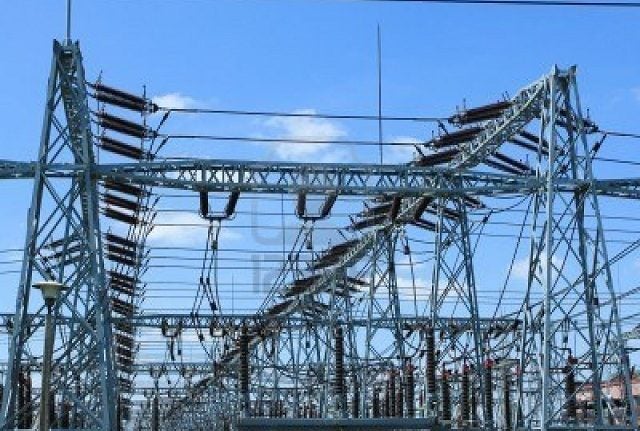
Recent reductions in electricity supply to Lagos, Abuja and parts of northern Nigeria were caused by multiple transmission line failures rather than a shortage of power generation, the Nigerian Independent System Operator, NISO, has said.
The clarification came in a statement issued on Sunday following changes in electricity allocations to Distribution Companies, DisCos. NISO said it had to reduce allocations in affected areas to prevent further instability and a possible wider collapse of the interconnected national grid.
The operator explained that having enough electricity generated across the country does not automatically mean that the power can reach every part of Nigeria. According to NISO, electricity delivery depends on the available capacity of the transmission network and how the national grid is configured at any given time.
Lagos was particularly affected by a series of faults on key high-voltage transmission lines. NISO listed failures involving the Olorunsogo-Ayede 330kV Line 1, Benin-Egbin 330kV Line 1 and Benin-Omotosho 330kV Line 1, alongside the prolonged outage of the Osogbo-Ikeja West circuit.
The combined failures reduced the amount of electricity that could be safely transmitted into the Lagos area. As a result, NISO reduced allocations to Eko Electricity Distribution Company, Ikeja Electric and the Sakete international supply network to protect the stability of the system.
The northern grid also experienced major disruptions between August 24 and 27. The Shiroro-Mararaba 330kV Line 1 first tripped, leaving the remaining circuit to carry the load. The situation became more severe on August 27 when the Shiroro-Mando 330kV Line 2 and Mando-Jos 330kV Line 1 failed at the same time.
NISO said the disruption left the Mando-Jos line as the only available circuit serving Jos and much of the North-East, while the Apir-Lafia 330kV Lines 1 and 2 were already unavailable because of earlier faults. Electricity allocations to Kano, Kaduna, Jos, Yola and nearby areas were subsequently revised.
Abuja also experienced a temporary transmission constraint on August 29 after the Shiroro-Katampe 330kV Line 1 and Gwagwalada-Katampe 330kV Line 1 tripped at about 3:55 a.m. Engineers restored both circuits shortly after 7:20 a.m., allowing transmission capacity to the Federal Capital Territory to recover. NISO said the incidents demonstrate that Nigeria needs not only more generation but also stronger transmission infrastructure and a more secure national grid.