Now Reading: Wike Defends Betta Edu’s Inclusion in Tinubu Campaign Council Despite EFCC Probe.
-
01
Wike Defends Betta Edu’s Inclusion in Tinubu Campaign Council Despite EFCC Probe.
Wike Defends Betta Edu’s Inclusion in Tinubu Campaign Council Despite EFCC Probe.


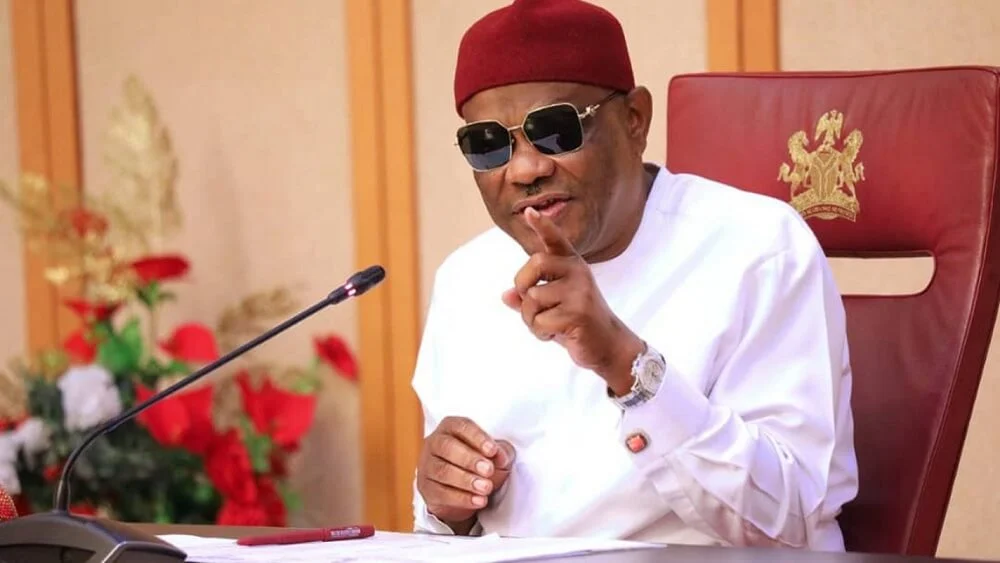
Federal Capital Territory Minister Nyesom Wike has defended the inclusion of former Humanitarian Affairs Minister Betta Edu in President Bola Tinubu’s 2027 campaign structure despite her ongoing investigation by the Economic and Financial Crimes Commission, EFCC.
Wike argued that an individual being investigated by the EFCC does not automatically prevent that person from participating in political activities or canvassing votes for a candidate.
The former Rivers State governor made the comments on Wednesday during a media parley in Abuja, which was aired by Channels Television, amid controversy over Edu’s inclusion in the APC campaign council.
Wike questioned what he described as a double standard in judging people involved in political campaigns. He argued that someone facing an EFCC investigation but who has not been convicted should not necessarily be barred from campaigning.
“You were asking the moral justification of putting someone who has an EFCC case to be in a campaign council,” Wike said.
He added that people facing criminal cases had previously contested elections and won, questioning why someone under investigation could not simply participate in a campaign.
“Now, somebody cannot be in a campaign to canvass for votes for a particular person, but somebody who has an EFCC case can contest an election and win an election?” he asked.
Wike further argued that even someone serving a prison sentence could express political support for a candidate, saying political participation and criminal prosecution should not automatically be treated as the same issue.
Controversy Over Betta Edu’s Role
The controversy centres on Edu’s appointment as Director of Women Mobilisation in the APC Presidential Campaign Council for Tinubu’s 2027 re-election campaign.
Tinubu suspended Edu as Minister in January 2024 following allegations of financial impropriety, after which the EFCC investigated the matter. Edu has not been publicly convicted of any offence arising from the investigation.
APC campaign council spokesperson Kemi Asekun-Shittu previously defended Edu’s inclusion, saying it would be unfair to prevent her from participating in politics simply because an investigation remained unresolved.
She also argued that Edu had not been found guilty of any offence and deserved the opportunity to resume political activities.
Asekun-Shittu described the campaign council as an internal party structure and said the APC had the authority to determine who would serve on it, while noting that the list could still be reviewed.
Wike’s comments add another voice to the growing debate over whether politicians facing investigations should be allowed to hold campaign positions ahead of the 2027 presidential election.