Now Reading: Akwa Ibom Govt Orders Review of Uyo Flood Master Plan Amid Rising Flooding
-
01
Akwa Ibom Govt Orders Review of Uyo Flood Master Plan Amid Rising Flooding
Akwa Ibom Govt Orders Review of Uyo Flood Master Plan Amid Rising Flooding

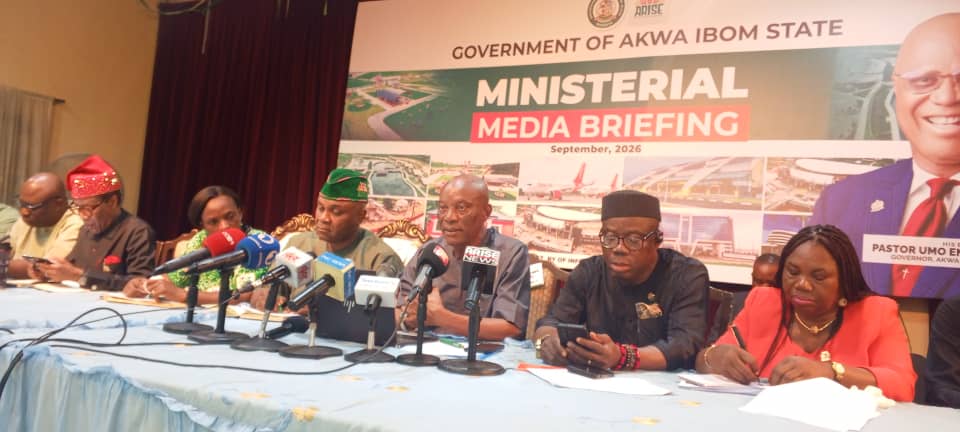
The Akwa Ibom State Government has ordered a review and update of Uyo’s urban drainage and flood master plan following an increase in flooding incidents across the state.
The Commissioner for Environment, Nsikak Ekong, disclosed this during a ministerial press briefing, saying Governor Umo Eno had directed a consultant to undertake the review as part of efforts to find a long-term solution to perennial flooding in Uyo.
Ekong attributed the rising flooding to a combination of human activities, climate change and rapid urbanisation. He noted that blocked drainage channels had worsened the situation, while increased construction had reduced the amount of land available to absorb rainwater.
“Rapid urbanisation is another factor causing flooding in Uyo because, because of urbanisation, the culverts that used to take water adequately may not be able to do that again,” the commissioner said.
He explained that the expansion of concrete surfaces, slabs and roads had reduced natural drainage and water absorption, making an updated flood and drainage master plan necessary.
“The governor has already directed a consultant to undertake the review. This shows how Akwa Ibom responds to rapid urbanisation, climate-induced flooding. I believe when this is completed, the issue of flooding will be a thing of the past,” Ekong said.
The commissioner also announced plans to inaugurate the Clean Akwa Ibom Brigade, an environmental response team that will monitor flood-prone areas across the state. He added that the ministry was developing a Climate Change Policy and working with the State House of Assembly on legislation to support climate action and carbon-credit opportunities.
On waste management, Ekong said Akwa Ibom generates about 700,000 metric tonnes of waste annually, equivalent to roughly 2,000 tonnes daily. He said the government was engaging consultants on plans to convert waste into energy and create economic opportunities from waste recycling.
According to him, the government has contacted companies in India and the United States over proposed waste-to-energy and waste-to-wealth projects. The plans include household waste segregation, recycling of plastics and conversion of organic waste into fertiliser.
Ekong also said environmental education on waste segregation had been introduced in primary and secondary schools, while drainage desilting had been carried out around Abak Road, Aka Road and Ikot Ekpene Road, as well as interventions in Shelter Extension and other affected areas.