Now Reading: El-Rufai Legal Battles Could Shape APC, Opposition Politics Ahead of 2027
-
01
El-Rufai Legal Battles Could Shape APC, Opposition Politics Ahead of 2027
El-Rufai Legal Battles Could Shape APC, Opposition Politics Ahead of 2027

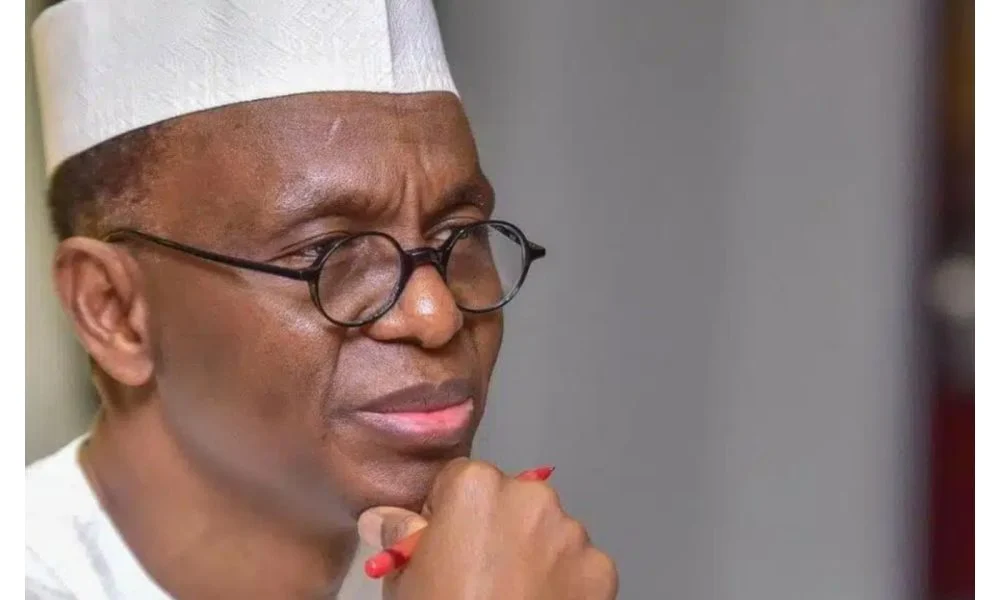
The ongoing legal battles involving former Kaduna State Governor Nasir El-Rufai are generating debate over their possible political implications ahead of Nigeria’s 2027 general elections.
Political analysts are divided over whether the former governor’s legal troubles could weaken his influence within the opposition or instead generate sympathy and become a mobilisation issue.
El-Rufai was initially detained in February 2026 after reporting to the Economic and Financial Crimes Commission (EFCC) over allegations of financial impropriety. He was subsequently taken into the custody of the Independent Corrupt Practices and Other Related Offences Commission (ICPC).
The ICPC later arraigned him over alleged corruption-related offences, including abuse of office, money laundering and fraud. El-Rufai pleaded not guilty to the charges.
However, the former governor was granted bail by the Federal High Court in Kaduna in April, with the court setting bail at N200 million and imposing conditions on his release.
He is also facing a separate case brought by the Department of State Services over alleged interception of telephone communications involving National Security Adviser Nuhu Ribadu. El-Rufai has pleaded not guilty, while the court is scheduled to rule on his no-case submission on October 26, 2026. He remains on N100 million bail in that matter.
The legal proceedings have nevertheless continued to attract political attention because of El-Rufai’s prominent role in northern politics and his alignment with the African Democratic Congress.
Political scientist Dr Kabiru Said Sufi said the political consequences would depend largely on how Nigerians perceive the cases.
According to Sufi, the issue could be interpreted either as an accountability process or as another confrontation among political elites.
He argued that the matter could currently benefit the ruling All Progressives Congress organisationally if El-Rufai remains less active in opposition politics, given his reputation as a political strategist.
However, Sufi noted that the political effect could change if public concern over the cases intensifies.
Political commentator Comrade Aminu Rabiu Kano similarly said El-Rufai remained an influential figure whose legal battles could have political consequences.
“El-Rufai is not an ordinary politician. He is a former governor, a prominent northern political figure and one of the politicians who played a significant role in the emergence of the APC,” Kano said.
He argued that while the government could frame the cases as matters of accountability and the rule of law, public perception would ultimately influence their political significance.
“Detaining a politician can restrict his physical participation in politics, but it does not necessarily eliminate his political influence,” Kano said.
He also cautioned against treating northern voters as a single political bloc, noting that electoral decisions are shaped by factors including security, economic conditions, government performance, candidates, alliances and local political structures.
According to Kano, if voters view the legal proceedings as a genuine judicial process, their electoral consequences could remain limited. If a significant section of the electorate instead perceives them as politically motivated, opposition groups could seek to make the issue part of their campaign messaging.
Comrade Umar Muhammad Kofar Naisa, Country Director of the Society for Educational Development and Socio-Democratic Activities, offered a different assessment, arguing that the controversy could generate sympathy for El-Rufai among some of his supporters.
He also said the former governor’s political history and previous relationship with the ruling establishment could influence how the public interprets the proceedings.
Kofar Naisa further argued that the case could affect perceptions within the APC, particularly among members concerned about the consequences of openly disagreeing with the Federal Government.
Meanwhile, Emir of Kano Muhammadu Sanusi II has questioned the consistency with which Nigeria’s anti-corruption laws are applied.
Speaking to Channels Television, Sanusi cited El-Rufai’s case while arguing that the country has institutions and courts responsible for investigating and prosecuting corruption allegations. He questioned whether high-profile cases are always pursued solely on anti-corruption grounds or whether political considerations sometimes influence their handling.
The differing views highlight the uncertainty surrounding the political significance of El-Rufai’s legal battles.
With the 2027 elections approaching, the extent to which the cases feature in opposition campaigning, how they are perceived by voters and the outcome of the ongoing court proceedings could determine whether the controversy remains primarily a legal matter or assumes a larger political dimension.